The Federal Railroad Administration has granted two key permissions for Texas Central to operate a high-speed trail between Houston and Dallas.



"Federal officials have issued final approvals to backers of a Houston-to-Dallas high-speed rail line, further clearing the way for construction of the proposed line, in a move almost certain to face challenges from opponents," according to an article by Dug Begley.
The company that will operate the bullet train from Houston to Dallas, Texas Central, "said early Monday that the Federal Railroad Administration had issued both the Record of Decision that ends the environmental analysis and the Rule of Particular Applicability that governs the safety standards the Japanese-developed trains must use," reports Begley.
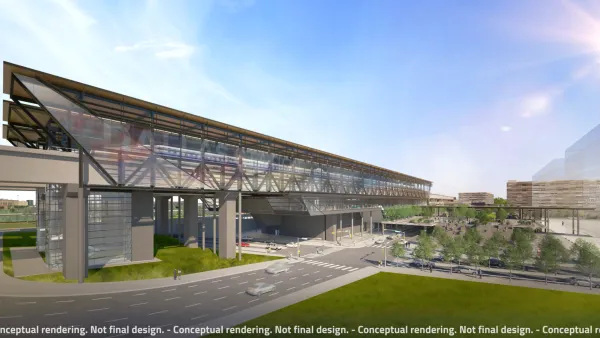
The Texas Central Railway will use Shinkansen-style bullet trains built by Central Japan Railway, though an international consortium of companies will contribute other components to the project.
The price tag for the project has now risen to $20 billion, from an original estimate of $10 billion, according to Begley, for a project that will make the trip between Houston and Dallas in 90 minutes and include a stop near College Station.
As reported by Begley, the project is already attracting loud opposition, and multiple lawsuits could be expected to slow the project. According to Begley, the opposition is led by rural and suburban interests concerned about the impact of construction and operations of the train as it passes through on its way to its destinations.
FULL STORY: Houston-to-Dallas bullet train given green light from feds, company says

Reclaiming Malls: How About a High-Speed Rail Station?
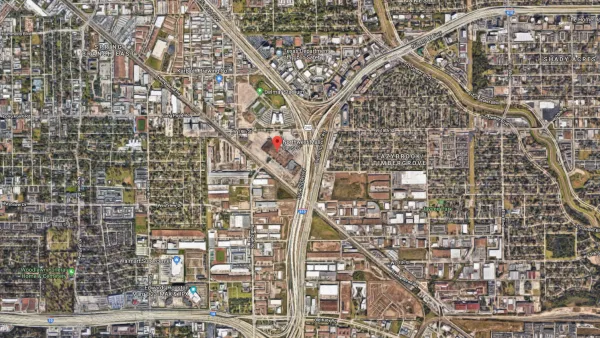
A Texas mall that opened in 1968 and largely closed ten months ago has been picked by Texas Central Partners as the Houston terminal of the Dallas-to-Houston high-speed rail. The site is far from downtown and distant from public transit.
Central Texas Bullet Train Loses Steam
A proposed bullet train project between Houston and Dallas may have stalled for the last time as the Texas Central Railway CEO steps down.

Eminent Domain Questions Still Dog Texas Central High Speed Rail Plans
The Texas Attorney General took a break from its crusade against unsubstantiated claims of voter fraud to weigh in on a controversial question of property rights.

The state-sanctioned urbicide of Austin
People don’t kill cities. Freeways do.

US to reduce Colorado River water deliveries to Mexico
A new Colorado Treaty amendment reduces Mexico’s Colorado River water allocation by 250,000 acre feet.

New Jersey’s second-largest city bans standalone data centers
Jersey City will continue to allow co-location facilities, such as those meant for research institutions that store their own data.

Amtrak not solely to blame for New Jersey commuter rail's unreliability, report finds
A new study from the Garden State Initiative found that NJ Transit’s budget grew 20% across a 4 year period, but reliability declined significantly over the same period.

EPA erases limits on planet-warming pollution from power plants
Under Monday’s plan, power plants would still have some limits on how much mercury, arsenic and other contaminants they can emit.

Phoenix announces new on-demand transit service, more frequent RAPID buses
Both new services will launch in October, and are part of Phoenix's Project Effective Access Solutions for Easing Congestion.

FREE Course: Walkable City 1: Why Walkability?
After describing his path towards focusing on walkability as the essence of good planning, Jeff Speck marches through his five principal reasons for making more walkable places.
Reinventing Malls: Planning Alchemy—Turning Gray Fields Into Gold
The course focuses on the opportunities and imperatives that shape reinvention of mall sites.

Eagle County Government
Harvard University Graduate School of Design
Nashville Planning Department
The Architects Foundation
University of Cincinnati Online
The Pocatello Development Authority
The Urban Renewal Agency of the City of Pocatello
Journal of the American Planning Association