In the United States, busy roads shorten lives in more ways than one, but when it comes to the ill effects of noise pollution, almost no efforts are made to reduce the damage.



"A team of Italian researchers found a broad consensus emerge from more than 250 scientific articles: urban noise pollution causes a variety of psychological, cardiovascular, and other health disorders — and the experts estimated that it costs 'at least one million healthy life years' per year across Western Europe," according to an article by Kea Wilson.
While the evidence in the new research doesn't include the American experience, but it's likely that the public health outcomes from noise are worse, because U.S. cities are even louder than European counterparts. "[I]t’s pretty clear we’re suffering too," writes Wilson, "only 65.5 percent of Europeans are routinely exposed to traffic noises above 50 decibels, but 97 percent of Americans live with that level of constant ruckus from our car-dominated road network."
The new study also provides ideas for future research, noting that most studies into the effects of noise pollution focus on air travel, despite the documented ill effects of noise pollution from automobiles.
"That dearth of research might help explain why restrictions on U.S. roadway sound levels are so lax. The Noise Control Act of 1972 authorized the Environmental Protection Agency to advise states on the recommended limits of noise pollution that would caused by their federally-funded road projects — but the responsibility for actually setting noise caps was shifted to the states less than ten years later, when the funding for the federal Office of Noise Abatement was rescinded," explains Wilson. Moreover: "The Federal Highway Administration provides almost no funding for highway noise abatement when it funds new road-building projects, besides a small number of federal dollars for concrete 'noise walls,' which don’t really work."
Read the full story: The Other Type of Car Pollution That Harms Us All


Watch: What it Takes to Retrofit Suburbia
June Williamson explains the necessary components of the next generation of the suburban retrofitting project, and why these actions are so necessary.
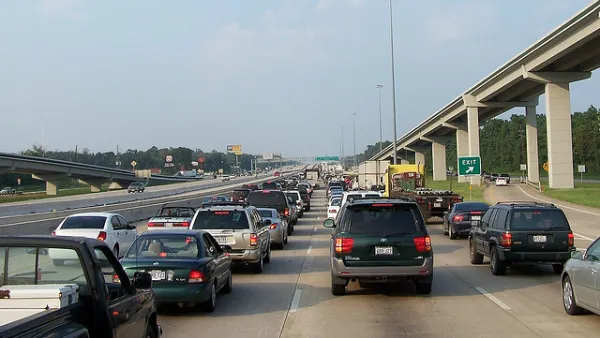
All the Ways Congestion and Long Car Commutes Are Bad for Public Health
The status quo is unhealthy for everybody.

The Harms of a Car-Centric World
While most of the world’s population doesn’t drive, cars have an outsized negative impact on public health, the environment, and land use.

Planetizen Federal Action Tracker
A weekly monitor of how Trump’s orders and actions are impacting planners and planning in America.

The state-sanctioned urbicide of Austin
People don’t kill cities. Freeways do.

US to reduce Colorado River water deliveries to Mexico
A new Colorado Treaty amendment reduces Mexico’s Colorado River water allocation by 250,000 acre feet.

Nation's most wind-powered state turns to coal as data centers increase energy demand
For the first time in decades, Iowa has increased its generation of coal power.

NYC cools commuters with city's first rain garden above a bus stop
New York City officials say the plants in the rain garden can absorb 16 gallons of rainwater during heavy storms.

Brightline West’s future may rely on $6 billion federal loan
The company has until Nov. 2 to make a $400 million equity investment into its proposed high-speed rail line.

FREE Course: Walkable City 1: Why Walkability?
After describing his path towards focusing on walkability as the essence of good planning, Jeff Speck marches through his five principal reasons for making more walkable places.
Reinventing Malls: Planning Alchemy—Turning Gray Fields Into Gold
The course focuses on the opportunities and imperatives that shape reinvention of mall sites.

Eagle County Government
Harvard University Graduate School of Design
Nashville Planning Department
The Architects Foundation
University of Cincinnati Online
The Pocatello Development Authority
The Urban Renewal Agency of the City of Pocatello
Journal of the American Planning Association