Climate change-fueled sea-level rise could cause a housing crisis of a new sort if the federal government doesn't reconsider valuation policies.


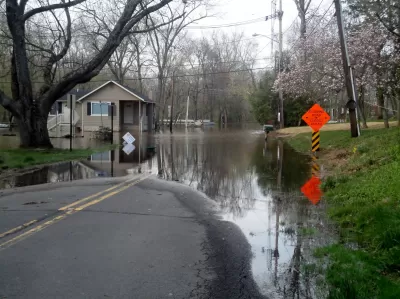
In their recent opinion piece, Katie Oran and Yuliya Panfil describe what they predict to be the effect of climate change on the future of housing in the United States. Oran and Panfil warn of a new kind of housing crisis, destroying home values and potential causing a major housing market crash, caused by neglecting to consider sea-level rise.
According to a report from First Street Foundation, federal flood maps don't account for 67% of homes at risk of flooding. Readers can use the organization's Flood Factor tool to determine current and future flood risk by address.
Oran and Panfil account for the damager caused by flooding in monetary terms:
Between 1980 and 2019, the cost of storm damage in the United States has totaled $1.75 trillion. That is $300 billion more than the estimated total value of all property that sits within 700 feet of the US coastline. To put it simply: the US Government and private insurance companies have spent more money rebuilding damaged coastal property than it would have cost to relocate every single home within this risky zone.
Risky mortgages are re-packaged and sold to such government-secured enterprises as Fannie Mae and Freddie Mac. Oran and Panfil call to stop insatiable subsidization and for a government response that acts to consider the climate change risk in valuation and incentivize relocation and buy-out packages in a process of managed retreat.
"The key, however, is for the government to listen to the science and act now to prevent Americans from being swept up in another housing crisis, this time caused by climate change," opine Oran and Panfil.
FULL STORY: Climate change is threatening to create a new housing crisis in America

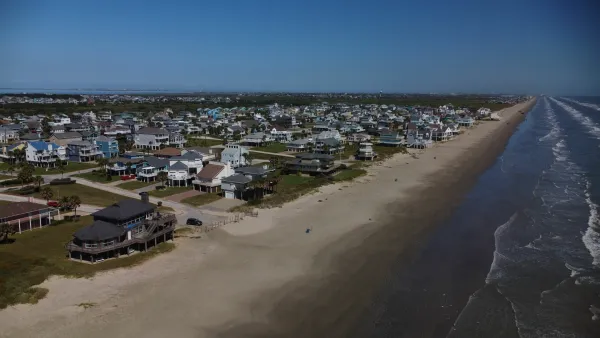
Looking for a Beach House? Check Your Risk First.
A new report from the insurance industry names the historic town of Galveston, Texas as the riskiest place to buy a beach house in the United States.
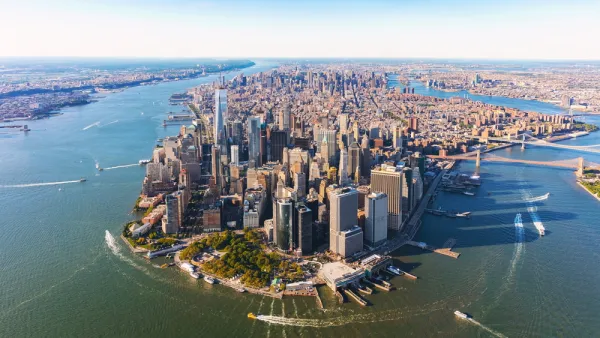
Opinion: One Solution to Manhattan's Land Shortage: Just Build It
A New York Times op-ed calls on the city to add landfill development on Manhattan's southern shoreline, claiming it would increase affordability and protect the city from rising sea levels.
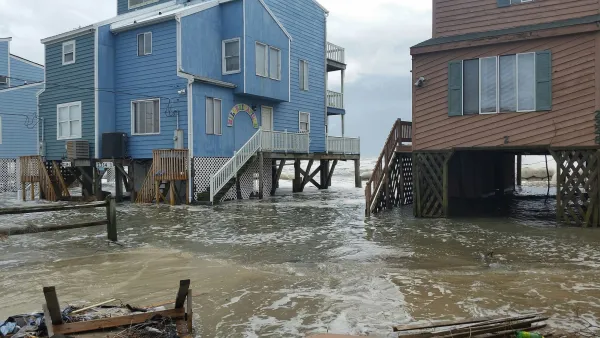
Flood Risk Upends the North Carolina Housing Market
Inequalities in the housing market of coastal North Carolina communities have already been exacerbated by the effects of extreme weather and climate change.

The state-sanctioned urbicide of Austin
People don’t kill cities. Freeways do.

US to reduce Colorado River water deliveries to Mexico
A new Colorado Treaty amendment reduces Mexico’s Colorado River water allocation by 250,000 acre feet.

New Jersey’s second-largest city bans standalone data centers
Jersey City will continue to allow co-location facilities, such as those meant for research institutions that store their own data.

Amtrak not solely to blame for New Jersey commuter rail's unreliability, report finds
A new study from the Garden State Initiative found that NJ Transit’s budget grew 20% across a 4 year period, but reliability declined significantly over the same period.

EPA erases limits on planet-warming pollution from power plants
Under Monday’s plan, power plants would still have some limits on how much mercury, arsenic and other contaminants they can emit.

Phoenix announces new on-demand transit service, more frequent RAPID buses
Both new services will launch in October, and are part of Phoenix's Project Effective Access Solutions for Easing Congestion.

FREE Course: Walkable City 1: Why Walkability?
After describing his path towards focusing on walkability as the essence of good planning, Jeff Speck marches through his five principal reasons for making more walkable places.
Reinventing Malls: Planning Alchemy—Turning Gray Fields Into Gold
The course focuses on the opportunities and imperatives that shape reinvention of mall sites.

Eagle County Government
Harvard University Graduate School of Design
Nashville Planning Department
The Architects Foundation
University of Cincinnati Online
The Pocatello Development Authority
The Urban Renewal Agency of the City of Pocatello
Journal of the American Planning Association