Nic Esposito calls for an "anti-racist reframe" of urbanism to address the attitudes and policies that have perpetuated racist systems and upheld capitalism at all costs.



When first encountering the term "urbanism," Nic Esposito went to work to uncover the implications of the word. In Esposito's reading, the term implies that "by identifying as an urbanist, you somehow know what’s good for other communities which you are not a part of. This is the exact mindset that drives white supremacy and has driven flawed city planning policy, such as urban renewal and broken windows policing."
Esposito noticed the ties between capitalist priorities, racial injustice, and the work of urbanists and asked, "What if urbanism itself is perpetuating systemic racism?"
In the past, urbanists have favored a mindset that elevates the commercial corridor, placing the highest value on infrastructure that can help turn a profit, says Esposito. The truth of the matter is that not every community can afford to support such a district and, furthermore, not every community wants one.
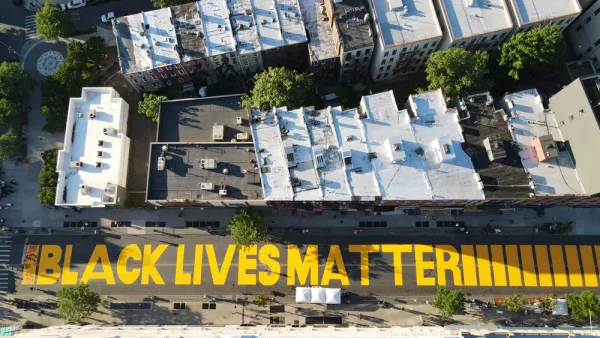
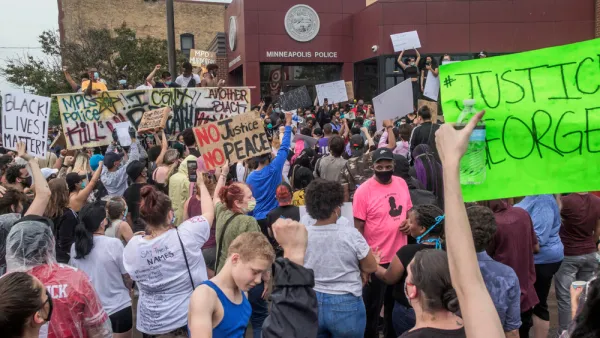
Urbanists and urban planners need to reconceptualize their work in the context of recent Black Lives Matter and anti-police brutality protests, what Esposito calls an "anti-racist reframe." "If urbanists are able to influence policy and political decisions on the city level, then they owe it to our entire community to completely reevaluate what urbanism is and how its brand of intellectualism, policy and design really just puts a nice aesthetic on a racist system."
FULL STORY: Is urbanism a fantasy of racialized capitalism?

Tactical Urbanism Gurus Rethink Equity
Mike Lydon and Tony Garcia wrote the book on Tactical Urbanism, and as leading consultants of the practice in cities around the country, they have faced criticism in recent weeks and months for a lack of attention to matters of equity.

Debating the Future of Cities After the Coronavirus, Volume 3
The third installment of an ongoing, curated list of a particularly contemporary genre of urbanism punditry.
Violence Against Black Americans a Moment of Reckoning for the Planning Profession
After a wave violence against Black men in the United States, it is the duty of the planning profession to consider its role in perpetuating institutional racism.

Planetizen Federal Action Tracker
A weekly monitor of how Trump’s orders and actions are impacting planners and planning in America.

The state-sanctioned urbicide of Austin
People don’t kill cities. Freeways do.

US to reduce Colorado River water deliveries to Mexico
A new Colorado Treaty amendment reduces Mexico’s Colorado River water allocation by 250,000 acre feet.

5 New England states march closer to 800 megawatt wind energy project
Securing federal approval for the project may be complicated under the Trump administration, which has historically been hostile towards domestic wind power.

Baltimore to break ground on $50 million Transit Priority Project
The project will bring faster bus trips, safer streets and better bike connections to Baltimore.

Airbnb launches $250 million 'last-dollar financing' housing accelerator, makes first investment in Austin
The company will put $6.4 million towards affordable housing development in Texas’ capital.

FREE Course: Walkable City 1: Why Walkability?
After describing his path towards focusing on walkability as the essence of good planning, Jeff Speck marches through his five principal reasons for making more walkable places.
Reinventing Malls: Planning Alchemy—Turning Gray Fields Into Gold
The course focuses on the opportunities and imperatives that shape reinvention of mall sites.

Eagle County Government
Harvard University Graduate School of Design
Nashville Planning Department
The Architects Foundation
University of Cincinnati Online
The Pocatello Development Authority
The Urban Renewal Agency of the City of Pocatello
Journal of the American Planning Association