An annual survey by the Mineta Transportation Institute found new levels of support for a change in the way the federal government raises money from, and for, highway infrastructure.


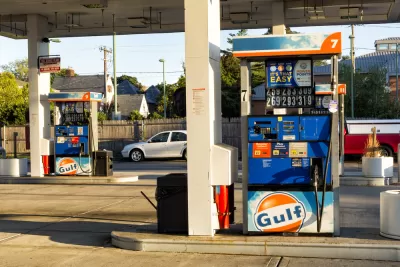
"Nearly half of Americans think it’s time to rethink how we fund our road infrastructure by switching from a federal gas tax — which theoretically rewards drivers for choosing greener cars, but doesn’t always deter excessive driving itself — and replacing it with a tax based on how many miles drivers actually travel," according to an article by Kea Wilson.
Wilson is sharing the findings of newly released survey findings from the Mineta Transportation Institute. "Forty-five percent of respondents said they would prefer a flat mileage fee to a gas tax, while 49 percent said they’d prefer a 'green' mileage fee that charges drivers of high-polluting cars a little more, and drivers of more-efficient cars a little less — the highest levels of support the researchers have found in the 10 years since the survey began," explains Wilson.
The article includes a thorough explanation of the gas tax, the fragile and perpetually threatened state of the Highway Trust Fund, and the benefits of changing for Vehicle Miles Traveled (VMT).
FULL STORY: Half of Americans Want Drivers Who Drive More to Pay More

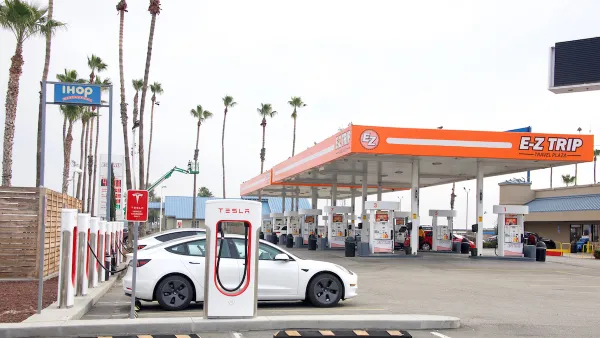
California Poised to Lose Up to $4 Billion in Gas Tax Revenue
States must find other ways to fund transportation projects as the transportation sector moves toward decarbonization.
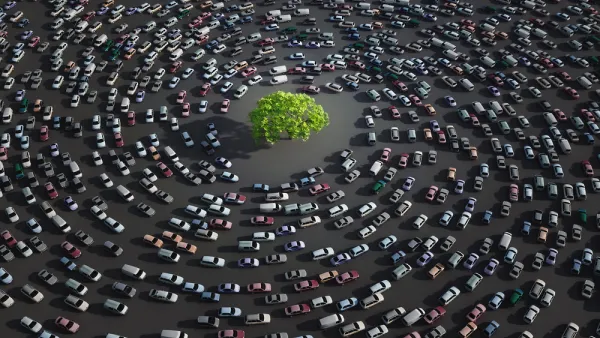
An Argument Against VMT Fees as Replacements for Gas Taxes
Vehicle Miles Traveled (VMT) fees are a bad way to pay for roads, according to an article by Joe Cortright.
The Looming Era of VMT
The gas tax is becoming an increasingly outdated and unsustainable idea. This piece from Miller McCune looks at the prospect of replacing it with a tax based on vehicle miles traveled.

The state-sanctioned urbicide of Austin
People don’t kill cities. Freeways do.

US to reduce Colorado River water deliveries to Mexico
A new Colorado Treaty amendment reduces Mexico’s Colorado River water allocation by 250,000 acre feet.

New Jersey’s second-largest city bans standalone data centers
Jersey City will continue to allow co-location facilities, such as those meant for research institutions that store their own data.

Amtrak not solely to blame for New Jersey commuter rail's unreliability, report finds
A new study from the Garden State Initiative found that NJ Transit’s budget grew 20% across a 4 year period, but reliability declined significantly over the same period.

EPA erases limits on planet-warming pollution from power plants
Under Monday’s plan, power plants would still have some limits on how much mercury, arsenic and other contaminants they can emit.

Phoenix announces new on-demand transit service, more frequent RAPID buses
Both new services will launch in October, and are part of Phoenix's Project Effective Access Solutions for Easing Congestion.

FREE Course: Walkable City 1: Why Walkability?
After describing his path towards focusing on walkability as the essence of good planning, Jeff Speck marches through his five principal reasons for making more walkable places.
Reinventing Malls: Planning Alchemy—Turning Gray Fields Into Gold
The course focuses on the opportunities and imperatives that shape reinvention of mall sites.

Eagle County Government
Harvard University Graduate School of Design
Nashville Planning Department
The Architects Foundation
University of Cincinnati Online
The Pocatello Development Authority
The Urban Renewal Agency of the City of Pocatello
Journal of the American Planning Association