With travel restrictions requiring quarantines for many out-of-state visitors to New York City, the normal hordes of tourists on New York's High Line will be absent for months to come.


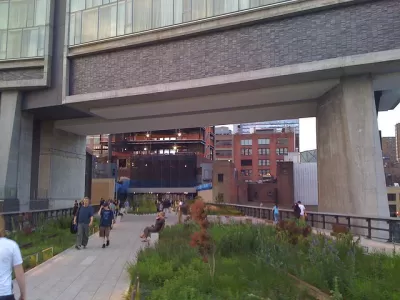
Washington Post columnist Adrian Higgins checks in the with the High Line in New York City, which has been vacated during the pandemic much like it was before its famous adaptive reuse and evolution into a tourism magnet and a controversial symbol of gentrification.
Now, with the city taking tentative steps to reopen and travel restrictions into New York in place, the High Line is likely to evolve again. Higgins writes:
In the interval between limited reopening and a world back to normal, whenever that may be, the High Line will become something closer to its original idea, a quirky postindustrial gift to the West Side. It may become for New Yorkers what the cultural treasures of Florence and Venice are now for their citizens: havens devoid of the hordes of out-of-towners.
According to Higgins, the Friends of the High Line is actively discussing how to implement and enforce social distancing on the eight-foot wide path, but no decisions have been made yet. It also "may take years for New York to return to the level of tourism — some 65 million visitors a year — it attained before the coronavirus crisis," according to Higgins.
FULL STORY: The High Line has been sidelined. When it reopens, New Yorkers may get the park they always wanted.

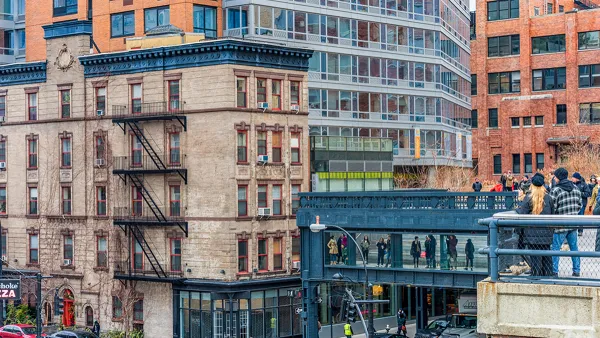
Debating the Legacy of the High Line
A new debate has emerged, starting from a source very close to the project, about the effects of the High Line in New York City.
Manhattan’s Population Is on the Rebound
After the ‘urban exodus’ brought on by the pandemic, most of New York City’s boroughs are regaining their population.
Winter Is Coming—Capitalize on It
Outdoor dining programs have provided relief for local restaurants and retailers, while offering an oasis of social life for residents. The winter months will challenge that momentum, but creative, flexible approaches can save the day again.

Planetizen Federal Action Tracker
A weekly monitor of how Trump’s orders and actions are impacting planners and planning in America.

The state-sanctioned urbicide of Austin
People don’t kill cities. Freeways do.

US to reduce Colorado River water deliveries to Mexico
A new Colorado Treaty amendment reduces Mexico’s Colorado River water allocation by 250,000 acre feet.

5 New England states march closer to 800 megawatt wind energy project
Securing federal approval for the project may be complicated under the Trump administration, which has historically been hostile towards domestic wind power.

Baltimore to break ground on $50 million Transit Priority Project
The project will bring faster bus trips, safer streets and better bike connections to Baltimore.

Airbnb launches $250 million 'last-dollar financing' housing accelerator, makes first investment in Austin
The company will put $6.4 million towards affordable housing development in Texas’ capital.

FREE Course: Walkable City 1: Why Walkability?
After describing his path towards focusing on walkability as the essence of good planning, Jeff Speck marches through his five principal reasons for making more walkable places.
Reinventing Malls: Planning Alchemy—Turning Gray Fields Into Gold
The course focuses on the opportunities and imperatives that shape reinvention of mall sites.

Eagle County Government
Harvard University Graduate School of Design
Nashville Planning Department
The Architects Foundation
University of Cincinnati Online
The Pocatello Development Authority
The Urban Renewal Agency of the City of Pocatello
Journal of the American Planning Association