People in cities all over the world are choosing the bike as their preferred mode of transportation as the coronavirus shakes up work and travel patterns. Residents of the largest city in Canada are no exception.


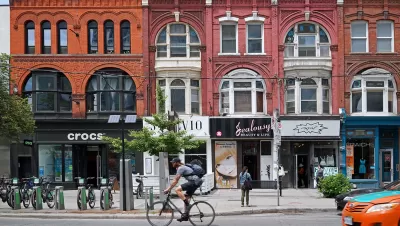
"Some city planners in Ontario say the renewed interest in cycling during the pandemic could spark long-term change in public attitudes toward bicycles as a means of transportation, as more people try it for the first time," reports Salmaan Farooqui.
The data contributing to this assessment are multiple: bike sales are up at bike shops in the city, trips on the Bike Share Toronto system recently set a record, and planners and city officials are making space for the new interest in this form of active transportation:
In Toronto, city council has approved 25 kilometres of temporary bike lanes to accommodate the increased demand during the health crisis, meaning a total of 40 kilometres of lanes are set to be built in 2020.
Kornel Mucsi, a program manager for transportation policy and networks in Ottawa, is quoted in the article arguing for permanent changes to the street to maintain the momentum created by the temporary circumstances of the coronavirus pandemic.
FULL STORY: City planners, bike shops say COVID-19 could shift culture of cycling

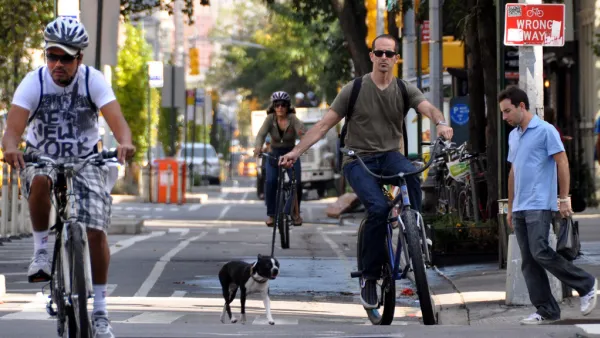
Five Borough Bikeway Plan Released
The Regional Plan Association is calling on New York City to implement an ambitious plan to transform the city into a world class city for biking—for the benefit of the public health and economic realities of the pandemic and beyond.
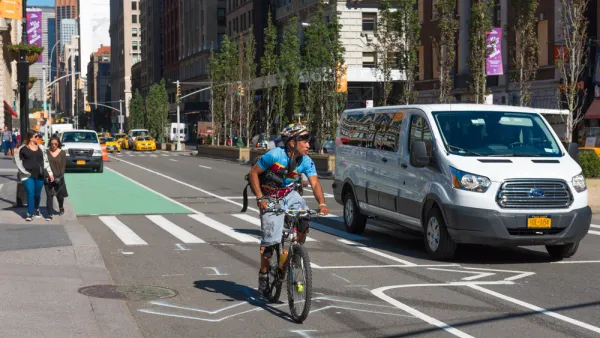
New York Poised to Become a Biking City
Could the pandemic be a tipping point for a century of car-centric planning in New York City's to give way to a more bike-friendly city?
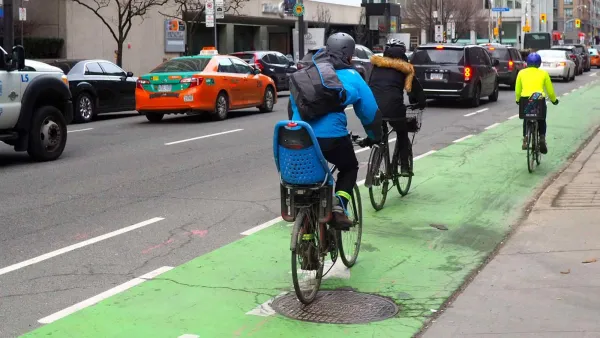
Toronto's Expanded its Bike Infrastructure Network to Run Parallel to Transit Lines
The Toronto City Council approved a quick expansion of bike lanes around the city to provide an alternative to public transit during and after the pandemic.

The state-sanctioned urbicide of Austin
People don’t kill cities. Freeways do.

US to reduce Colorado River water deliveries to Mexico
A new Colorado Treaty amendment reduces Mexico’s Colorado River water allocation by 250,000 acre feet.

New Jersey’s second-largest city bans standalone data centers
Jersey City will continue to allow co-location facilities, such as those meant for research institutions that store their own data.

Amtrak not solely to blame for New Jersey commuter rail's unreliability, report finds
A new study from the Garden State Initiative found that NJ Transit’s budget grew 20% across a 4 year period, but reliability declined significantly over the same period.

EPA erases limits on planet-warming pollution from power plants
Under Monday’s plan, power plants would still have some limits on how much mercury, arsenic and other contaminants they can emit.

Phoenix announces new on-demand transit service, more frequent RAPID buses
Both new services will launch in October, and are part of Phoenix's Project Effective Access Solutions for Easing Congestion.

FREE Course: Walkable City 1: Why Walkability?
After describing his path towards focusing on walkability as the essence of good planning, Jeff Speck marches through his five principal reasons for making more walkable places.
Reinventing Malls: Planning Alchemy—Turning Gray Fields Into Gold
The course focuses on the opportunities and imperatives that shape reinvention of mall sites.

Eagle County Government
Harvard University Graduate School of Design
Nashville Planning Department
The Architects Foundation
University of Cincinnati Online
The Pocatello Development Authority
The Urban Renewal Agency of the City of Pocatello
Journal of the American Planning Association