How can planners be more effective in politics? A new book offers planners turned executive-level politicians a chance to explain their insights.


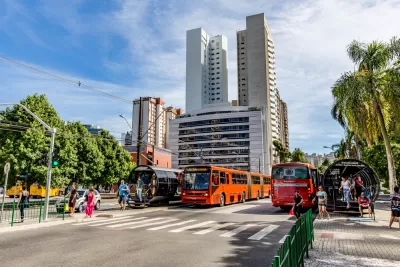
Eduardo Oliveira writes a book review of Planners in Politics: Do they Make a Difference? for the European Planning Studies journal, providing the following assessment:
The book evidences that planners-acting-as-politicians can effectively shape, for example, housing policies or navigate through the stakes of private groups or opposing parties in order to develop plans or implement projects.
According to Oliveira, the editors systematically chose their subjects and posed questions that invoked a consistent storyline in examples as varied as mitigating urban inequalities of favelas in Brazil to regional innovation strategies in Portugal to the development of Iowa's City strategic plan.
Each chapter is penned by a planner that transitioned to an executive-level politician, like Jaime Lerner, for example. According to Oliveira, each of the contributors detailed how they achieved change in their communities.
Read the full story: Planners in politics – Do they make a difference?

There's More Than One Path to AICP Certification
The AICP Candidate Pilot Program launched in 2017 allows for planners to begin the journey to AICP certification earlier in their careers—even while they are still in school.

Crafting the Future of Zoning
Lee D. Einsweiler, principal and co-founder of Code Studio, offers practiced insight on the relationship between planning and implementation, as well as guidance for a fulfilling career navigating the two.

Planning and Teaching in Southern California
Elizabeth Gallardo is a planning associate with the city of Los Angeles, working as part of an ambitious effort to update the city's numerous community plans while also teaching planning courses at a nearby university.

Desperate measures: Advocates weigh draining Lake Powell to fill Colorado River
Draining the reservoir could reduce evaporation losses by a couple hundred thousand acre-feet.

Eastern Nebraska is running out of electricity
Data centers and electrification are straining eastern Nebraska’s grid, throttling economic development.

Malls are becoming the midtowns of the future
Mall and office park redevelopments are a generational opportunity to create new nodes of urbanity.

NYC breaks ground on anti-flooding infrastructure project
New York City's new system will reduce stormwater flows to local sewers by 90%.

One Kentucky town’s secret to affordable housing
The Smoketown Community Land Trust has already built seven affordable homes for community members.

Houston gains petal-shaped cooling infrastructure to make streets more ‘delightful’
The city has installed the pavilions along 15 blocks in Houston.

FREE Course: Walkable City 1: Why Walkability?
After describing his path towards focusing on walkability as the essence of good planning, Jeff Speck marches through his five principal reasons for making more walkable places.
Reinventing Malls: Planning Alchemy—Turning Gray Fields Into Gold
The course focuses on the opportunities and imperatives that shape reinvention of mall sites.

City of Rosemead
Rutgers University, Edward J. Bloustein School of Planning and Public Policy
One Hundred Miles
University of Michigan School for Environment and Sustainability (SEAS)
Hunter College, City University of New York (CUNY)
The Architects Foundation
City of Cambridge
Montrose County
The Pocatello Development Authority