The Center for Community progress offers advice on effective code enforcement during a time of extreme economic duress.


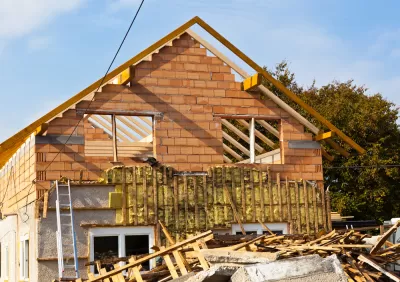
An article by Liz Kozub makes the case for cities and communities to pivot on code enforcement, but not neglect the sometimes controversial policy measure, in response to the realities of the Covid-19 pandemic.
Kozub addresses the potentially controversial aspects of code enforcement up front, noting that many community members will struggle in the coming months to pay for the repairs that maintain their properties at levels acceptable to regulations, so, Kozub asserts, cities should consider the long-term ramifications of their code enforcement practices during the pandemic, and focus on protecting the health and safety of residents.
To achieve the maximum benefit from code enforcement, Kozub suggests three specific policy response, detailed in the source article: 1) Adapt Responses to Deferred Property Maintenance, 2) Increase Communication with Renters and Landlords, and 3) Track Residential and Commercial Vacancies.
Read the full story: We Will Need Code Enforcement Now More Than Ever: Three COVID-19 Responses to Protect Neighborhoods

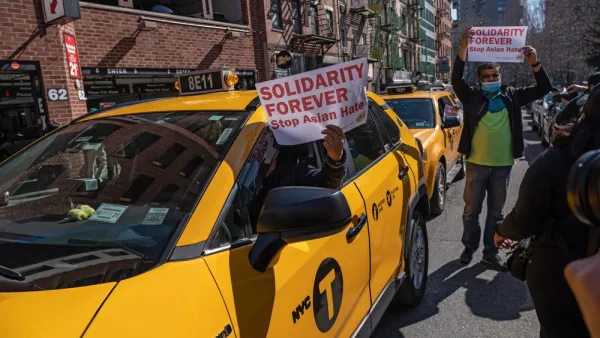
'Never Let a Good Crisis Go to Waste' and Planning in the Pandemic
The latest in a series of compendia collecting news and commentary focusing on the complexities of the COVID-19 pandemic's effect on communities.
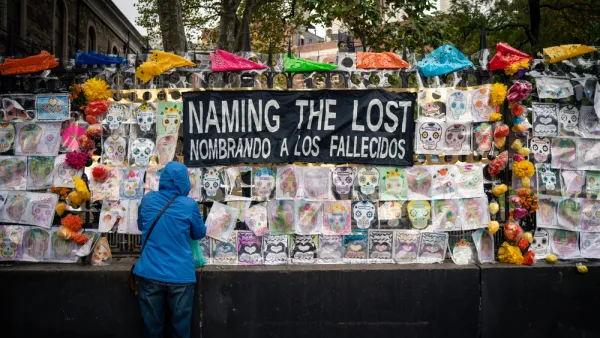
Haves and Have Nots: Planning and the Deep Divides of the Pandemic
The latest in a series of compendia gathering news and analysis about the effects of the COVID-19 on the built and natural environments—now and long into the future.
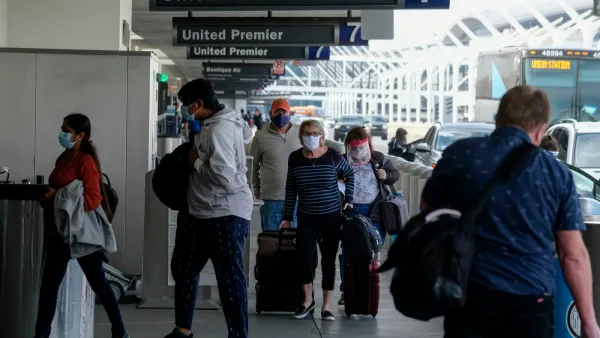
Thanksgiving Air Travel Breaks Pandemic Records
As expected, air travel in the United States reached heights not seen since before the pandemic, but still fell well short of the norm.

Planetizen Federal Action Tracker
A weekly monitor of how Trump’s orders and actions are impacting planners and planning in America.

Amtrak, CN end decades-long dispute with eight-year agreement
The new operating agreement establishes an updated framework for the companies to work together, including processes to resolve disputes.

Judges permit Denver to divert 77,000 acre feet from the Colorado River for reservoir expansion
Overuse and climate change have caused the Colorado River’s water levels to plummet.

Boston has spent millions making the Green Line more accessible — and there’s no end in sight
While the city has invested millions into expanding and adding platforms to the Green Line to make it more accessible, new train cars set to arrive next year will be too tall for disabled passengers to board without raising the current platforms.

Idaho may see an 18% drop in federal surface transit funding — the largest estimated cut in the US
Transit systems in rural communities are much more reliant on federal funding to provide their services.

How ‘post-disaster gentrification’ alters neighborhoods after natural calamities
After hurricanes, fires or other calamities, the original residents of a community are often replaced by younger, wealthier residents.

FREE Course: Walkable City 1: Why Walkability?
After describing his path towards focusing on walkability as the essence of good planning, Jeff Speck marches through his five principal reasons for making more walkable places.
Reinventing Malls: Planning Alchemy—Turning Gray Fields Into Gold
The course focuses on the opportunities and imperatives that shape reinvention of mall sites.

City of Wisconsin Rapids
Harvard University Graduate School of Design
KFH Group Inc.
The Architects Foundation
University of Cincinnati Online
The Pocatello Development Authority
The Urban Renewal Agency of the City of Pocatello