A public-private partnership between the city of San Diego and GE Current to develop a smart streetlights program started in 2017 has not lived up to expectations three years and $300 million dollars later.


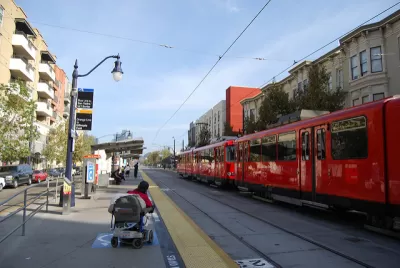
In 2017, the city of San Diego began to plan for a smart streetlights program that would provide democratized, anonymous data on real-time movement of vehicles, pedestrians, and cyclists to planners and developers. Initially funded by a loan from General Electric, the city teamed up with the private Boston-based company GE Current to launch the program. "The company was promising to fundamentally transform the way the public interacts with its government and its neighbors with data," imparts Jesse Marx.
More than three years since the formation of the partnership issues with unreliable data and difficulties with the installation of the smart streetlights, there is concern that the program is not living up to its original promotional promises including using the sensors to help drivers find open parking spots across the city. "The city’s Sustainability Department has been looking at the data to see how stay-at-home orders are changing pedestrian activity, but officials said they were unaware of any public-facing apps that had been developed yet," writes Marx.
Despite weekly requests for access to data, researchers and developers are unable to create the kinds of apps promised to improve quality of life for San Diego residents because of faulty, incorrect, or unavailable data. According to Marx, only about a dozen of the 3,000 streetlights are producing information.
Technologist and the director of the San Diego Regional Data Library says that San Diego is not alone in its difficulties of implementing new big data systems, citing an underestimation of the effort involved in these projects. In addition, while San Diego owns the raw data collected by sensors, GE Current owns all of the analyzed data as a result of the original contract. City officials will present details to the City Council later in 2020. Moving forward, the city aims to bring between five and ten sensors into the network on a weekly basis. With a budget deficit of about $300 million, Mayor Kevin Faulconer hopes to maintain the $1.3 million in annual funding for the project.
FULL STORY: Smart Streetlights Aren’t Delivering the Data Boosters Promised


San Diego Smart City Sensors Causing Controversy
Thousands of streetlight sensors are collecting a trove of data—from traffic counts to humidity levels—and advocacy groups say the city needs to be more transparent about how the data is being used and who has access to it.

San Diego Could Eliminate Height Limits Near Transit
San Diego Mayor Kevin Faulconer is following up on an idea first pitched during a State of the City address, but with a few teaks.

San Diego Unbundles Parking, Eliminates Parking Minimums and Sets Maximums
In addition to replacing parking minimums with parking maximums of one space per unit in transit corridors, the city council went a step further by requiring unbundling, that is, requiring separate payment for parking from the housing.

The state-sanctioned urbicide of Austin
People don’t kill cities. Freeways do.

US to reduce Colorado River water deliveries to Mexico
A new Colorado Treaty amendment reduces Mexico’s Colorado River water allocation by 250,000 acre feet.

New Jersey’s second-largest city bans standalone data centers
Jersey City will continue to allow co-location facilities, such as those meant for research institutions that store their own data.

Amtrak not solely to blame for New Jersey commuter rail's unreliability, report finds
A new study from the Garden State Initiative found that NJ Transit’s budget grew 20% across a 4 year period, but reliability declined significantly over the same period.

EPA erases limits on planet-warming pollution from power plants
Under Monday’s plan, power plants would still have some limits on how much mercury, arsenic and other contaminants they can emit.

Phoenix announces new on-demand transit service, more frequent RAPID buses
Both new services will launch in October, and are part of Phoenix's Project Effective Access Solutions for Easing Congestion.

FREE Course: Walkable City 1: Why Walkability?
After describing his path towards focusing on walkability as the essence of good planning, Jeff Speck marches through his five principal reasons for making more walkable places.
Reinventing Malls: Planning Alchemy—Turning Gray Fields Into Gold
The course focuses on the opportunities and imperatives that shape reinvention of mall sites.

Eagle County Government
Harvard University Graduate School of Design
Nashville Planning Department
The Architects Foundation
University of Cincinnati Online
The Pocatello Development Authority
The Urban Renewal Agency of the City of Pocatello
Journal of the American Planning Association