Vision Zero arrives in one of the country's most car-centric big cities.


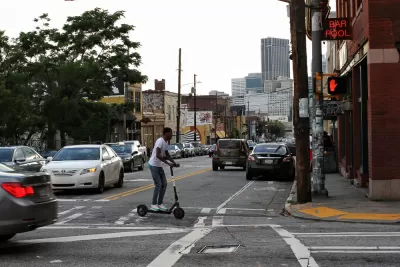
"Atlanta’s local roads now have a default speed limit of 25 miles per hour after the City Council formally adopted the Vision Zero plan on April 20, which focuses on eliminating traffic deaths and reducing crashes and serious injuries," according to an article published by Atlanta Intown.
"The default speed limit applies to any city road without another speed limit expressly posted," according to the article.
The new speed limits are the key component of a Vision Zero plan now approved by the Atlanta City Council. A separate article by David Ederer calls on the city to go beyond the posted speed limits to improve traffic safety in the city, tackling the tougher problem of the design and engineering decisions that enable drivers to choose unsafe speeds in the first place.
Atlanta, while late to the Vision Zero movement, could lead by explicitly designating people walking or rolling as their design user. For too long, Atlanta has prioritized convenience over safety in its transportation system. By beginning with the principle that it will design a transportation system with the most vulnerable as its key users, Atlanta will start on a path to an effective Vision Zero program.
Atlanta Journal-Constitution columnist Bill Torpy is the sole voice from that publication to discuss the new speed limits, in case anyone wants to read barely concealed, car-centric skepticism about the decision.
FULL STORY: Default speed limit lowered to 25 mph on Atlanta roads as part of Vision Zero plan


Chicago Could Join Other Cities in Lowering Speed Limits
Lowering speed limits by just 10 miles per hour can have a major impact on traffic safety.

Banning Right Turns on Red: Lessons From Atlanta
How road safety activists passed a law that could make roads much safer.

Philly Speed Camera Program Cuts Fatalities in Half
Excessive speeding along dangerous segments of Roosevelt Boulevard dropped by 90 percent after the city installed automated enforcement cameras.

Planetizen Federal Action Tracker
A weekly monitor of how Trump’s orders and actions are impacting planners and planning in America.

The state-sanctioned urbicide of Austin
People don’t kill cities. Freeways do.

US to reduce Colorado River water deliveries to Mexico
A new Colorado Treaty amendment reduces Mexico’s Colorado River water allocation by 250,000 acre feet.

5 New England states march closer to 800 megawatt wind energy project
Securing federal approval for the project may be complicated under the Trump administration, which has historically been hostile towards domestic wind power.

Baltimore to break ground on $50 million Transit Priority Project
The project will bring faster bus trips, safer streets and better bike connections to Baltimore.

Airbnb launches $250 million 'last-dollar financing' housing accelerator, makes first investment in Austin
The company will put $6.4 million towards affordable housing development in Texas’ capital.

FREE Course: Walkable City 1: Why Walkability?
After describing his path towards focusing on walkability as the essence of good planning, Jeff Speck marches through his five principal reasons for making more walkable places.
Reinventing Malls: Planning Alchemy—Turning Gray Fields Into Gold
The course focuses on the opportunities and imperatives that shape reinvention of mall sites.

Eagle County Government
Harvard University Graduate School of Design
Nashville Planning Department
The Architects Foundation
University of Cincinnati Online
The Pocatello Development Authority
The Urban Renewal Agency of the City of Pocatello
Journal of the American Planning Association