The number of drive-through testing sites across the country is still low. With continued supply shortages, when and if the situation will change are unclear.


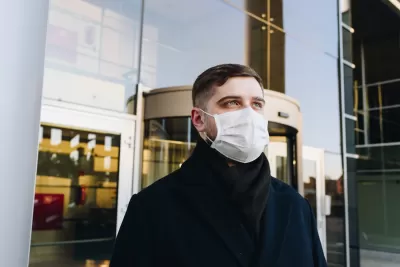
"Drive-thru sites have been opening around the United States to make it quicker and safer to test people for the new coronavirus. But much like the rest of the U.S. response to the pandemic, the system has been marked by inconsistencies, delays, and shortages. Many people who have symptoms and a doctor’s order have waited hours or days for a test," reports Michelle R. Smith.
Smith describes the testing situations in states across the country, where some states have at least a small number of operational drive-through test centers while others are still struggling with staff and supply shortages.
President Trump also stated test centers were coming to retail locations, such as CVS and Walmart, but very few sites are up and running.
"The slow ramp-up of the COVID-19 testing and the spotty nature now of the system makes it hard for public health officials to track the spread of the disease and bring it under control," says Smith.
FULL STORY: Chaos, inconsistency mark launch of drive-thru virus testing

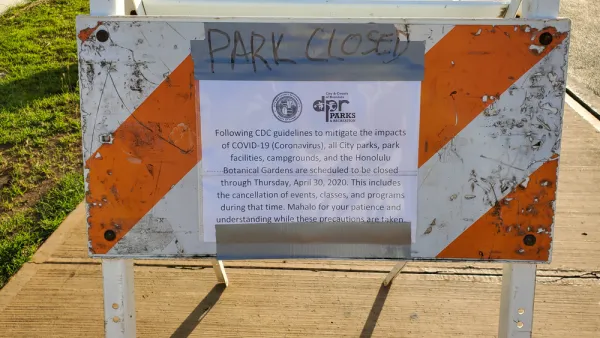
Coronavirus Success: The Unusual Story Behind the State with the Lowest Infection Rate
Like New Zealand, another island has achieved success in reducing viral spread. The ability to quarantine travelers to Hawaii was crucial, but the virus had already arrived. Health professionals played key roles which, at times, led to conflict.
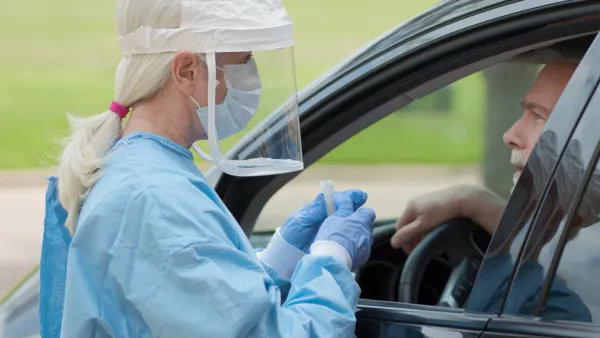
Connecticut Town Rejects Drive-Through COVID-19 Testing Facility
The annals of local control, or, as some would say, NIMBYism, have a new chapter.
Density in the Pandemic Era
High population density is viewed as an environmental benefit in terms of decreasing emissions, particularly from transportation, but from the public health perspective of containing the spread of COVID-19, it might be a significant negative.

Planetizen Federal Action Tracker
A weekly monitor of how Trump’s orders and actions are impacting planners and planning in America.

The state-sanctioned urbicide of Austin
People don’t kill cities. Freeways do.

US to reduce Colorado River water deliveries to Mexico
A new Colorado Treaty amendment reduces Mexico’s Colorado River water allocation by 250,000 acre feet.

Mamdani overhauls NYC's Vision Zero plan with 100 new policy goals
The overhaul aims to reduce traffic deaths and make streets safer for pedestrians, cyclists and drivers through lower speed limits, new safety infrastructure and more.

Amtrak not solely to blame for New Jersey commuter rail's unreliability, report finds
A new study from the Garden State Initiative found that NJ Transit’s budget grew 20% across a 4 year period, but reliability declined significantly over the same period.

EPA erases limits on planet-warming pollution from power plants
Under Monday’s plan, power plants would still have some limits on how much mercury, arsenic and other contaminants they can emit.

FREE Course: Walkable City 1: Why Walkability?
After describing his path towards focusing on walkability as the essence of good planning, Jeff Speck marches through his five principal reasons for making more walkable places.
Reinventing Malls: Planning Alchemy—Turning Gray Fields Into Gold
The course focuses on the opportunities and imperatives that shape reinvention of mall sites.

Eagle County Government
Harvard University Graduate School of Design
Nashville Planning Department
The Architects Foundation
University of Cincinnati Online
The Pocatello Development Authority
The Urban Renewal Agency of the City of Pocatello
Journal of the American Planning Association