The economic fallout of the COVID-19 pandemic has already hit public transit revenues hard, and the concerns of millions of renters around the country about how they'll afford to pay the rent are weighing heavily on the country.


[Update: the text of the Senate version of the bill [pdf], and a summary, have been released [pdf].]
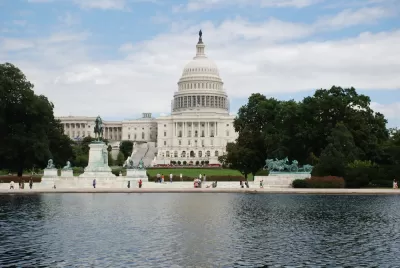
"Senators and Trump administration officials reached an agreement early Wednesday on a sweeping, roughly $2 trillion stimulus measure to send direct payments and jobless benefits to individuals as well as money to states and businesses devastated by the coronavirus pandemic," report Emily Cochrane and Nicholas Fandos.
"Lawmakers and aides were still drafting portions of the bill early Wednesday morning," according to the article, so a text of the bill was not available as of this writing, but initial reports indicate that transit and housing will both receive a sizable infusion of funding in the final version of the bill.
Diane Yentel of the National Low Income Housing Coalition is on Twitter this morning, sharing news about the stimulus package’s funding for housing. According to Yentel, the stimulus bill will include (in addition to other sums of money):
- $4 billion in Emergency Solutions Grants to assist homeless shelters and outreach workers working to reduce risks from the coronavirus for the homeless.
- $5 billion in Community Development Block Grants, which can be used for rental assistance.
- $685 million for public housing.
- $1.25 billion in Tenant-Based Rental Assistance [pdf].
- $1 Billion in Project-Based Rental Assistance [pdf].
Yonah Freemark, a transportation researcher at MIT who also runs The Transport Politic website, is also on Twitter this morning mining the available information about the stimulus bill for details on transit for beleaguered public transit systems.
According to Freemark, the bill includes $25 billion for public transit agencies, including funding for operations. The bill almost triples annual spending on transit from the federal government, and provides a huge infusion of dollars for transit operations, according to Freemark, "which have been mostly off-limits for federal transit funding for years."
Calyton Guse, New York Daily News transit report, is also on Twitter reporting details of the bill specific to public transit in New York. In total, the state of New York will receive $4.35 billion for transit, including $3.8 billion just for the MTA.
The MTA had asked Congress for $4 billion in funding last week, and the American Public Transportation Association (APTA) asked for $12.5 billion for all transit agencies, so the final stimulus bill, expected to pass later today, increased the funding on both those requests.
Planetizen will continue to update this story as more details emerge.
FULL STORY: Congress and White House Strike Deal for $2 Trillion Stimulus Package

How $30 Billion in Stimulus Funding Would Change the Equation for Transit Agencies
The funding in the draft stimulus funding package making its way through Congress falls short of the total requested by the American Public Transportation Association, but would go a long way to helping transit agencies weather the pandemic.
What's in the New Economic Stimulus Package for U.S. Transit Agencies
A new economic stimulus package that appears headed for approval as of this writing will give $15 billion to public transit, far less than transit advocates had hoped, but far better than nothing.
Amtrak in Dire Financial Straits, Seeking More Federal Relief Funding
Amtrak officials say they need $4.9 billion in funding to prevent service and job losses.

Planetizen Federal Action Tracker
A weekly monitor of how Trump’s orders and actions are impacting planners and planning in America.

The state-sanctioned urbicide of Austin
People don’t kill cities. Freeways do.

US to reduce Colorado River water deliveries to Mexico
A new Colorado Treaty amendment reduces Mexico’s Colorado River water allocation by 250,000 acre feet.

5 New England states march closer to 800 megawatt wind energy project
Securing federal approval for the project may be complicated under the Trump administration, which has historically been hostile towards domestic wind power.

Baltimore to break ground on $50 million Transit Priority Project
The project will bring faster bus trips, safer streets and better bike connections to Baltimore.

Airbnb launches $250 million 'last-dollar financing' housing accelerator, makes first investment in Austin
The company will put $6.4 million towards affordable housing development in Texas’ capital.

FREE Course: Walkable City 1: Why Walkability?
After describing his path towards focusing on walkability as the essence of good planning, Jeff Speck marches through his five principal reasons for making more walkable places.
Reinventing Malls: Planning Alchemy—Turning Gray Fields Into Gold
The course focuses on the opportunities and imperatives that shape reinvention of mall sites.

Eagle County Government
Harvard University Graduate School of Design
Nashville Planning Department
The Architects Foundation
University of Cincinnati Online
The Pocatello Development Authority
The Urban Renewal Agency of the City of Pocatello
Journal of the American Planning Association