The massive Port Lands infrastructure project will transform an industrial area by carving out a new island.


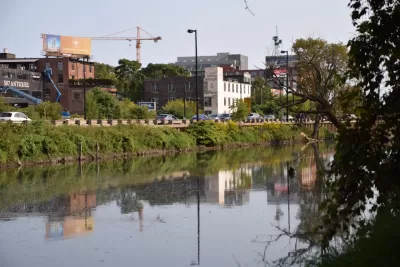
Kenyon Wallace takes a closer look at the Port Lands Flood Protection Project, a $1.25 billion project to naturalize the Don River pathway and help with flood control through construction of a river valley that will result in an island at the river’s mouth.
"The Port Lands, located south of Lake Shore Boulevard between Leslie Street in the east and Cherry Street in the west, are a primarily industrial and commercial neighbourhood built on landfill that was once home to oil tank farms, factories and a city incinerator," writes Wallace.
He describes the different phases of the project in more detail, including the excavation of the river valley, treatment of groundwater, and landscaping along the edge of the river. The entire area will also be raised and will undergo soil stabilization.
"The new island, named Villiers Island, will feature parklands, walking and biking trails, and residential and commercial real estate (not to mention great views of the city skyline). It will also feature the only natural shoreline within the inner harbour, allowing for easy entry into Lake Ontario with canoes and kayaks," says Wallace.
FULL STORY: How do you build an island in Toronto?

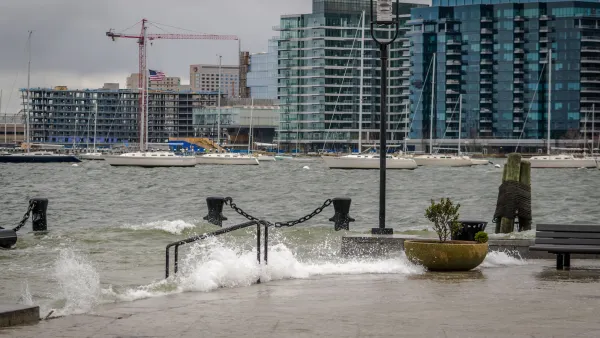
Boston releases draft $10B flood prevention plan
The joint effort with the U.S. Army Corps of Engineers outlines multiple strategies for protecting the city's most vulnerable neighborhoods from sea level rise.
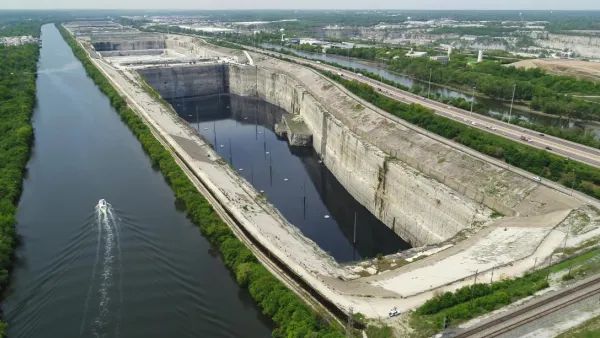
Chicago's underground flood control system is almost full
The system known as Deep Tunnel has never filled much more than halfway, but the cumulative effect of recent rains is putting suburban communities at risk of flooding.
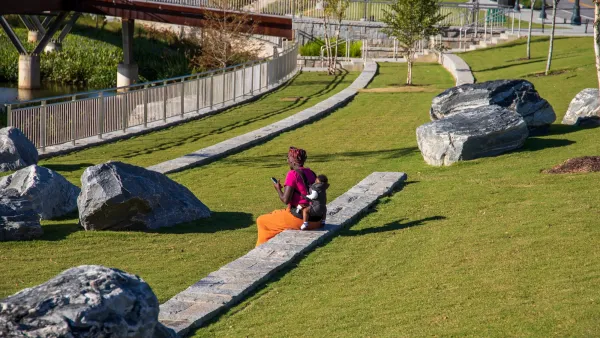
Atlanta Flood Prevention Efforts are Causing ‘Climate Gentrification’ in its Black Communities
New infrastructure in neighborhoods that have borne the brunt of seasonal floods is making them safer — and more expensive.

Planetizen Federal Action Tracker
A weekly monitor of how Trump’s orders and actions are impacting planners and planning in America.

The state-sanctioned urbicide of Austin
People don’t kill cities. Freeways do.

US to reduce Colorado River water deliveries to Mexico
A new Colorado Treaty amendment reduces Mexico’s Colorado River water allocation by 250,000 acre feet.

5 New England states march closer to 800 megawatt wind energy project
Securing federal approval for the project may be complicated under the Trump administration, which has historically been hostile towards domestic wind power.

Baltimore to break ground on $50 million Transit Priority Project
The project will bring faster bus trips, safer streets and better bike connections to Baltimore.

Airbnb launches $250 million 'last-dollar financing' housing accelerator, makes first investment in Austin
The company will put $6.4 million towards affordable housing development in Texas’ capital.

FREE Course: Walkable City 1: Why Walkability?
After describing his path towards focusing on walkability as the essence of good planning, Jeff Speck marches through his five principal reasons for making more walkable places.
Reinventing Malls: Planning Alchemy—Turning Gray Fields Into Gold
The course focuses on the opportunities and imperatives that shape reinvention of mall sites.

Eagle County Government
Harvard University Graduate School of Design
Nashville Planning Department
The Architects Foundation
University of Cincinnati Online
The Pocatello Development Authority
The Urban Renewal Agency of the City of Pocatello
Journal of the American Planning Association