States in the Lower Basin of the Colorado River will contribute more water in order to keep reservoirs from reaching critically low levels.


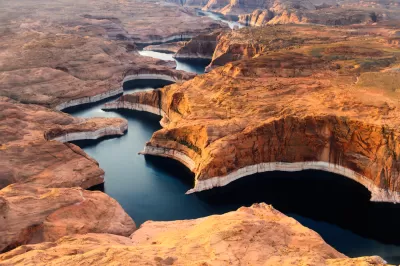
"Arizona, Nevada and Mexico will start taking less water from the Colorado River in January as a hard-fought set of agreements kicks in to reduce the risk of reservoirs falling to critically low levels," reports Ian James. The Lower Basin agreement also means California will contribute water to Lake Mead if reservoir levels drop below a certain point.
This agreement, as well as Upper Basin plans and an additional accord with Mexico, is part of an effort to keep reservoir levels sustained for the next seven years. The effects of chronic overuse in past decades and years of drought are now being exacerbated by climate change, and the drought contingency plans are an attempt to get out ahead of the problem.
"Water managers and supporters of the latest Colorado River deal have called it a ‘bridge solution’ to get the region through 2026, by which time new guidelines for managing shortages are supposed to be in place," says James.
Read the full story: Water cutbacks set to begin under deal designed to ‘buy down risk’ on Colorado River

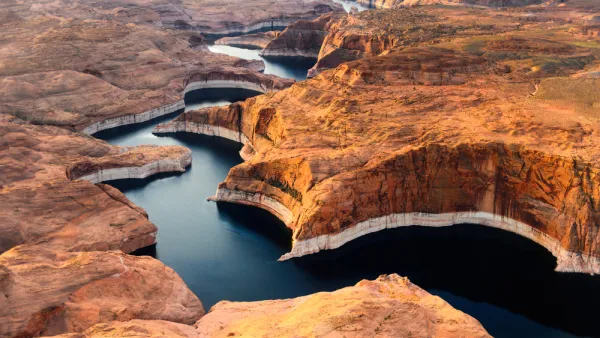
States Agree to Drastic Water Cuts From Colorado River
In the throes of a historic megadrought, three Southwestern states will make deep reductions in their water usage to preserve diminishing resources.
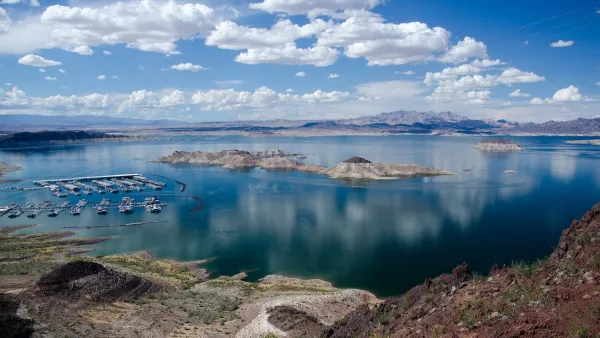
Colorado River States Inch Closer to Agreement
Upper Basin and Lower Basin states each say their plan for conserving the Colorado River’s water is the most sustainable.
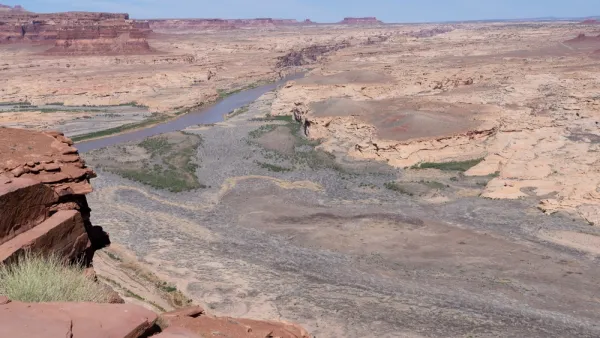
Federal Program Provides Direct Payments for Colorado River Water Conservation
A water buyback program will pay farmers who reduce their water use in an effort to sustain the West’s reservoirs, which are at historically low levels.

Planetizen Federal Action Tracker
A weekly monitor of how Trump’s orders and actions are impacting planners and planning in America.

California plans to bury El Niño’s downpour
If the state plays its cards right, it may be able to store a billion acre-feet of El Niño’s water in aquifers.

Chicago breaks ground on $3 billion megadevelopment
The new neighborhood, titled Foundry Park, will one day host 3,700 residences.

Satanic Place Names
From streams and lakes to valleys and canyons, I mapped more than 1,000 places named after the Devil.

California High-Speed Rail Authority CEO resigns after $600,000 scandal
Under Ian Choudri, the authority used taxpayer dollars to fund first class flights and trips to nightclubs.

Want to study the Missouri River? Soon, you may need unanimous approval from 10 states
Legislation would require 10 governors’ permission to study or build projects moving water outside the basin.

FREE Course: Walkable City 1: Why Walkability?
After describing his path towards focusing on walkability as the essence of good planning, Jeff Speck marches through his five principal reasons for making more walkable places.
Reinventing Malls: Planning Alchemy—Turning Gray Fields Into Gold
The course focuses on the opportunities and imperatives that shape reinvention of mall sites.

City of Rosemead
Rutgers University, Edward J. Bloustein School of Planning and Public Policy
One Hundred Miles
Hunter College, City University of New York (CUNY)
The Architects Foundation
University of Cincinnati Online
City of Cambridge
Montrose County
The Pocatello Development Authority