A California cooperative brings together investors to make homeownership more accessible and finance housing projects that help to slow gentrification.


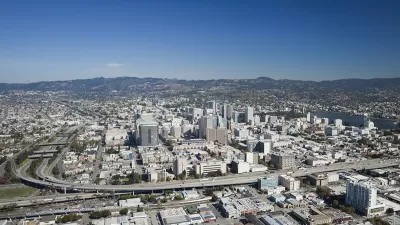
Oscar Perry Abello looks at the East Bay Permanent Real Estate Cooperative, an organization in the San Francisco Bay Area that facilitates purchase and shared ownership of properties for low- and moderate-income households. With funding from investors, the cooperative is pursuing affordable housing projects while also promoting a vision and goals that differ from those of conventional real estate development ventures.
"The cooperative sees its work as an attempt to demystify the entire process of real estate — securing properties for acquisition, assembling capital stacks, and managing properties for the long-term — so that community organizers everywhere, of every marginalized group, can bring in communities to participate as an active player in their own development instead of just being passive recipients or victims of displacement," says Abello.
One feature that distinguishes the cooperative, he says, is the fact that investors do not have to be residents of the properties. "In some ways EB PREC resembles the savings-and-loan associations of yesteryear, where neighbors invested into a communal pot of money that they took turns borrowing from in order to support each other’s acquisition of property," notes Abello.
FULL STORY: A New Kind of Cooperative in Oakland Fights Against Speculative Development

Community Gardens as Harbingers of Gentrification
Lauren Markham examines the value of community gardens to the bottom lines of developers—because one person's blighted back yard can easily become another person's veggie garden marketing pitch.
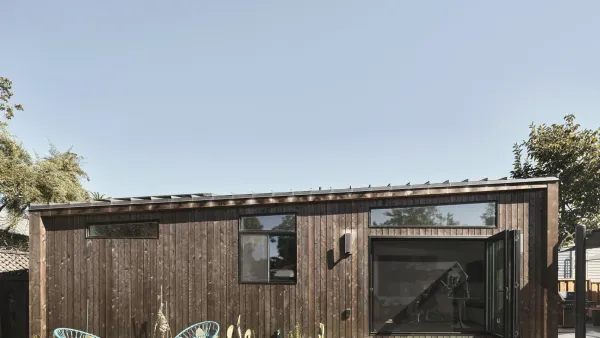
A Tour of East Bay ADUs
Now that cities and states are recognizing the potential of middle-density zoning, builders and homeowners are getting creative with Accessory Dwelling Unit designs that minimize costs and maximize comfort.
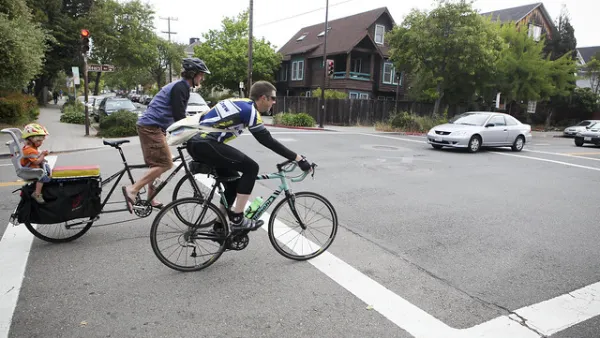
City to Bicyclists: Berkeley Not in Idaho
Berkeley, California might have a reputation of a very progressive city, but when it comes to cycling, it appears to have little tolerance for cyclists who roll through stop signs. Police are justifying the crackdown on the terms of a state grant.

Planetizen Federal Action Tracker
A weekly monitor of how Trump’s orders and actions are impacting planners and planning in America.

The state-sanctioned urbicide of Austin
People don’t kill cities. Freeways do.

US to reduce Colorado River water deliveries to Mexico
A new Colorado Treaty amendment reduces Mexico’s Colorado River water allocation by 250,000 acre feet.

5 New England states march closer to 800 megawatt wind energy project
Securing federal approval for the project may be complicated under the Trump administration, which has historically been hostile towards domestic wind power.

Baltimore to break ground on $50 million Transit Priority Project
The project will bring faster bus trips, safer streets and better bike connections to Baltimore.

Airbnb launches $250 million 'last-dollar financing' housing accelerator, makes first investment in Austin
The company will put $6.4 million towards affordable housing development in Texas’ capital.

FREE Course: Walkable City 1: Why Walkability?
After describing his path towards focusing on walkability as the essence of good planning, Jeff Speck marches through his five principal reasons for making more walkable places.
Reinventing Malls: Planning Alchemy—Turning Gray Fields Into Gold
The course focuses on the opportunities and imperatives that shape reinvention of mall sites.

Eagle County Government
Harvard University Graduate School of Design
Nashville Planning Department
The Architects Foundation
University of Cincinnati Online
The Pocatello Development Authority
The Urban Renewal Agency of the City of Pocatello
Journal of the American Planning Association