More and more, cities are seeing little-used highways as a chance to reverse the planning decisions of the 20th century and provide more housing and economic opportunities.


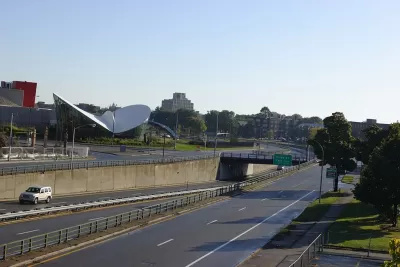
David Harrison writes of efforts of numerous cities around the country to remove highway lanes, rather than construct new lanes:
In Rochester and several other American cities, some of the biggest highway infrastructure projects under consideration involve demolition rather than construction. Removals are being considered for stretches of highway in Detroit, Tampa, Fla., Baltimore and elsewhere. They are following in the footsteps of cities such as Portland, Ore., Milwaukee and Chattanooga, Tenn., all of which have removed highways.
Harrison launches this examination of the highway removal trend with the example of Rochester, summarizing the success of an effort to build a neighborhood in place of the Inner Loop in economic development terms: "$229 million in new investment, including 519 homes and 45,000 square feet of commercial space."
The article includes a description of the history of the kinds of highways, some a part of the country's Interstate highway system, now being removed in these cities. Harrison also notes the destructive history of highway planning on predominantly African-American neighborhoods.
FULL STORY: Highways Give Way to Homes as Cities Rebuild

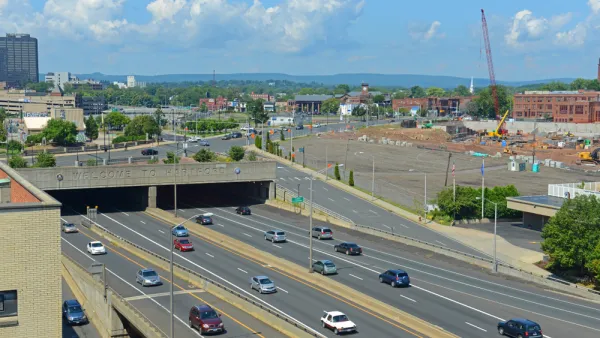
Undoing the Destructive Legacy of Hartford's Interstates
A new plan would spend an estimated $17 billion to remove a huge chunk of the Interstate Highway System's footprint in Hartford, Connecticut.

Dead End: Nine Highways Ready for Retirement
The Freeways Without Futures report describes the nation’s most promising highway removal proposals.
Rochester Approves Tenant Protections
The city adopted the strictest possible version of New York state’s ‘Good Cause’ eviction protections, which cap rent increases at 10 percent.

Planetizen Federal Action Tracker
A weekly monitor of how Trump’s orders and actions are impacting planners and planning in America.

The state-sanctioned urbicide of Austin
People don’t kill cities. Freeways do.

US to reduce Colorado River water deliveries to Mexico
A new Colorado Treaty amendment reduces Mexico’s Colorado River water allocation by 250,000 acre feet.

Colorado’s Largest Data Center Could Rise Next to Homes — Without a Public Hearing
The proposed campus would consume 11 times the power of Denver International Airport; as it has across the country, opposition mounts.

5 New England states march closer to 800 megawatt wind energy project
Securing federal approval for the project may be complicated under the Trump administration, which has historically been hostile towards domestic wind power.

Baltimore to break ground on $50 million Transit Priority Project
The project will bring faster bus trips, safer streets and better bike connections to Baltimore.

FREE Course: Walkable City 1: Why Walkability?
After describing his path towards focusing on walkability as the essence of good planning, Jeff Speck marches through his five principal reasons for making more walkable places.
Reinventing Malls: Planning Alchemy—Turning Gray Fields Into Gold
The course focuses on the opportunities and imperatives that shape reinvention of mall sites.


Eagle County Government
Harvard University Graduate School of Design
Nashville Planning Department
The Architects Foundation
University of Cincinnati Online
The Pocatello Development Authority
The Urban Renewal Agency of the City of Pocatello
Journal of the American Planning Association