While much attention is focused on new technologies, the potential of existing transportation modes has never been fully realized.


"The tools we need to change transportation are right there in front of us," writes Henry Grabar. He argues that it is not the new, flashy technological innovations and visions—the hyperloops and self-driving cars—that are going to improve mobility. Instead, revisiting the technologies we already have, such as elevators and bikes, are what will truly transform the world.
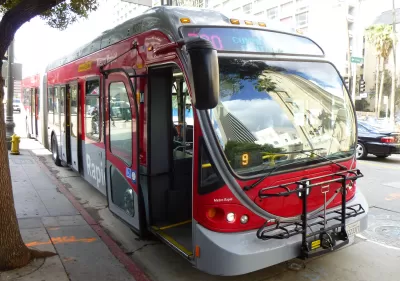
"The bus is another overlooked piece of technology that could do far more. In most American cities, buses are hard to depend on because they run infrequently, slowly, and often on routes that are holdovers from streetcar systems abandoned decades ago. Give a bus its own lane, its own route, its own authority over signals, and it can permit car-free land use to flourish alongside," urges Grabar.
The issue ultimately is about cities designed for and prioritizing cars and driving. "Even here, in a nation of unprecedented personal wealth and plentiful land, the car-centric system has pushed up against the limitations of space, proving expensive to maintain and impossible to scale," says Grabar.
Read the full story: The Hyperloop and the Self-Driving Car Are Not the Future of Transportation

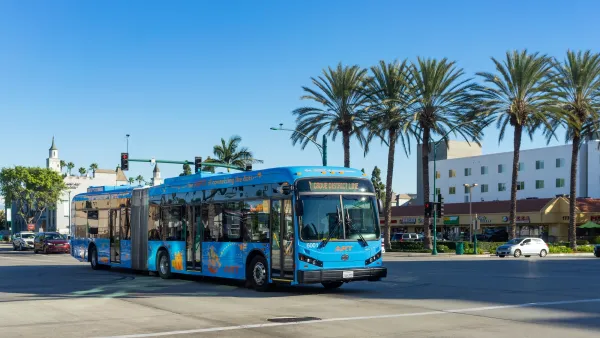
Anaheim Transit to Shut Down March 31 After City Declines to Take Over
The service offered free rides to residents employed by local businesses, serving key destinations like Disneyland.
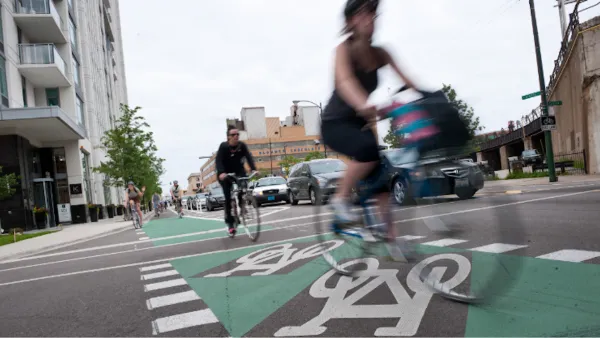
Growing up Car-Free in Chicago
One Chicago youth recounts their experience growing up in a car-free household.
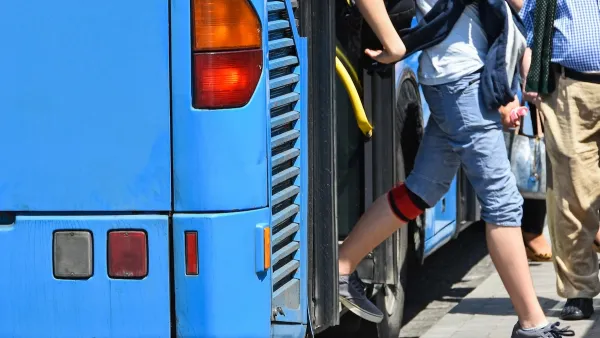
Opinion: Make Buses More Like Sidewalks
Sidewalks are an intuitive, low-cost, and easily accessible mobility tool. Can local buses function in the same way?

Planetizen Federal Action Tracker
A weekly monitor of how Trump’s orders and actions are impacting planners and planning in America.

The state-sanctioned urbicide of Austin
People don’t kill cities. Freeways do.

Colorado’s Largest Data Center Could Rise Next to Homes — Without a Public Hearing
The proposed campus would consume 11 times the power of Denver International Airport; as it has across the country, opposition mounts.

Nation's most wind-powered state turns to coal as data centers increase energy demand
For the first time in decades, Iowa has increased its generation of coal power.

NYC cools commuters with city's first rain garden above a bus stop
New York City officials say the plants in the rain garden can absorb 16 gallons of rainwater during heavy storms.

Brightline West’s future may rely on $6 billion federal loan
The company has until Nov. 2 to make a $400 million equity investment into its proposed high-speed rail line.

FREE Course: Walkable City 1: Why Walkability?
After describing his path towards focusing on walkability as the essence of good planning, Jeff Speck marches through his five principal reasons for making more walkable places.
Reinventing Malls: Planning Alchemy—Turning Gray Fields Into Gold
The course focuses on the opportunities and imperatives that shape reinvention of mall sites.

Greater Baltimore Committee
Eagle County Government
Harvard University Graduate School of Design
The Architects Foundation
University of Cincinnati Online
The Pocatello Development Authority
The Urban Renewal Agency of the City of Pocatello
Journal of the American Planning Association