"Member deference" is what they call it New York, but many local elected officials in the United States have veto power over land use and development plans.



An opinion piece by Alec Schierenbeck calls for an end to the councilmember's land use veto in New York City.
"Under the City Council’s longstanding practice of 'member deference,' Council approval of any land-use change — like allowing affordable housing on a lot zoned for parking — turns on the opinion of the local member," according to Schierenbeck's explanation of the practice.
The inspiration for the argument behind this post comes from a decision by Councilmember Jimmy Van Bramer, who represents the Sunnyside neighborhood in Queens, to kill a proposal that would develop a parking lot in the neighborhood into 100 percent affordable apartments.
That's a shame, according to Schierenbeck, in the midst of a housing affordability crisis. The writer calls for an end to the land use veto in New York: "But we can, and should, end a City Council practice that ensures the narrow preferences of each member control all of the Council’s power over land use. Because the forces behind rising rents, gentrification, and homelessness don’t stop at Council district lines, our solutions can’t either.
The idea seemed to win critical political support when Council Speaker Core Johnson entered the position in 2018, but during that time Schierenbeck doesn't see any change.
FULL STORY: End the Council’s land-use veto: The path to a more affordable, fairer New York

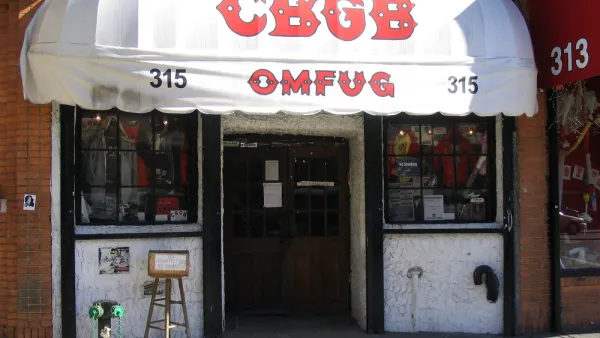
Opinion: Lower Rents Will Give Downtown Spaces Back to the ‘Weirdos’
Introducing the “CBGB theory of city planning.”

San Francisco Plans for 82,000 New Housing Units
California housing regulators have granted preliminary approval for the city of San Francisco’s housing element as mandated by the state’s Regional Housing Needs Allocation process.
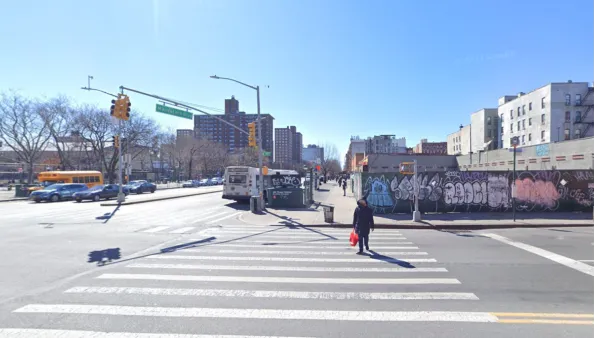
Harlem Apartment Project Nixed in Favor of Truck Depot
After a proposal for a mixed-use development failed to gain support from a local city councilmember, the developer turned the site into a truck storage depot, prompting concerns over air quality and health impacts.

Planetizen Federal Action Tracker
A weekly monitor of how Trump’s orders and actions are impacting planners and planning in America.

The state-sanctioned urbicide of Austin
People don’t kill cities. Freeways do.

US to reduce Colorado River water deliveries to Mexico
A new Colorado Treaty amendment reduces Mexico’s Colorado River water allocation by 250,000 acre feet.

5 New England states march closer to 800 megawatt wind energy project
Securing federal approval for the project may be complicated under the Trump administration, which has historically been hostile towards domestic wind power.

Baltimore to break ground on $50 million Transit Priority Project
The project will bring faster bus trips, safer streets and better bike connections to Baltimore.

Airbnb launches $250 million 'last-dollar financing' housing accelerator, makes first investment in Austin
The company will put $6.4 million towards affordable housing development in Texas’ capital.

FREE Course: Walkable City 1: Why Walkability?
After describing his path towards focusing on walkability as the essence of good planning, Jeff Speck marches through his five principal reasons for making more walkable places.
Reinventing Malls: Planning Alchemy—Turning Gray Fields Into Gold
The course focuses on the opportunities and imperatives that shape reinvention of mall sites.

Eagle County Government
Harvard University Graduate School of Design
Nashville Planning Department
The Architects Foundation
University of Cincinnati Online
The Pocatello Development Authority
The Urban Renewal Agency of the City of Pocatello
Journal of the American Planning Association