Although electric scooter rental companies won't confirm the reasoning behind price increases for scooter rides in the Washington, D.C. region, it's likely the same story will be repeated in other regions as well.


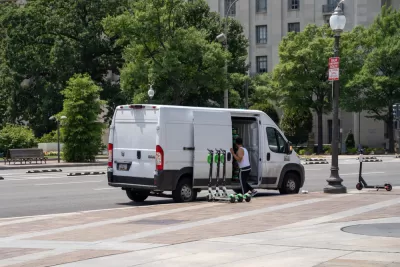
Luz Lazo reports on a new era in the still very young history of electric scooter rentals:
Scooter companies operating in the Washington region have raised their rental prices, dropping the introductory 15-cents-per-minute rides that were widely appealing in exchange for per-minute charges that range from 24 cents to 39 cents, depending on the company. That’s in addition to the $1 unlocking fee some charge. Experts predict prices may go even higher as companies face more fees from cities and increasing pressure to turn a profit.
According to Lazo, all of the scooter rentals companies operating in the District offer programs to discount the costs of rides for low-income users.
"But some riders say the new prices can be comparable to taking Uber Pool and much higher than taking the bus, which costs $2. A 20-minute ride on Bird runs nearly $8.80, plus tax; the same ride is $5, plus tax, on a Jump scooter, the cheapest option," according to Lazo.
Experts cited in the article say the increasing prices are unsurprising given the costs imposed by regulations designed to mitigate the negative effects of the sudden proliferation of electric scooters in the public realm.
Read the full story: That scooter ride is going to cost you a lot more

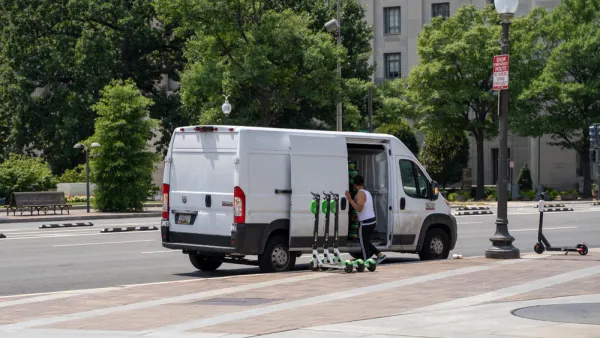
The Culling: Four Fewer Scooter Companies Allowed to Operate in D.C.
A controversial evaluation process has produced a final verdict, and four scooter companies are no longer welcome on the streets of the nation's capital.
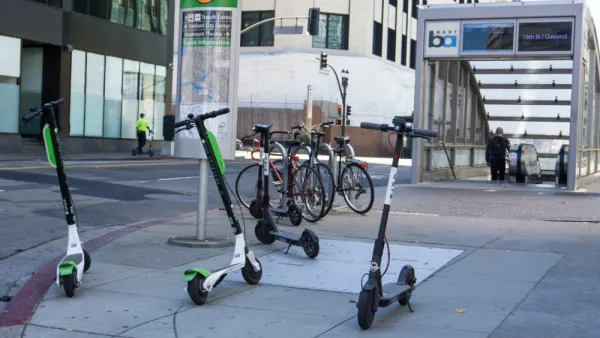
How E-Scooters Can Complement Public Transit
With some strategic planning on the part of transit agencies and operators, shared e-scooters can be an important ally in the fight against car dependence.
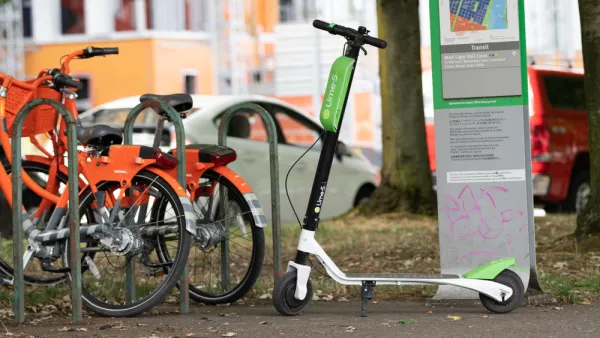
The State of the Micromobility Industry
The North American Bikeshare Association released the first-ever state of the industry report for active forms of micromobility—i.e., bike share and electric scooter rental companies.

Planetizen Federal Action Tracker
A weekly monitor of how Trump’s orders and actions are impacting planners and planning in America.

The state-sanctioned urbicide of Austin
People don’t kill cities. Freeways do.

US to reduce Colorado River water deliveries to Mexico
A new Colorado Treaty amendment reduces Mexico’s Colorado River water allocation by 250,000 acre feet.

Nation's most wind-powered state turns to coal as data centers increase energy demand
For the first time in decades, Iowa has increased its generation of coal power.

NYC cools commuters with city's first rain garden above a bus stop
New York City officials say the plants in the rain garden can absorb 16 gallons of rainwater during heavy storms.

Brightline West’s future may rely on $6 billion federal loan
The company has until Nov. 2 to make a $400 million equity investment into its proposed high-speed rail line.

FREE Course: Walkable City 1: Why Walkability?
After describing his path towards focusing on walkability as the essence of good planning, Jeff Speck marches through his five principal reasons for making more walkable places.
Reinventing Malls: Planning Alchemy—Turning Gray Fields Into Gold
The course focuses on the opportunities and imperatives that shape reinvention of mall sites.

Greater Baltimore Committee
Eagle County Government
Harvard University Graduate School of Design
The Architects Foundation
University of Cincinnati Online
The Pocatello Development Authority
The Urban Renewal Agency of the City of Pocatello
Journal of the American Planning Association