How to make Microtransit work. Hint: it's about coverage, not ridership.


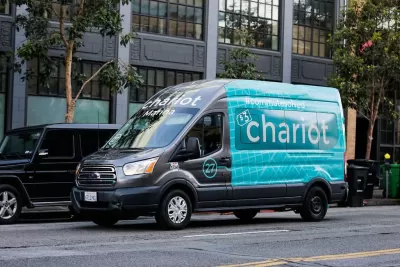
Jarrett Walker writes to explain the pragmatic details of microtransit (which the Human Transit author and consultant prefers to call Flexible Transit, as revealed early in the article).
"Flexible transit means any transit service where the route vary [sic] according to who requests it," according to Walker. That means "the common terms demand responsive transit, on-demand transit and 'microtransit' mean the same thing."
So how should communities and transit agencies make flexible transit work as part of a publicly funded transit network? That is, how should transit agencies taxpayers are getting their money's worth when they devote public dollars to flexible transit operations? One of Walker's main assertions might surprise: "flexible transit makes sense only if ridership is not the primary goal of a service."Transit systems balance competing needs of ridership and coverage, according to Walker, and flexible transit is devoted to the latter.
Last year, Walker wrote a series on Microtransit devoted to dispelling notions derived from the novelty of the concept and to cautioning transit agencies from sinking too many resources into the new technologies promising to change the nature of transit.
Read the full story: What is “Microtransit” For?
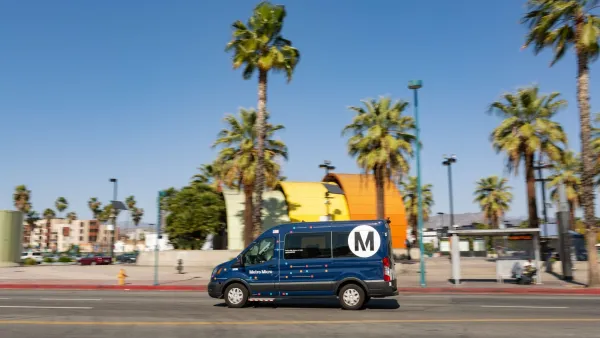
It's a Bus! It's a Van! It's… Microtransit?
Microtransit is in vogue. Cultivating a strong understanding for what it can and can't do will help prevent you from getting rizzed up by this charismatic mode of transportation.
Poor Returns for L.A.'s Transit on Demand Pilot
Similar to microtransit on demand programs in other cities, Los Angeles' ongoing experiment is proving to be very expensive (for the public) for the benefit of very few riders.
L.A. Metro Jumps Into the Ridesharing Business
The Los Angeles County metropolitan Transportation Authority announced the launch of a one-year pilot program for on demand ridesharing, otherwise known as microtransit.

Planetizen Federal Action Tracker
A weekly monitor of how Trump’s orders and actions are impacting planners and planning in America.

Eastern Nebraska is running out of electricity
Data centers and electrification are straining eastern Nebraska’s grid, throttling economic development.

Study reveals best places in the U.S. for cycling, walking
New research from Streetlight Data examines bicycle and pedestrian miles per capita in the 100 largest U.S. cities by population.

Instead of building new housing, LA developers are turning mansions into mega-mansions
In the richest areas, the number of houses valued at $30 million with demolition permits has skyrocketed since 2018.

Illinois considers spending $1 billion in taxpayer money on data center
A quantum computing campus and data center are currently under construction in Chicago.

As development costs rise, Boston moves to lessen affordable housing requirements
The Boston Zoning Commission and the City Council still need to approve Boston Mayor Michelle Wu’s proposed changes

FREE Course: Walkable City 1: Why Walkability?
After describing his path towards focusing on walkability as the essence of good planning, Jeff Speck marches through his five principal reasons for making more walkable places.
Reinventing Malls: Planning Alchemy—Turning Gray Fields Into Gold
The course focuses on the opportunities and imperatives that shape reinvention of mall sites.


City of Charlotte
City of Rosemead
Rutgers University, Edward J. Bloustein School of Planning and Public Policy
University of Michigan School for Environment and Sustainability (SEAS)
Hunter College, City University of New York (CUNY)
The Architects Foundation
City of Cambridge
The Pocatello Development Authority
The Urban Renewal Agency of the City of Pocatello