Cities in flyover country are facing new redevelopment challenges as companies relocate from costly coastal cities. In St. Louis, downtown revitalization has also brought plans to tackle blight, and the consequences for residents could be immense.


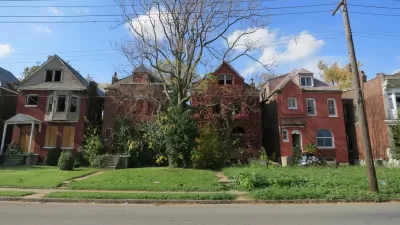
Michael R. Allen writes that the tech company Square has plans to expand its St. Louis hub, part of what the city is heralding as a successful reinvigoration of downtown.
Square founder Jack Dorsey also has plans to clear blight in the city’s neighborhoods through a private company called the St. Louis Blight Authority, says Allen:
The government is off the hook, and the city reduces its sizable number of vacant houses. But all of the demolitions that [Jack] Dorsey and [Bill] Pulte are funding are on the city’s north side, while at the same time, the city is funneling millions in tax incentives into development elsewhere. The effect of St. Louis' efforts will increase the value of central city neighborhoods while demolishing and depreciating the north side.
Allen points out that other blight-reduction projects in the past have resulted in the destruction of poorer communities of color on the north side of St. Louis, rather than improvement and stabilization. He argues that the city lacks an effective plan to ensure this latest strategy does not negatively impact the most vulnerable St. Louis residents.
"Imagine if the city had secured a fund from Dorsey and Pulte to create micro-grants for small business startups—or home repair dollars—in the same north city neighborhood. Imagine if St. Louis and Detroit counted progress in some other way than number of vacant buildings demolished and number of downtown jobs added this year," says Allen.
FULL STORY: Downtown St. Louis Is Rising; Black St. Louis Is Being Razed

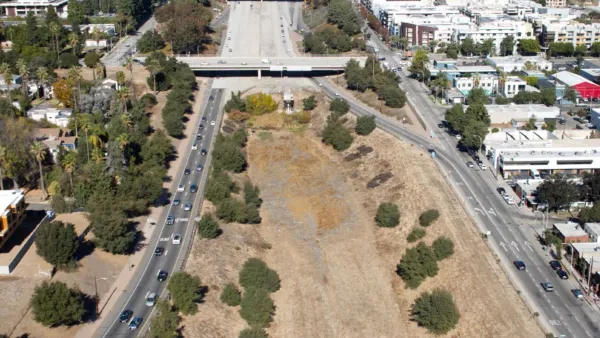
Pasadena approves plan for 710 Stub but tables Restorative Justice elements
A never-built freeway that displaced hundreds of residents in the 1970s has left a 50-acre scar that may finally see redevelopment.
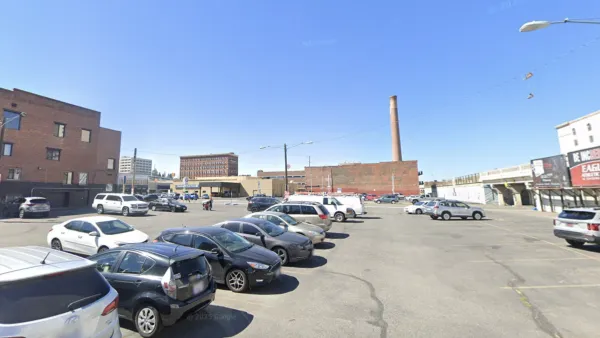
Spokane Could Tax Parking Lots 12% to Increase Development
A proposal before the city council would tax surface parking lots in an effort to boost infill development.

San Francisco Mayor’s ‘Family Zoning’ Plan Faces Pushback, Displacement Concerns
Newly proposed legislation aims to protect long-term tenants from displacement caused by Mayor Lurie’s proposed zoning reform plan, which would allow for more housing construction in parts of the city.

Planetizen Federal Action Tracker
A weekly monitor of how Trump’s orders and actions are impacting planners and planning in America.

The state-sanctioned urbicide of Austin
People don’t kill cities. Freeways do.

US to reduce Colorado River water deliveries to Mexico
A new Colorado Treaty amendment reduces Mexico’s Colorado River water allocation by 250,000 acre feet.

5 New England states march closer to 800 megawatt wind energy project
Securing federal approval for the project may be complicated under the Trump administration, which has historically been hostile towards domestic wind power.

Baltimore to break ground on $50 million Transit Priority Project
The project will bring faster bus trips, safer streets and better bike connections to Baltimore.

Airbnb launches $250 million 'last-dollar financing' housing accelerator, makes first investment in Austin
The company will put $6.4 million towards affordable housing development in Texas’ capital.

FREE Course: Walkable City 1: Why Walkability?
After describing his path towards focusing on walkability as the essence of good planning, Jeff Speck marches through his five principal reasons for making more walkable places.
Reinventing Malls: Planning Alchemy—Turning Gray Fields Into Gold
The course focuses on the opportunities and imperatives that shape reinvention of mall sites.

Eagle County Government
Harvard University Graduate School of Design
Nashville Planning Department
The Architects Foundation
University of Cincinnati Online
The Pocatello Development Authority
The Urban Renewal Agency of the City of Pocatello
Journal of the American Planning Association