The country of Estonia is seeking more details on a plan to build the world's longest undersea rail tunnel between Helsinki and Tallinn.


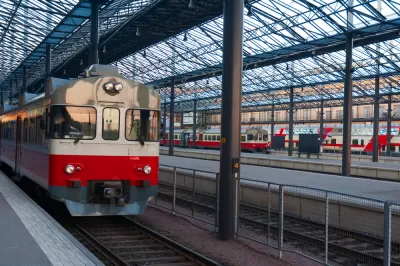
A Baltic Sea rail tunnel planned to link Helsinki, Finland to Tallinn, Estonia, has his a snag, reports Ott Ummelas. If completed, the tunnel would become the largest undersea tunnel in the world.
"Financing of 15 billion euros ($16.8 billion) was agreed this year for the tunnel to link Finland and Estonia. But the Baltic nation of 1.3 million people wants more details on that funding, the business plan behind the idea and Finland’s role before giving the green light," according to Ummelas.
As for the planning and engineering details of the plan, Ummelas provides the following details: "The tunnel between Helsinki and Tallinn would span more than 100 kilometers (62 miles) and entails construction of at least one artificial island."
And for a bit of trivia that might come in handy someday, here's a detail about how the project idea got its start: "The project was founded by Finnish entrepreneur Peter Vesterbacka, formerly of Rovio Entertainment Oyj, which developed the Angry Birds video game."
Read the full story: World’s Longest Undersea Rail Tunnel Hits First Obstacle

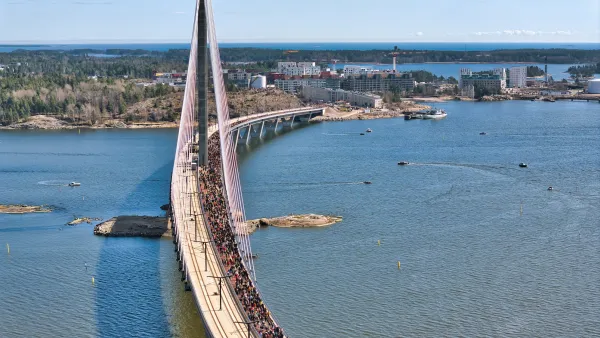
Finland opens world's longest multimodal, car-free bridge
The last of three new Crown Bridges connects island suburbs with Helsinki's city center via walking and biking paths and a light rail system.
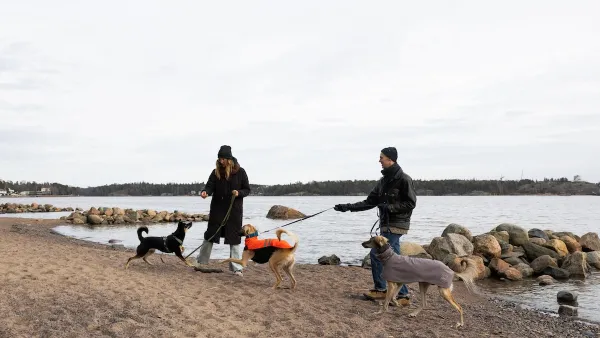
Sunday Smile: Helsinki Opens Sightseeing Route for Dogs
The Finnish capital is one of the world's most dog-friendly cities, with over 90 dedicated dog parks.
Finland Special: Snow As Traffic Calming Device
Very snowy holiday greetings from Finland, everyone! While here visiting my in-laws and friends, I wanted to take a quick moment and share an interesting observation about the way Finns handle the incessant layers of snow that blanket their chilly winter country. It seems that aside from limited access highways and some primary arterials, the Finnish standard for snow treatment is to plow to a reasonable depth, but not worry too much about an inch or two of snow base layer covering streets. Some streets get sand treatment as well, but salt is used very, very sparingly.

Planetizen Federal Action Tracker
A weekly monitor of how Trump’s orders and actions are impacting planners and planning in America.

California plans to bury El Niño’s downpour
If the state plays its cards right, it may be able to store a billion acre-feet of El Niño’s water in aquifers.

Desperate measures: Advocates weigh draining Lake Powell to fill Colorado River
Draining the reservoir could reduce evaporation losses by a couple hundred thousand acre-feet.

California city breaks ground on transit connector
The project includes three mobility hubs and a pedestrian bridge.

After public outcry, Massachusetts city releases housing development tracker
Cambridge’s tracker currently shows 250 housing projects in various stages of development.

40 years after approval, Chicago breaks ground on new park
The park honors Jean Baptiste Point du Sable, the city’s first permanent non-native settler.

FREE Course: Walkable City 1: Why Walkability?
After describing his path towards focusing on walkability as the essence of good planning, Jeff Speck marches through his five principal reasons for making more walkable places.
Reinventing Malls: Planning Alchemy—Turning Gray Fields Into Gold
The course focuses on the opportunities and imperatives that shape reinvention of mall sites.

City of Rosemead
Rutgers University, Edward J. Bloustein School of Planning and Public Policy
One Hundred Miles
Hunter College, City University of New York (CUNY)
The Architects Foundation
University of Cincinnati Online
City of Cambridge
Montrose County
The Pocatello Development Authority