A rezoning process for a neighborhood in Queens will allow homes to be built wider and deeper. Supporters say the space is needed for large families.


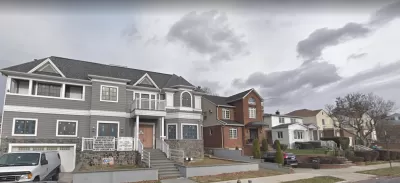
"Parts of Kew Gardens Hills are doubling down on single-family home zoning and wider, deeper houses — bucking a national trend amid an affordable housing crunch in New York and beyond," reports Savannah Jacobson.
The Kew Gardens Hills plan will allow about 400 single-family homes to build out horizontally, and it already has approval from Community Board 8, which applied for the rezoning, as well as Borough President Melinda Katz and the City Planning Commission. The plan still requires approval from the City Council and Mayor Bill de Blasio, which is "all but guaranteed."
As Jacobson notes, the plan stands in stark contrast to the trend toward allowing new density to accommodate growth in cities like Minneapolis and states like Oregon and California.
The Kew Gardens Hills plan takes the poosite approach, according to Jacobson. "Local Councilmember Rory Lancman (D-Queens) supports the Kew Gardens Hill plan, which will allow the single-family homes to build out horizontally – even as he penned an op-ed calling for denser housing in the city." By Lancman's reasoning, larger homes will accommodate the larger families that live in the neighborhood.
Similar arguments for downzoning as a positive environmental tool were also made recently in support of a growth cap approved by the city of Lakewood in Colorado.
FULL STORY: QUEENS NEIGHBORHOOD FIGHTS FOR BIGGER SINGLE-FAMILY HOMES, BUCKING U.S. TREND

Neighborhood Rezoning Proposal at Odds With Philadelphia's Comprehensive Plan
While planning departments around the country make news for removing exclusionary zoning and parking requirements, many neighborhoods still show a strong preference for parking minimums and development limits. Case in point: Germantown, Philadelphia.

YIMBYs Go Mainstream in New York
YIMBY, pro-development, politics are gaining support and attention in New York City at an opportune moment in the city's planning history.
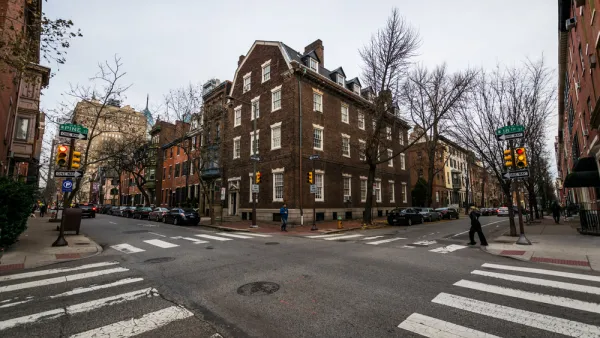
Mayoral Veto Kills Controversial Philadelphia Downzoning
The mayor, planning staff, and the Philadelphia Planning Commission agree. The Philadelphia City Council and residents of the wealthy neighborhood of Society Hill, not so much.

The state-sanctioned urbicide of Austin
People don’t kill cities. Freeways do.

US to reduce Colorado River water deliveries to Mexico
A new Colorado Treaty amendment reduces Mexico’s Colorado River water allocation by 250,000 acre feet.

New Jersey’s second-largest city bans standalone data centers
Jersey City will continue to allow co-location facilities, such as those meant for research institutions that store their own data.

Amtrak not solely to blame for New Jersey commuter rail's unreliability, report finds
A new study from the Garden State Initiative found that NJ Transit’s budget grew 20% across a 4 year period, but reliability declined significantly over the same period.

EPA erases limits on planet-warming pollution from power plants
Under Monday’s plan, power plants would still have some limits on how much mercury, arsenic and other contaminants they can emit.

Phoenix announces new on-demand transit service, more frequent RAPID buses
Both new services will launch in October, and are part of Phoenix's Project Effective Access Solutions for Easing Congestion.

FREE Course: Walkable City 1: Why Walkability?
After describing his path towards focusing on walkability as the essence of good planning, Jeff Speck marches through his five principal reasons for making more walkable places.
Reinventing Malls: Planning Alchemy—Turning Gray Fields Into Gold
The course focuses on the opportunities and imperatives that shape reinvention of mall sites.

Eagle County Government
Harvard University Graduate School of Design
Nashville Planning Department
The Architects Foundation
University of Cincinnati Online
The Pocatello Development Authority
The Urban Renewal Agency of the City of Pocatello
Journal of the American Planning Association