Houston's potential as a multi-modal city will be on the ballot this November.


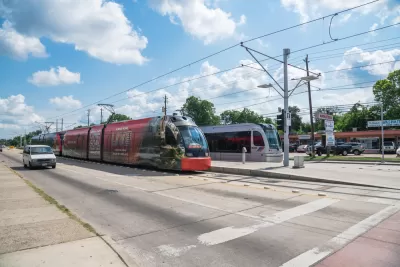
"Metropolitan Transit Authority board members voted Tuesday to ask voters in November for permission to borrow up to $3.5 billion, without raising taxes," according to an article by Dug Begley.
"The item will be on the Nov. 5 ballot, the first vote for new transit projects in 16 years for the Houston region," adds Begley.
The bond proposition would enable Houston to move forward with the $7.5 billion METRONext Moving Forward transportation plan, revealed at the end of 2018. The plan calls for three light rail extensions, expanded use of bus rapid transit, and the construction of high-occupancy vehicle lanes on most of the city's freeways.
According to Begley, the plan is expected to shift Houston "from a car-focused city to a multimodal metro region."
Also according to Begley, the bond proposition hasn't yet encountered opposition, but politicians and business leaders are expected to stump for the plan to persuade voters to support the plan and the bond funding.
Read the full story: Houston area voters will have $3.5 billion decision about future of transit on November ballot

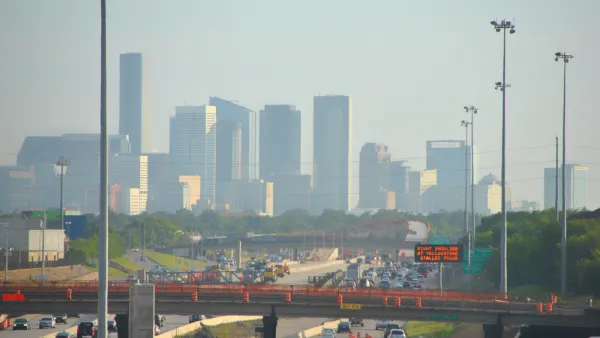
Opinion: Houston Should Vote Yes for MetroNext to Build Transit and Clean the Air
The executive director of Environment Texas makes the case for public transit as a key tool in improving air pollution in and around Houston. Houston voters will vote on the MetroNext bond referendum today.
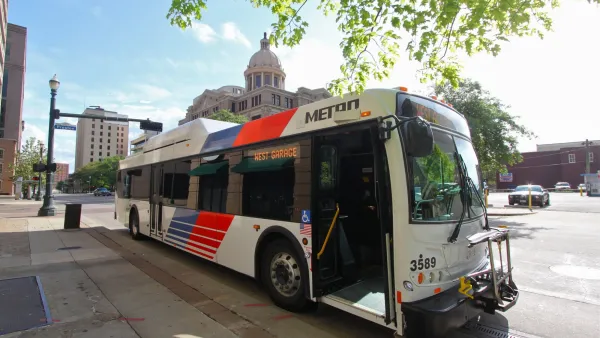
Houston's $7.5 Billion Multimodal Transportation Plan
The Moving Forward Plan seeks to improve transportation throughout the region, but funding and project priorities still need to be sorted out.
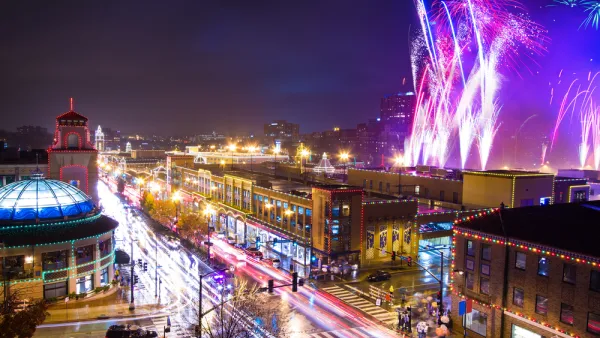
Advocates See Opportunity in Kansas City's $800 Million Transportation Bond
Kansas City, Missouri is in the process of considering an $800 million general obligation bond to fund transportation projects. The advocacy group BikeWalkKC, seeing the opportunity, is already advocating for how to put that money to use.

Planetizen Federal Action Tracker
A weekly monitor of how Trump’s orders and actions are impacting planners and planning in America.

California plans to bury El Niño’s downpour
If the state plays its cards right, it may be able to store a billion acre-feet of El Niño’s water in aquifers.

Chicago breaks ground on $3 billion megadevelopment
The new neighborhood, titled Foundry Park, will one day host 3,700 residences.

California High-Speed Rail Authority CEO resigns after $600,000 scandal
Under Ian Choudri, the authority used taxpayer dollars to fund first class flights and trips to nightclubs.

Want to study the Missouri River? Soon, you may need unanimous approval from 10 states
Legislation would require 10 governors’ permission to study or build projects moving water outside the basin.

Desperate measures: Advocates weigh draining Lake Powell to fill Colorado River
Draining the reservoir could reduce evaporation losses by a couple hundred thousand acre-feet.

FREE Course: Walkable City 1: Why Walkability?
After describing his path towards focusing on walkability as the essence of good planning, Jeff Speck marches through his five principal reasons for making more walkable places.
Reinventing Malls: Planning Alchemy—Turning Gray Fields Into Gold
The course focuses on the opportunities and imperatives that shape reinvention of mall sites.

City of Rosemead
Rutgers University, Edward J. Bloustein School of Planning and Public Policy
One Hundred Miles
Hunter College, City University of New York (CUNY)
The Architects Foundation
University of Cincinnati Online
City of Cambridge
Montrose County
The Pocatello Development Authority