Rivers are high and drought conditions have been lifted, but experts say that the 19-year drought in Colorado isn't over.


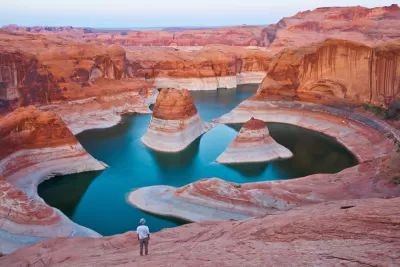
"Though 2019 has brought deep snowpack and heavy rain, we’re still in the midst of a 19-year drought that threatens waterways, landscapes, and communities throughout the West," writes Jay Bouchard.
One wet year doesn't resolve the long-term trend of water scarcity, according to the data and experts cited in article.
The long-term trend is this: Since the National Oceanic and Atmospheric Administration (NOAA) introduced the U.S. Drought Monitor in 2000, Colorado has been bone dry. There have been a handful of wet years, but Colorado has been in a near-constant state of drought—including almost eight straight years from 2001 to 2009.
Moreover, the challenges in Colorado have repercussions for all of the states and communities downstream of Colorado on the Colorado River—as is made obvious by the water levels in Lake Powell and Lake Mead.
A great challenge facing public officials is to educate the public, and rally around the idea of water conservation even in wet years.
FULL STORY: Why We Shouldn’t Be Celebrating the “End of Drought” in Colorado

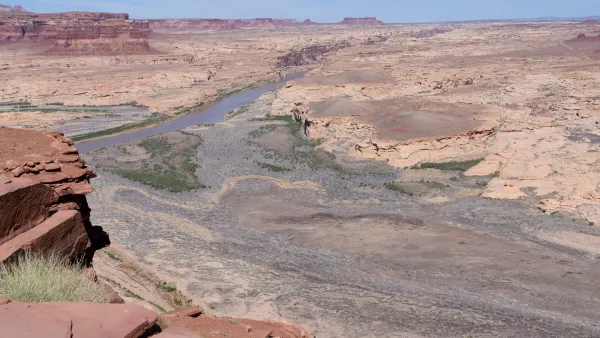
Feds say Arizona, California and Nevada must cut Colorado River water use by 1.25 million acre-feet
The new plan does not apply mandatory cuts to any of the river’s upper basin states.
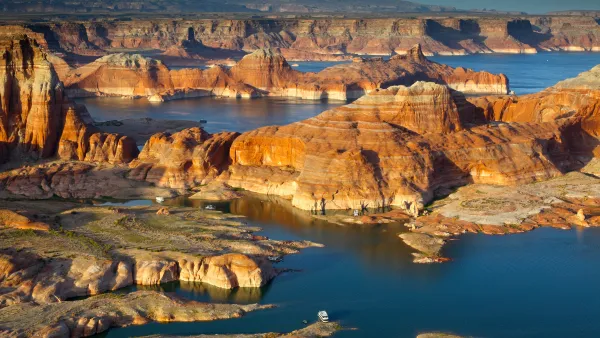
Even a “best case scenario” El Niño won't fix the West’s drought
While lower basin states may see increased precipitation, increased snowfall in upper basin states is needed to bring sufficient water to the West.
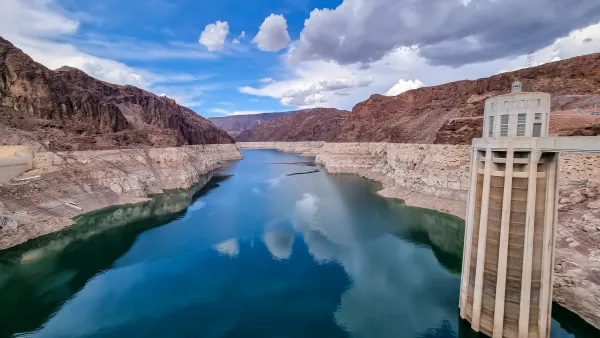
Why a Colorado River water conservation agreement is so hard to reach
As the nation's two largest reservoirs hit their lowest levels on record, what would it take to avert the crisis? An expert weighs in.

Planetizen Federal Action Tracker
A weekly monitor of how Trump’s orders and actions are impacting planners and planning in America.

The state-sanctioned urbicide of Austin
People don’t kill cities. Freeways do.

US to reduce Colorado River water deliveries to Mexico
A new Colorado Treaty amendment reduces Mexico’s Colorado River water allocation by 250,000 acre feet.

5 New England states march closer to 800 megawatt wind energy project
Securing federal approval for the project may be complicated under the Trump administration, which has historically been hostile towards domestic wind power.

Baltimore to break ground on $50 million Transit Priority Project
The project will bring faster bus trips, safer streets and better bike connections to Baltimore.

Airbnb launches $250 million 'last-dollar financing' housing accelerator, makes first investment in Austin
The company will put $6.4 million towards affordable housing development in Texas’ capital.

FREE Course: Walkable City 1: Why Walkability?
After describing his path towards focusing on walkability as the essence of good planning, Jeff Speck marches through his five principal reasons for making more walkable places.
Reinventing Malls: Planning Alchemy—Turning Gray Fields Into Gold
The course focuses on the opportunities and imperatives that shape reinvention of mall sites.

Eagle County Government
Harvard University Graduate School of Design
Nashville Planning Department
The Architects Foundation
University of Cincinnati Online
The Pocatello Development Authority
The Urban Renewal Agency of the City of Pocatello
Journal of the American Planning Association