The U.S. Department of Commerce was not successful in achieving a highly consequential change to the 2020 Census form, after the Supreme Court ruled it needed a better reason to make the change.


[Updated July 3, 2019]
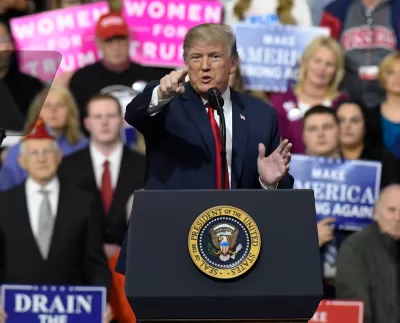
Following last week's Supreme Court decision in United States Department of Commerce v. New York, which dealt a significant blow to the Trump administration's plans to add a citizenship question to the 2020 Census, confirmation arrives that the question will officially now longer be included in the biennial count.
Zoe Tillman reports: "The Trump administration will carry out the 2020 Census without a citizenship question, according to an email the Justice Department sent Tuesday to groups that sued over the question, marking a huge victory for Democrats and civil rights advocates."
The Supreme Court had left open the possibility of the Department of Commerce adding a citizenship question in the future. "A majority of the justices — Chief Justice John Roberts Jr. joined the court's more liberal wing — concluded that Commerce Secretary Wilbur Ross had given a 'contrived' reason for adding the question now," explains Tillman.
President Trump responded to the ruling by tweeting that he might delay the entire Census to force the change through. That threat turned out to be empty, according to these reports.
Update: Despite both the Department of Justice email and a public statement from Commerce Secretary Wilbur Ross confirming the news that the citizenship question would not be included on the 2020 Census form, President Donald Trump took to Twitter today to call the news "FAKE!" and insist his administration is moving forward with the citizenship question.
The News Reports about the Department of Commerce dropping its quest to put the Citizenship Question on the Census is incorrect or, to state it differently, FAKE! We are absolutely moving forward, as we must, because of the importance of the answer to this question.
— Donald J. Trump (@realDonaldTrump) July 3, 2019
Read the full story: The Trump Administration Will Not Put A Citizenship Question On The 2020 Census
Updated: Supreme Court Falls Short of Clarity on Census Citizenship Question
Those hoping for resolution of a major controversy impacting the 2020 Census, and all of the governance and policy decisions that depend on it, will have to wait.
Breaking News: Court Blocks Citizenship Question on 2020 Census
A federal judge's decision accuses U.S. Commerce Secretary of playing politics with the U.S. Census.
Prepping for Today's Big 2020 Census Release
Setting the table as the nation awaits the first results from the 2020 Census.

Planetizen Federal Action Tracker
A weekly monitor of how Trump’s orders and actions are impacting planners and planning in America.

California plans to bury El Niño’s downpour
If the state plays its cards right, it may be able to store a billion acre-feet of El Niño’s water in aquifers.

Desperate measures: Advocates weigh draining Lake Powell to fill Colorado River
Draining the reservoir could reduce evaporation losses by a couple hundred thousand acre-feet.

US buildings threatened, destroyed by fires set to triple by 2060
Researchers found a high fire risk for socioeconomically vulnerable neighborhoods in the American West.

LA residents may be allowed to paint their own crosswalks
Councilwoman Katy Yaroslavsky put out a motion instructing the Los Angeles Department of Public Transportation to study the feasibility of allowing volunteers to paint crosswalks.

Dallas moves to overhaul its zoning code
The city's zoning reform will allow more multi-family and mixed-use developments.

FREE Course: Walkable City 1: Why Walkability?
After describing his path towards focusing on walkability as the essence of good planning, Jeff Speck marches through his five principal reasons for making more walkable places.
Reinventing Malls: Planning Alchemy—Turning Gray Fields Into Gold
The course focuses on the opportunities and imperatives that shape reinvention of mall sites.

City of Rosemead
Rutgers University, Edward J. Bloustein School of Planning and Public Policy
One Hundred Miles
Hunter College, City University of New York (CUNY)
The Architects Foundation
University of Cincinnati Online
City of Cambridge
Montrose County
The Pocatello Development Authority