It's a popularity contest, sure, but it's our popularity contest.



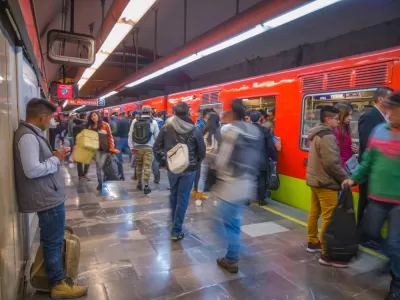
The American Planning Association's Transportation Planning Division recently announced the Transit Bracket Challenge 2019.
According to the website hosting the bracket challenge, the agencies were selected based on reported ridership and metro area populations. (Sorry, Phoenix. Maybe if you hadn't gutted your light rail plan you'd get to play.)
All it takes is one click to participate in Round One of voting, which runs until May 19 and pits transit agencies against each other in eight matchups. Round Two starts May 20.
It seems there is a seeding system at work, just like the real March Madness, because the oldest and largest systems are not facing off yet. Here are the first round matchups:
- MTA (New York) versus Metro (Houston)
- CTA (Chicago) versus MTS (San Diego)
- Metro (Los Angeles) versus MDT (Miami)
- MBTA (Boston) versus RTD (Denver)
- WMATA (D.C.) versus TriMet (Portland)
- SEPTA (Philadelphia) versus MTA (Baltimore)
- NJTransit (Newark) versus MARTA (Atlanta)
- Muni/SFMTA (San Francisco) versus King County Metro (Seattle)
For my money, the most compelling matchups of round one are Philadelphia versus Baltimore and San Francisco versus Seattle, but the contest promises more fireworks in later rounds. One imagines a scene out of Anchorman: The Legend of Ron Burgundy (2004) when or if New York and Chicago face off.
While this whole exercise is clearly intended to be fun, to inspire local pride, and to raise awareness about the acronyms behind public transit in cities far away, it could also force a lot of transit riders and civic enthusiasts to reckon with where and when they ally with the local transit agency. As a transit user myself, I oscillate between system evangelism (seriously, I should get a cut of the fare box, Metro Los Angeles) and just spewing rage tweets about service (seriously, I should get 10 minute headways and signal prioritization, Metro Los Angeles).
How people feel about riding transit, and the messages they send to the world about riding transit, gets at a fine line between civic pride and civic duty, I think. Many pro-transit urbanists, I think, would never say anything bad about the city they love, but also probably don't ride transit enough to learn to hate it at times. Or the transit system is a signifier of a cause to which they are unequivocally committed: their city.
On the flip side, many of these transit agency's fiercest critics will soon find themselves in the awkward position of repeatedly supporting the agency they love to hate (or is it hate to love?) out of civic pride.
For other people, riding transit is about being a good citizen—about living in public, interacting with their neighbors, and embodying the type of city and community they would choose for the world. I imagine that it will be hard to chose from this list. Something about the "lesser of two evils"? (Hey! This isn't March Madness! This is a presidential election!)
It's too bad we won't get this extra layer of demographic insight in addition to a winner with this contest:
- Are you a planner?
- Are you a regular transit user?
- Do you consider yourself a civic booster or a good citizen?
- How many of these transit systems have you ridden?
- How many transit systems you have ridden in other countries?
- Do you want to ban cars?
- Are you a NIMBY?
- Are you a YIMBY?
- Are you a PHIMBY?
I'll tell you : I'm a journalist, who uses buses for 80 percent of my trips, and rail for 10 percent of my trips. I do not consider myself a civic booster, but I love my city, and I try to be a good citizen. I've ridden nine of these systems. (I'm taking the fifth on the rest of those questions.) I'll be voting for the system with the most high frequency lines, running the most trains and buses at off-peak hours, and with the most priority given to transit in the public realm.
Unfortunately, Mexico City isn't on the list.

What Is Good Transit?
Good Transit is frequent. Good Transit is reliable. Good Transit is (reasonably) fast. Good Transit feels safe.

Wow, These Bus Stops are Close Together! The Case for Bus Stop Balancing.
Appropriate bus stop spacing keeps the bus moving and ensures people get where they need to be in a reliable amount of time.
Madison Launches Redesigned Transit System
Transit riders in Madison, Wisconsin are navigating an entirely new system this week.

The state-sanctioned urbicide of Austin
People don’t kill cities. Freeways do.

US to reduce Colorado River water deliveries to Mexico
A new Colorado Treaty amendment reduces Mexico’s Colorado River water allocation by 250,000 acre feet.

New Jersey’s second-largest city bans standalone data centers
Jersey City will continue to allow co-location facilities, such as those meant for research institutions that store their own data.

Amtrak not solely to blame for New Jersey commuter rail's unreliability, report finds
A new study from the Garden State Initiative found that NJ Transit’s budget grew 20% across a 4 year period, but reliability declined significantly over the same period.

EPA erases limits on planet-warming pollution from power plants
Under Monday’s plan, power plants would still have some limits on how much mercury, arsenic and other contaminants they can emit.

Phoenix announces new on-demand transit service, more frequent RAPID buses
Both new services will launch in October, and are part of Phoenix's Project Effective Access Solutions for Easing Congestion.

FREE Course: Walkable City 1: Why Walkability?
After describing his path towards focusing on walkability as the essence of good planning, Jeff Speck marches through his five principal reasons for making more walkable places.
Reinventing Malls: Planning Alchemy—Turning Gray Fields Into Gold
The course focuses on the opportunities and imperatives that shape reinvention of mall sites.

Eagle County Government
Harvard University Graduate School of Design
Nashville Planning Department
The Architects Foundation
University of Cincinnati Online
The Pocatello Development Authority
The Urban Renewal Agency of the City of Pocatello
Journal of the American Planning Association

