The lesson of the I-405 widening project that birthed meme-worthy events like "Carmageddon": widening a freeway won't reduce congestion for long, if ever.


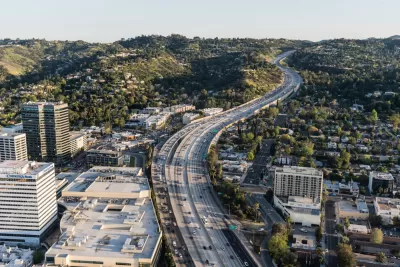
Five years after the completion of a northbound carpool lane on Interstate 405 in Los Angeles, built at a cost of $1 billion, traffic has only gotten worse.
"Since then, average northbound drive times through the Sepulveda Pass have increased at all hours of the day," reports Elijah Chiland, citing data from traffic analyst Inrix.
The project has delivered poor results in terms of congestion mitigation since it opened, so this latest news is only the most recent bad news for drivers who travel the Sepulveda Pass between the San Fernando Valley and the Westside of Los Angeles. The Los Angeles County Metropolitan Transportation Authority promised a 37 percent reduction in overall hours of delay with the project as compared to a scenario that never built the project.
But broken promises and congestion are probably the least of the concerns associated with the freeway widening project. "A 2015 policy brief from the National Center for Sustainable Transportation notes that expanding freeways is likely to result in a long-term increase in both greenhouse gas emissions and the number of miles driven in a given area," according to Chiland.
FULL STORY: Five years after Sepulveda Pass widening, travel times on the 405 keep getting worse

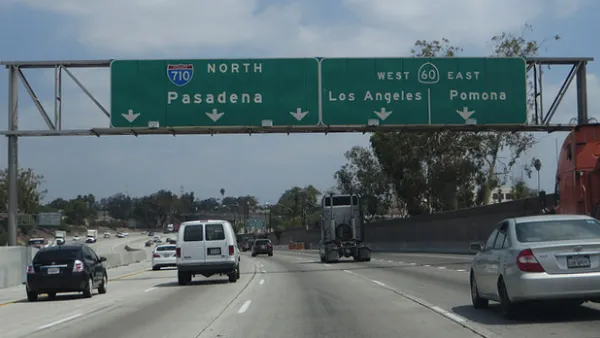
A Traffic Solution 'Straight Out of the 1950s'
That's how the Los Angeles Times editorial board characterized the $6 billion plan by Los Angeles Metro to widen the 710 freeway. "A waste of money," they assert. Key to the solution is how to deal with goods movement from the seaport complex.
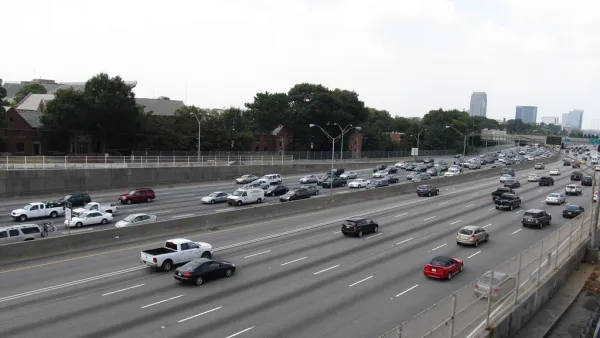
Why Don't State DOTs Believe in Induced Demand?
Despite evidence that widening roadways is only a temporary solution to congestion, a decades-long inertia leads states to continue pushing expansion projects against local opposition.
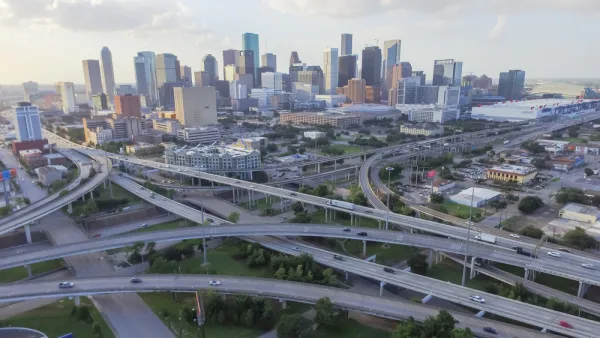
Speck: Don't Widen I-45 in Houston
Jeff Speck, planning consultant and author of Walkable City, writes an opinion piece for the Houston Chronicle to oppose the plan to widen the I-45 freeway in Houston.

Planetizen Federal Action Tracker
A weekly monitor of how Trump’s orders and actions are impacting planners and planning in America.

The state-sanctioned urbicide of Austin
People don’t kill cities. Freeways do.

US to reduce Colorado River water deliveries to Mexico
A new Colorado Treaty amendment reduces Mexico’s Colorado River water allocation by 250,000 acre feet.

5 New England states march closer to 800 megawatt wind energy project
Securing federal approval for the project may be complicated under the Trump administration, which has historically been hostile towards domestic wind power.

Baltimore to break ground on $50 million Transit Priority Project
The project will bring faster bus trips, safer streets and better bike connections to Baltimore.

Airbnb launches $250 million 'last-dollar financing' housing accelerator, makes first investment in Austin
The company will put $6.4 million towards affordable housing development in Texas’ capital.

FREE Course: Walkable City 1: Why Walkability?
After describing his path towards focusing on walkability as the essence of good planning, Jeff Speck marches through his five principal reasons for making more walkable places.
Reinventing Malls: Planning Alchemy—Turning Gray Fields Into Gold
The course focuses on the opportunities and imperatives that shape reinvention of mall sites.

Eagle County Government
Harvard University Graduate School of Design
Nashville Planning Department
The Architects Foundation
University of Cincinnati Online
The Pocatello Development Authority
The Urban Renewal Agency of the City of Pocatello
Journal of the American Planning Association