The city of St. Petersburg is intended to improve safety for all users of streets—bicyclists, pedestrians, transit users, and drivers.



St. Petersburg, Florida has approved a new complete streets plan to guide street design and engineering for the next 20 years.
Kate Pyzyk shares details of the city's Complete Streets Implementation Plan [pdf], which updates a 2015 plan and will receive additional updates every five years.
"St. Petersburg's plan addresses needs in the city's motor vehicle, transit, trail, sidewalk and bicycle infrastructure networks. It includes key steps such as adding bike lanes, crosswalks and a bus rapid transit line, as well as increasing the use of data to improve traffic safety," according to Pyzyk.
According to a press release from the city announcing the approval of the implementation plan, the city has recently completed a pair of projects under the complete streets umbrella: "resurfacing and reconfiguration of Dr. Martin Luther King Jr. Street and bike improvements along the 30thAve. corridor."
FULL STORY: St. Petersburg, FL approves complete streets plan

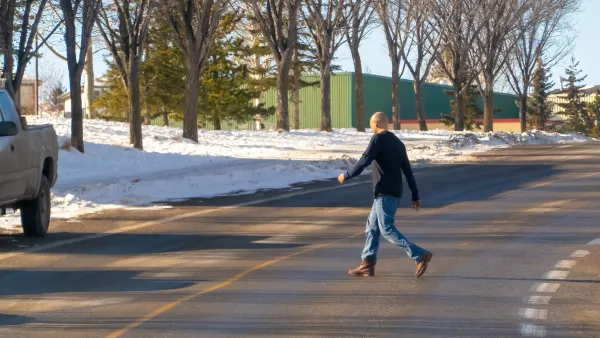
Study: Midblock pedestrian crossings are more common than we think
One in six crossings in the study took place outside of a marked crosswalk.
San Diego budget axes multimodal team at DOT
The budget scales back funding for some bike lane and traffic safety projects that are already in the works.

StreetVision tool pinpoints likely crash sites using mobile phone data
The tool can help cities quickly identify high-risk intersections and corridors and make an evidence-based case for safety interventions.

Planetizen Federal Action Tracker
A weekly monitor of how Trump’s orders and actions are impacting planners and planning in America.

The state-sanctioned urbicide of Austin
People don’t kill cities. Freeways do.

US to reduce Colorado River water deliveries to Mexico
A new Colorado Treaty amendment reduces Mexico’s Colorado River water allocation by 250,000 acre feet.

Mamdani overhauls NYC's Vision Zero plan with 100 new policy goals
The overhaul aims to reduce traffic deaths and make streets safer for pedestrians, cyclists and drivers through lower speed limits, new safety infrastructure and more.

Amtrak not solely to blame for New Jersey commuter rail's unreliability, report finds
A new study from the Garden State Initiative found that NJ Transit’s budget grew 20% across a 4 year period, but reliability declined significantly over the same period.

EPA erases limits on planet-warming pollution from power plants
Under Monday’s plan, power plants would still have some limits on how much mercury, arsenic and other contaminants they can emit.

FREE Course: Walkable City 1: Why Walkability?
After describing his path towards focusing on walkability as the essence of good planning, Jeff Speck marches through his five principal reasons for making more walkable places.
Reinventing Malls: Planning Alchemy—Turning Gray Fields Into Gold
The course focuses on the opportunities and imperatives that shape reinvention of mall sites.

Eagle County Government
Harvard University Graduate School of Design
Nashville Planning Department
The Architects Foundation
University of Cincinnati Online
The Pocatello Development Authority
The Urban Renewal Agency of the City of Pocatello
Journal of the American Planning Association