One in six crossings in the study took place outside of a marked crosswalk.


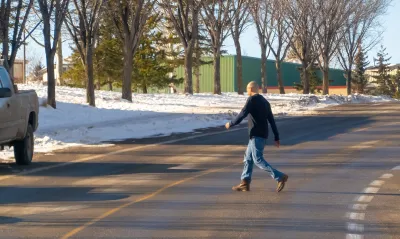
A new study reveals that midblock pedestrian crossings are much more common than transportation agencies typically estimate, highlighting the need for a shift in mindset when it comes to designing crosswalks and road infrastructure.
As Leslie Vasquez explains in a piece for State Smart Transportation Initiative, about one in six crossings in the study happened at places other than intersections. "In fact, 75% of the studied street segments had at least one midblock crossing per hour." On some streets, midblock crossings were more common than crossings at marked crosswalks.
According to Vasquez, "Midblock crossings were more common in areas where people had reasons to cross—higher job density, more retail activity, and proximity to bus stops. However, they were less common on roads with posted speed limits and parks."
The study adds to a body of research that highlights a gap between road design and how people actually move. "Many planning and data collection efforts focus on intersections, even though nearly 80% of pedestrian fatalities occur elsewhere." To address this, transportation planners can use midblock crossing data to understand where they could add marked midblock crossings, traffic calming measures or signalized crossings.
FULL STORY: People cross the street where it makes sense

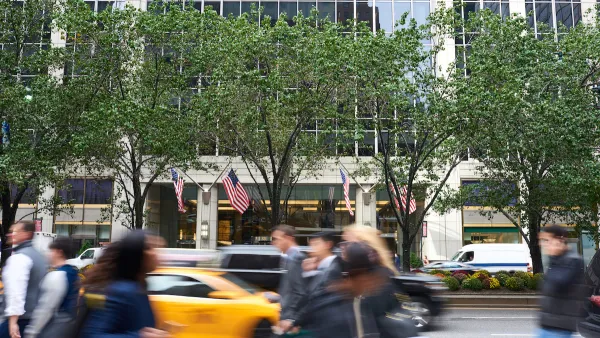
NYC Officials Split on Jaywalking Decriminalization
While some council members say the ‘outdated’ practice disproportionately impacts Black and Latino residents, law enforcement officials say its a necessary measure for road safety.
Traffic Safety Efforts Chug Ahead — Too Slowly for Some
Around the United States, traffic deaths are growing or plateauing, yet efforts to make roads safer still face political opposition.
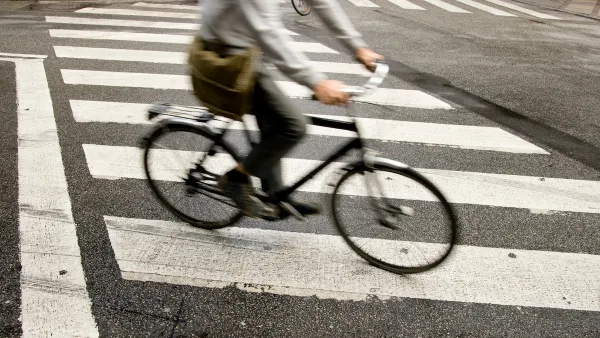
A Little-Known Loophole Puts Cyclists at Risk
Crosswalk laws in most U.S. states don’t offer legal protections to people on bikes, scooters, or mobility devices.

The state-sanctioned urbicide of Austin
People don’t kill cities. Freeways do.

US to reduce Colorado River water deliveries to Mexico
A new Colorado Treaty amendment reduces Mexico’s Colorado River water allocation by 250,000 acre feet.

New Jersey’s second-largest city bans standalone data centers
Jersey City will continue to allow co-location facilities, such as those meant for research institutions that store their own data.

Amtrak not solely to blame for New Jersey commuter rail's unreliability, report finds
A new study from the Garden State Initiative found that NJ Transit’s budget grew 20% across a 4 year period, but reliability declined significantly over the same period.

EPA erases limits on planet-warming pollution from power plants
Under Monday’s plan, power plants would still have some limits on how much mercury, arsenic and other contaminants they can emit.

Phoenix announces new on-demand transit service, more frequent RAPID buses
Both new services will launch in October, and are part of Phoenix's Project Effective Access Solutions for Easing Congestion.

FREE Course: Walkable City 1: Why Walkability?
After describing his path towards focusing on walkability as the essence of good planning, Jeff Speck marches through his five principal reasons for making more walkable places.
Reinventing Malls: Planning Alchemy—Turning Gray Fields Into Gold
The course focuses on the opportunities and imperatives that shape reinvention of mall sites.

Eagle County Government
Harvard University Graduate School of Design
Nashville Planning Department
The Architects Foundation
University of Cincinnati Online
The Pocatello Development Authority
The Urban Renewal Agency of the City of Pocatello
Journal of the American Planning Association