A more than 400 percent increase in bike ridership following the opening of a protected bike lane on Second Avenue proves that Seattleites are more inclined to ride with safe facilities.


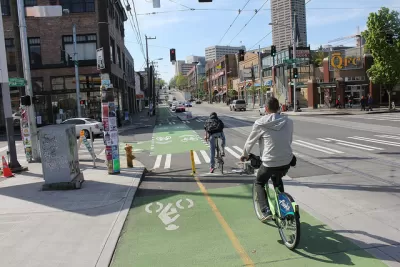
Part of an ongoing project to improve bikeability in Seattle, WA, a "project began with a pilot in 2014 to convert a regular painted bike lane on Second Avenue into a curb-and-landscape-protected bike lane," reports Angie Schmitt. The now protected lane extends through hilly downtown Seattle and features a physical barrier in the form of planter boxes and barricades separating bikes and cars.
The increased ridership is a great success for proponents of bike safety in Seattle. During her tenure to date, Mayor Jenny Durkan has cut plans for many similar projects including, "a bike lane on 35th Avenue NE, a dangerous thoroughfare which has been proposed for bike lanes for a decade." While the Second Avenue Bike Lane cost about $12 million (the most expensive bike lane in Seattle history) and required significant utility movement, hope remains that proof of the "game-changing power of a protected lane versus a painted lane" won’t end with this project.
FULL STORY: Ridership Jumped 400% When Seattle Protected a Bike Lane

Checking in on Two of Seattle's Bike Infrastructure Plans
The city of Seattle is moving through the planning and design stages on two important bike infrastructure projects located at the south end of Downtown.
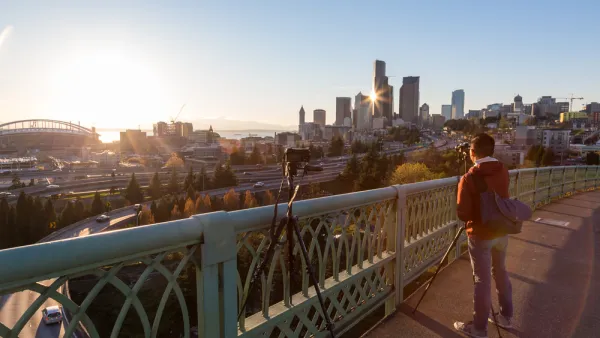
A Thorough, Mixed Review for a New Protected Bike Lane in Seattle
So many highly anticipated bike facilities finally deliver only to fall short of real game changing status. Seattle provides the latest example of the phenomenon in the wild.
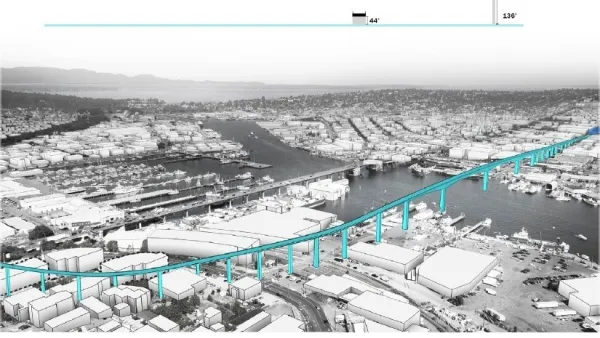
Seattle Ponders Improvements to Ballard Bridge for All Modes of Transport
The Seattle Department of Transportation (SDOT) is in the midst of a planning study on Ballard Bridge, soliciting feedback from the community about how to improve circulation of vehicles and pedestrians.

Planetizen Federal Action Tracker
A weekly monitor of how Trump’s orders and actions are impacting planners and planning in America.

The state-sanctioned urbicide of Austin
People don’t kill cities. Freeways do.

US to reduce Colorado River water deliveries to Mexico
A new Colorado Treaty amendment reduces Mexico’s Colorado River water allocation by 250,000 acre feet.

5 New England states march closer to 800 megawatt wind energy project
Securing federal approval for the project may be complicated under the Trump administration, which has historically been hostile towards domestic wind power.

Baltimore to break ground on $50 million Transit Priority Project
The project will bring faster bus trips, safer streets and better bike connections to Baltimore.

Airbnb launches $250 million 'last-dollar financing' housing accelerator, makes first investment in Austin
The company will put $6.4 million towards affordable housing development in Texas’ capital.

FREE Course: Walkable City 1: Why Walkability?
After describing his path towards focusing on walkability as the essence of good planning, Jeff Speck marches through his five principal reasons for making more walkable places.
Reinventing Malls: Planning Alchemy—Turning Gray Fields Into Gold
The course focuses on the opportunities and imperatives that shape reinvention of mall sites.

Eagle County Government
Harvard University Graduate School of Design
Nashville Planning Department
The Architects Foundation
University of Cincinnati Online
The Pocatello Development Authority
The Urban Renewal Agency of the City of Pocatello
Journal of the American Planning Association