Transit experts want to optimize the benefits of the biggest network of separated busways in the country.


Rather than building light rail, highways, or hyperloops, some advocates want Pittsburgh to look to its extensive busway system as a means to ease traffic, reduce greenhouse-gas emissions, and improve access to jobs.
Speaking to experts on transit and economic development, Ryan Deto recommends three basic strategies to expand the benefits of Pittsburgh's existing system.
-
Rebrand: Pittsburgh busways were originally named for colors, and the article suggests returning to this system. Currently, lines are named for the directions they take: South Busway, East Busway, and so forth.
-
Improve accessibility: Many stations are hostile to pedestrians and people with disabilities, Deto writes. Better ingress and street-facing design could improve visibility and use of the stations.
-
Encourage transit-oriented development: Deto points to studies suggesting that mixed-use development around busway stations could reduce poverty by providing access to jobs. Port Authority, which manages Pittsburgh buses, offers TOD guidelines, but they are not mandatory.
Advocates are pushing for a busway vision before potential changes to state and federal transit funding in 2022, when funding from the Turnpike Commission expires. A more thorough set of suggestions for Pittsburgh's busway network is explored in the article.
Read the full story: How busways can lead Pittsburgh into an equitable public transit future
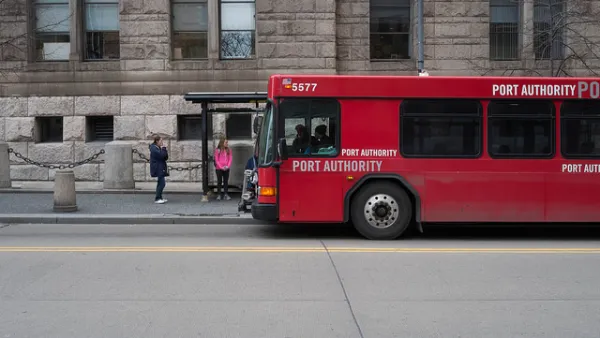
Systemwide Evaluation of Bus Stops Underway in the Pittsburgh Region
The Port Authority of Allegheny County is evaluating how to make improvements at
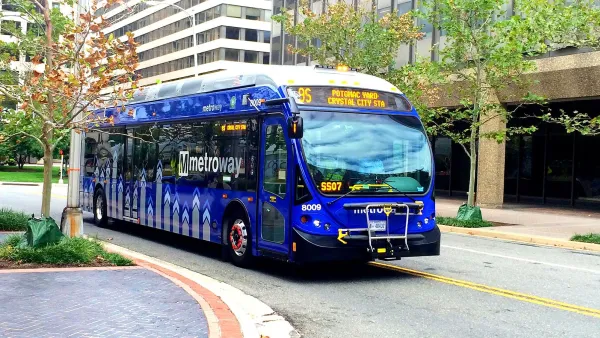
Doubling Down on Bus Rapid Transit in Northern Virginia
Arlington County plans an expansion of the D.C. region's first Bus Rapid Transit line.
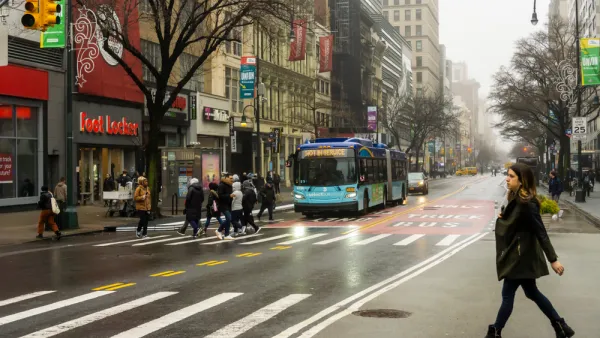
Bus Lane Plans Continue Retreat in New York City—This Time it's Fifth Avenue
The de Blasio administration caved to the interests of a Manhattan real estate developer and shelved a plan to prioritize bus transit over private automobiles on one of the most famous corridors in the world.

Planetizen Federal Action Tracker
A weekly monitor of how Trump’s orders and actions are impacting planners and planning in America.

California plans to bury El Niño’s downpour
If the state plays its cards right, it may be able to store a billion acre-feet of El Niño’s water in aquifers.

Desperate measures: Advocates weigh draining Lake Powell to fill Colorado River
Draining the reservoir could reduce evaporation losses by a couple hundred thousand acre-feet.

Mamdani’s pied-à-terre tax survives legal challenge
A panel of judges found that the plaintiffs failed to demonstrate injury as a result of New York City's implementation of the tax.

Eastern Nebraska is running out of electricity
Data centers and electrification are straining eastern Nebraska’s grid, throttling economic development.

Seattle passes record-breaking transit services expansion
Proposition 1 will double the city’s transit tax to add 95,000 more bus trips and preserve 180,000 bus trips annually.

FREE Course: Walkable City 1: Why Walkability?
After describing his path towards focusing on walkability as the essence of good planning, Jeff Speck marches through his five principal reasons for making more walkable places.
Reinventing Malls: Planning Alchemy—Turning Gray Fields Into Gold
The course focuses on the opportunities and imperatives that shape reinvention of mall sites.

City of Rosemead
Rutgers University, Edward J. Bloustein School of Planning and Public Policy
One Hundred Miles
University of Michigan School for Environment and Sustainability (SEAS)
Hunter College, City University of New York (CUNY)
The Architects Foundation
City of Cambridge
Montrose County
The Pocatello Development Authority