The automobile has been pitched as a machine for freedom, but travelling inside a small metal box, strapped to a chair, forced to focus on the road while your life is threatened by two-ton projectiles doesn’t sound like freedom to David Levinson.



The automobile has been pitched as a machine for freedom. But you travel caged inside a small metal box, strapped to your chair, while your life is being threatened randomly by high speed two-ton projectiles, forced to keep eyes focused on the road and obliged to place hands at the 10 and 2 o’clock positions on the wheel, with your foot constrained to a small area on the floor. This doesn’t sound like freedom to me.

If you choose to enter a freeway, you are not even permitted to leave your car til you exit the road.
On streets, your behavior is governed by inanimate traffic lights, signs, and paint, which are violated at penalty of automatically generated fine or imprisonment.
This is all self-imposed, so it is more like committing yourself to an institution, the automobility asylum, perhaps, than prison which is imposed by others.
An alternative view is that freedom is not ensconced in a machine but in a way you can interact with the world. If you can, at your whim, when you want to, do what you want, engage in the activities you want, without fearing for your life, that is closer to freedom.
Jarrett Walker argues frequency is freedom. This is closer to the truth. While on a bus or train I am still caged in a metal box, it is a larger box, I am not strapped in, and I am much safer. I am also now free to do something with my time while in motion, not constrained to monitor the road.
And where can I travel in these safe freedom machines, reaching many more opportunities? Cities. This gives a new meaning to the expression: Urban air makes you free.
‘But I can reach more places in a car than on transit in the same amount of time, almost everywhere,’ you argue. This is true, if you ignore the costs you impose on society, if you ignore the fixed costs of that opportunity to you, and if you ignore the ability to use time in some other way, as is available when not driving.
Freedom from car ownership, freedom from the obligation of driving, and freedom from negative externalities borne by the community at large are how we should reframe transport and land use goals. What can we do to give people those freedoms?
Read the full story: The Automobile as Prison. The City as Freedom.

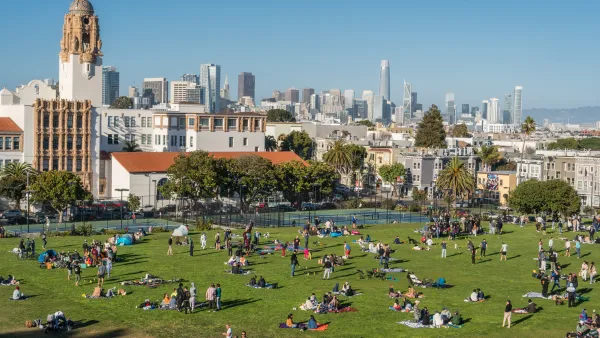
Only one US city makes the Happy City Index top 50
The list is topped by Copenhagen, Helsinki, and Geneva.
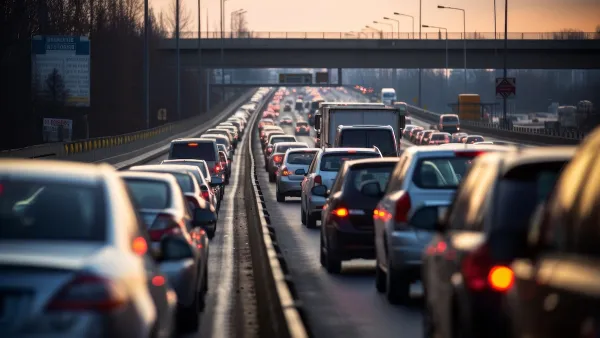
The Mobility-Productivity Paradox
New research shows that excessive vehicle travel reduces economic productivity, and that less mobility provides more productivity. Yes, you read that right.
January Must-Reads: Top 10 Articles From Last Month
How a tidal wave of potential changes at the federal level could throw many programs planners depend on into chaos, a roundup of last year’s zoning stories, and the continuing ripple effects of a landmark Supreme Court case.

Planetizen Federal Action Tracker
A weekly monitor of how Trump’s orders and actions are impacting planners and planning in America.

The state-sanctioned urbicide of Austin
People don’t kill cities. Freeways do.

US to reduce Colorado River water deliveries to Mexico
A new Colorado Treaty amendment reduces Mexico’s Colorado River water allocation by 250,000 acre feet.

Nation's most wind-powered state turns to coal as data centers increase energy demand
For the first time in decades, Iowa has increased its generation of coal power.

NYC cools commuters with city's first rain garden above a bus stop
New York City officials say the plants in the rain garden can absorb 16 gallons of rainwater during heavy storms.

Brightline West’s future may rely on $6 billion federal loan
The company has until Nov. 2 to make a $400 million equity investment into its proposed high-speed rail line.

FREE Course: Walkable City 1: Why Walkability?
After describing his path towards focusing on walkability as the essence of good planning, Jeff Speck marches through his five principal reasons for making more walkable places.
Reinventing Malls: Planning Alchemy—Turning Gray Fields Into Gold
The course focuses on the opportunities and imperatives that shape reinvention of mall sites.

Eagle County Government
Harvard University Graduate School of Design
Nashville Planning Department
The Architects Foundation
University of Cincinnati Online
The Pocatello Development Authority
The Urban Renewal Agency of the City of Pocatello
Journal of the American Planning Association