Cambridge, Massachusetts has made a thorough commitment to building robust bike infrastructure with every street repair project.


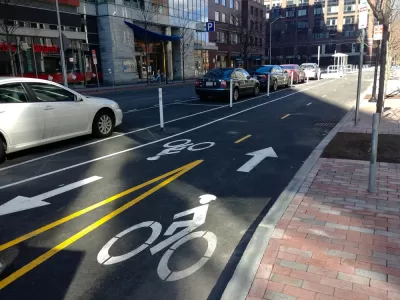
"The Boston suburb of Cambridge is poised to become one of the most-progressive safe-biking cities in the country, thanks to the passage of a bill requiring protected bike lanes on all city streets," reports Angie Schmitt.
"The 'Cycling Safety Ordinance' requires city streets to be upgraded to include the safest bike paths whoever [sic] a roadway is repaired or resurfaced. It is expected to result in a 20-mile network of protected bike lanes in five years for the city of 113,000," adds Schmitt.
The burden of proof for exceptions will be on the city.
Tom Acitelli also reported on the ordinance prior to City Council approval. Yet another article by Steve Annear calls the ordinance the first of its kind in the country.
Read the full story: Cambridge Becomes First U.S. City to Make Protected Bike Lanes Mandatory

Checking in on Two of Seattle's Bike Infrastructure Plans
The city of Seattle is moving through the planning and design stages on two important bike infrastructure projects located at the south end of Downtown.
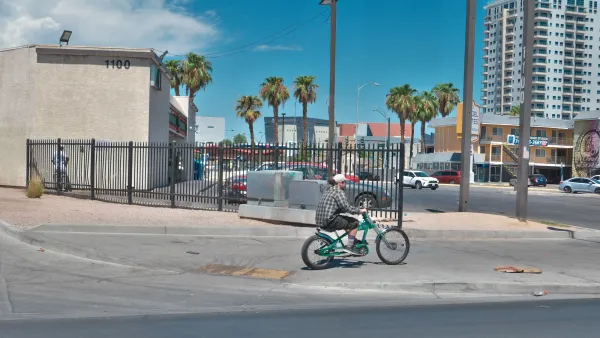
Las Vegas is building its first protected bike lane
The new lane connects Henderson and the Las Vegas Raiders headquarters via Starr Avenue.

Nashville installs concrete barriers to protect bike lanes
The new 'Toronto barriers' provide a physical buffer between cars and bike lanes.

Planetizen Federal Action Tracker
A weekly monitor of how Trump’s orders and actions are impacting planners and planning in America.

California plans to bury El Niño’s downpour
If the state plays its cards right, it may be able to store a billion acre-feet of El Niño’s water in aquifers.

Desperate measures: Advocates weigh draining Lake Powell to fill Colorado River
Draining the reservoir could reduce evaporation losses by a couple hundred thousand acre-feet.

MTA gives itself 30 days to transform pit into basketball court
The site has been under construction since 2022; the city originally estimated it would finish the court in 2024.

Non-stop party: Chicago voters weigh permanent festival grounds
A stable place for bleachers, stages and drainage may streamline the setup and teardown of large events.

Metra may invest $9.1 billion in regional rail
The agency released a draft of a study examining potential ways to offer more frequent train service.

FREE Course: Walkable City 1: Why Walkability?
After describing his path towards focusing on walkability as the essence of good planning, Jeff Speck marches through his five principal reasons for making more walkable places.
Reinventing Malls: Planning Alchemy—Turning Gray Fields Into Gold
The course focuses on the opportunities and imperatives that shape reinvention of mall sites.

City of Rosemead
Rutgers University, Edward J. Bloustein School of Planning and Public Policy
One Hundred Miles
Hunter College, City University of New York (CUNY)
The Architects Foundation
University of Cincinnati Online
City of Cambridge
Montrose County
The Pocatello Development Authority