Boulder declared a moratorium on development in a federally designated Opportunity Zone back in December. Here's how the decision has played out so far.


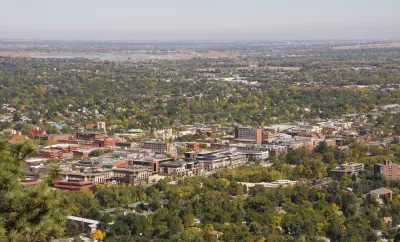
Oscar Perry Abello reports from Boulder, Colorado, the city pressed "pause" on development in a Census tract designated as an Opportunity Zone (a federal program that gives investors tax breaks for making certain investments in the area).
"Uncertain whether the federal program would benefit residents in or near Colorado census tract 122.03, let alone the rest of the city, Boulder City Council temporarily suspended the acceptance of building permits, site review applications and other development applications for many types of projects in the Opportunity Zone," according to Abello.
Specially, the action declared a moratorium on "development that would result in adding non-residential floor area, any demolition that removes multifamily dwelling units or any non-residential floor area, and the creation of any new dwelling units "that do not meet the requirements of the ordinance,'" explains Abello.
Still, Boulder is allowing exemptions to the moratorium, claiming the exemptions reflect the vision established by the Boulder Valley Comprehensive Plan, approved in 2017. Abello explains in a lot more detail the politics surrounding the decision, the exemptions, and the prospects for the Opportunity Zone program in Boulder in the future.
Read the full story: Boulder Presses Pause on Some Opportunity Zone Development
Sweeping Building Moratorium Issued in Response to Potential Opportunity Zone Investments
From opportunity zone to 'opportunity-free zone.'

Boulder Eliminates Parking Minimums Citywide
Officials estimate the cost of building a single underground parking space at up to $100,000.
Proposed Boulder Ballot Measures Call for Impact Fees, Affordable Duplexes
Boulder residents are working to put two housing-related proposals on the November ballot.

Planetizen Federal Action Tracker
A weekly monitor of how Trump’s orders and actions are impacting planners and planning in America.

California plans to bury El Niño’s downpour
If the state plays its cards right, it may be able to store a billion acre-feet of El Niño’s water in aquifers.

Desperate measures: Advocates weigh draining Lake Powell to fill Colorado River
Draining the reservoir could reduce evaporation losses by a couple hundred thousand acre-feet.

Mamdani’s pied-à-terre tax survives legal challenge
A panel of judges found that the plaintiffs failed to demonstrate injury as a result of New York City's implementation of the tax.

Eastern Nebraska is running out of electricity
Data centers and electrification are straining eastern Nebraska’s grid, throttling economic development.

Seattle passes record-breaking transit services expansion
Proposition 1 will double the city’s transit tax to add 95,000 more bus trips and preserve 180,000 bus trips annually.

FREE Course: Walkable City 1: Why Walkability?
After describing his path towards focusing on walkability as the essence of good planning, Jeff Speck marches through his five principal reasons for making more walkable places.
Reinventing Malls: Planning Alchemy—Turning Gray Fields Into Gold
The course focuses on the opportunities and imperatives that shape reinvention of mall sites.

City of Rosemead
Rutgers University, Edward J. Bloustein School of Planning and Public Policy
One Hundred Miles
University of Michigan School for Environment and Sustainability (SEAS)
Hunter College, City University of New York (CUNY)
The Architects Foundation
City of Cambridge
Montrose County
The Pocatello Development Authority