The price of electric cars is dropping, and this together with lower lifetime costs makes them a good alternative for vehicle fleets.


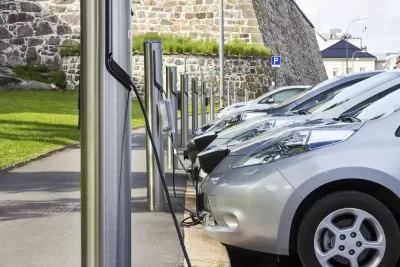
Electric cars are not cheap, but prices are continuing to drop. Along with state and federal incentives and lower fuel, maintenance, and repair costs, these vehicles look to be a good option for fleet owners, reports Michael J. Coren.
Coren says that data about electric vehicles in fleets is not substantial enough to draw definite conclusions, but recent evidence from New York City suggests that the investment in electric vehicles is paying off in the long run:
In what it calls the first analysis of its kind (pdf), the city analyzed fuel and maintenance costs for 1,893 of its 9,196 light-passenger vehicles in 2018. It found servicing costs with all-electric vehicle models was less than for gas, hybrid, and hybrid plug-in models.
The all-electric Nissan Leaf and hybrid plug-in Toyota Prius are especially good values when factoring in the purchase price of the vehicles. "Despite slightly higher initial prices compared to the gas-powered Ford Fusion, the Leaf is expected to save the city $8,748, or 21% of the expected $41,328 for the gasoline car over the course of nine years," writes Coren.
Read the full story: New York City says electric cars are now the cheapest option for its fleet

Hybrids Regain in Popularity Amid EV Cost and and Charging Concerns
After their sales dropped thanks to the introduction of all-electric vehicles, hybrid gas-electric cars are seeing a renaissance among consumers.
Post-Cuomo Penn Station Updates Could Move Project Forward
The controversial renovation of Penn Station could move forward with a scaled-back plan.
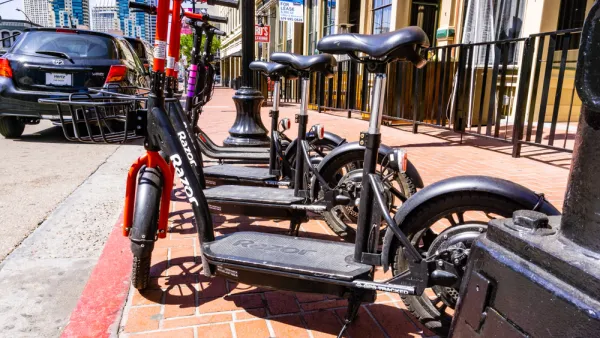
Electric Bikes and Scooters Legalized in New York City
The City Council has legalized electric scooters and bikes. A citywide shared electric scooter pilot program is expected by early 2021.

Planetizen Federal Action Tracker
A weekly monitor of how Trump’s orders and actions are impacting planners and planning in America.

The state-sanctioned urbicide of Austin
People don’t kill cities. Freeways do.

US to reduce Colorado River water deliveries to Mexico
A new Colorado Treaty amendment reduces Mexico’s Colorado River water allocation by 250,000 acre feet.

Nation's most wind-powered state turns to coal as data centers increase energy demand
For the first time in decades, Iowa has increased its generation of coal power.

NYC cools commuters with city's first rain garden above a bus stop
New York City officials say the plants in the rain garden can absorb 16 gallons of rainwater during heavy storms.

Brightline West’s future may rely on $6 billion federal loan
The company has until Nov. 2 to make a $400 million equity investment into its proposed high-speed rail line.

FREE Course: Walkable City 1: Why Walkability?
After describing his path towards focusing on walkability as the essence of good planning, Jeff Speck marches through his five principal reasons for making more walkable places.
Reinventing Malls: Planning Alchemy—Turning Gray Fields Into Gold
The course focuses on the opportunities and imperatives that shape reinvention of mall sites.

Eagle County Government
Harvard University Graduate School of Design
Nashville Planning Department
The Architects Foundation
University of Cincinnati Online
The Pocatello Development Authority
The Urban Renewal Agency of the City of Pocatello
Journal of the American Planning Association