A new plan will phase out cash fare payments on buses and trolleys, but many of the details are still up in the air.


Massachusetts Bay Transportation Authority buses and above-ground trolleys will stop taking cash fares by 2021, reports Adam Vaccaro. Instead, riders will use fare cards or a smartphone app when boarding vehicles. "Because riders will be able to board at rear doors as well, and drivers will no longer have to watch over fare collection, the agency will instead deploy fare inspectors to conduct spot checks to ensure everyone has paid," says Vaccaro.
Estimates indicate that the new system will allow faster boarding and will lower bus trip times by 10 percent. Still, community activists are raising a host of concerns about how the agency will handle inspections and enforcement. They are worried about a potential police presence on buses, discriminatory targeting of riders, and unnecessarily high penalty fees.
MBTA is still developing the new fare policy, and officials say they plan to hold public forums and work with activists and other agencies that use similar fare systems. "Proof-of-payment systems are common in Europe and are also used on some US systems, including the San Francisco Municipal Transportation Agency. Many systems use non-police fare inspectors, but others rely on police, including Cleveland and Portland, Ore., where activists have challenged the inspections as unconstitutional," notes Vaccaro.
FULL STORY: Your MBTA bus ride may get a lot faster, but be prepared for fare inspections

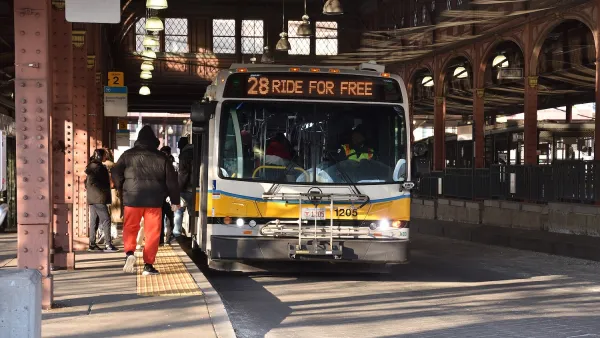
Boston’s Free Buses are Also its Slowest
Two fare-free bus lines have seen a sharp increase in travel times.
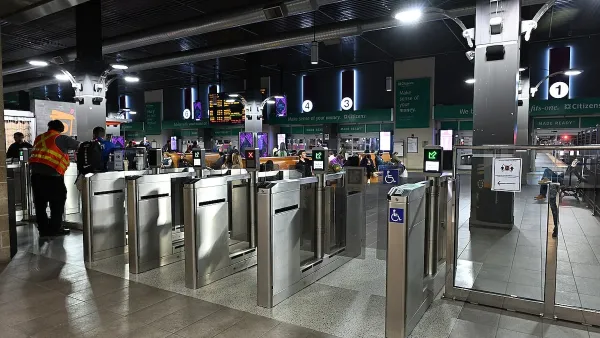
MBTA Fare Collection Jumped 35% At Stations With ‘Engagement Reps’
Boston’s transit agency is taking a firmer stance against fare evasion, cautioning riders it will begin issuing citations beginning September 8.
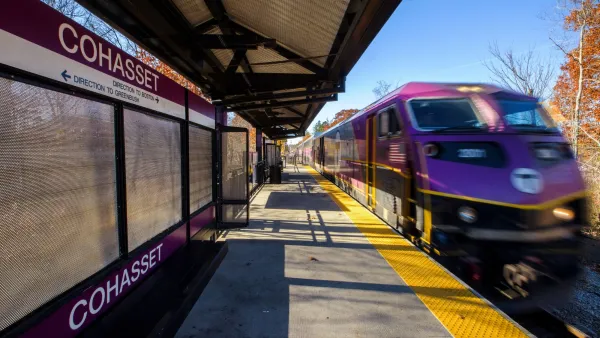
MBTA extends commuter rail discounts and lowers express bus fare to keep passengers riding into the fall
Boston-area commuters can access half-price monthly passes through November.

Planetizen Federal Action Tracker
A weekly monitor of how Trump’s orders and actions are impacting planners and planning in America.

The state-sanctioned urbicide of Austin
People don’t kill cities. Freeways do.

US to reduce Colorado River water deliveries to Mexico
A new Colorado Treaty amendment reduces Mexico’s Colorado River water allocation by 250,000 acre feet.

5 New England states march closer to 800 megawatt wind energy project
Securing federal approval for the project may be complicated under the Trump administration, which has historically been hostile towards domestic wind power.

Baltimore to break ground on $50 million Transit Priority Project
The project will bring faster bus trips, safer streets and better bike connections to Baltimore.

Airbnb launches $250 million 'last-dollar financing' housing accelerator, makes first investment in Austin
The company will put $6.4 million towards affordable housing development in Texas’ capital.

FREE Course: Walkable City 1: Why Walkability?
After describing his path towards focusing on walkability as the essence of good planning, Jeff Speck marches through his five principal reasons for making more walkable places.
Reinventing Malls: Planning Alchemy—Turning Gray Fields Into Gold
The course focuses on the opportunities and imperatives that shape reinvention of mall sites.

Eagle County Government
Harvard University Graduate School of Design
Nashville Planning Department
The Architects Foundation
University of Cincinnati Online
The Pocatello Development Authority
The Urban Renewal Agency of the City of Pocatello
Journal of the American Planning Association