Seattle Mayor Jenny Durkan proposed new electric vehicle parking requirements in the recent State of the City address, but the proposal is in keeping with the Seattle Climate Action Plan released in April 2018.


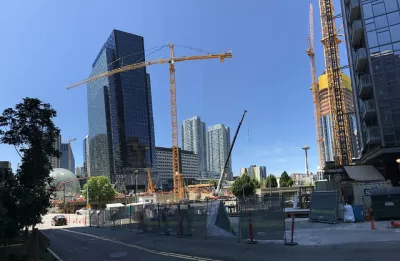
"Seattle Mayor Jenny Durkan is proposing that all new buildings be equipped for electric vehicle (EV) charging as part of the city’s climate change strategy," reports Jason Plautz.
"Under the proposal, any individual residence with private parking would have to include one EV-ready space, and multi-family developments with shared parking must have 20% of their spaces be EV-ready," adds Plautz. "At least 10% of spaces at non-residential buildings would have to be EV-ready."
The EV parking requirement is just one component of the proposed Seattle Climate Action Plan, released in 2018. The city targets 12 initiatives to achieve carbon neutrality by 2050, but transportation will require the most effort. An estimated two-thirds of the city's carbon emissions come from transportation—far higher than the national average.
Read the full story: Seattle mayor proposes EV readiness requirement for all new buildings

New Developments Must Be EV Ready in Seattle
It's not the same as requiring that all new development have charging facilities and parking spots for electric vehicles, but it's close.
Five Key Transportation Funding Proposals in Trump’s Budget
The President’s proposed 2026 budget would keep spending roughly the same for transit and rail and eliminate over $5 billion in funding for EV charging infrastructure.
Oakland to Add 244 New EV Chargers
Oakland plans to launch its new charging network at eight locations by the end of 2025.

Planetizen Federal Action Tracker
A weekly monitor of how Trump’s orders and actions are impacting planners and planning in America.

The state-sanctioned urbicide of Austin
People don’t kill cities. Freeways do.

US to reduce Colorado River water deliveries to Mexico
A new Colorado Treaty amendment reduces Mexico’s Colorado River water allocation by 250,000 acre feet.

Nation's most wind-powered state turns to coal as data centers increase energy demand
For the first time in decades, Iowa has increased its generation of coal power.

NYC cools commuters with city's first rain garden above a bus stop
New York City officials say the plants in the rain garden can absorb 16 gallons of rainwater during heavy storms.

Brightline West’s future may rely on $6 billion federal loan
The company has until Nov. 2 to make a $400 million equity investment into its proposed high-speed rail line.

FREE Course: Walkable City 1: Why Walkability?
After describing his path towards focusing on walkability as the essence of good planning, Jeff Speck marches through his five principal reasons for making more walkable places.
Reinventing Malls: Planning Alchemy—Turning Gray Fields Into Gold
The course focuses on the opportunities and imperatives that shape reinvention of mall sites.

Eagle County Government
Harvard University Graduate School of Design
Nashville Planning Department
The Architects Foundation
University of Cincinnati Online
The Pocatello Development Authority
The Urban Renewal Agency of the City of Pocatello
Journal of the American Planning Association