When the Manhattan megadevelopment got its start, big data was a major part of Hudson Yards' marketing pitch. Now it's "probably the last thing we'll get to."


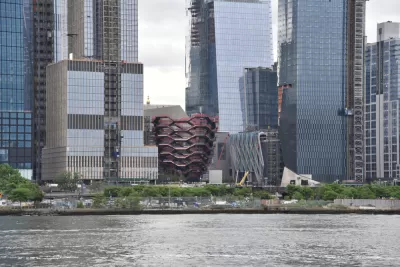
"New York's Hudson Yards was once billed as the country's first 'quantified community,'" Emily Nonko writes. "So where is the NASA-like mission control? Data collection and advanced infrastructure will still drive parts of Hudson Yards' operations, but not (yet) as first advertised."
In a pitch that segued with then-mayor Michael Bloomberg's luxe, tech-friendly vision for the city, Hudson Yards was supposed to be "a test bed for a network of sensors meant to provide constant updates to [developers] Related and Oxford. In a city known for grueling walk-ups and miserable subway commutes, data—it was promised—would make 'live, work, and play' (as the marketing lingo goes) easy and adaptable."
But in the intervening years, those developers "have been occupied with the not-so-insignificant task of building a neighborhood." Meanwhile, many of those smart city ambitions have been put on hold. "We concluded that big data is probably the last thing we'll get to. It'll be years from now before we're in that world," said Related Hudson Yards president Jay Cross.
Certain easy-to-implement smart systems are in place at Hudson Yards, including an app serving tenants, touch-screen kiosks for visitors, and fingerprint sensors for office workers. But even so, Nonko asks, "If Hudson Yards—with a seemingly infinite budget and a blank slate—couldn't build it, who can?" And as data collection stirs controversy at other smart city hotspots like Sidewalk Labs' Quayside, does that vision even reflect what people want?
Read the full story: Hudson Yards Promised a High-Tech Neighborhood—It Was a Greater Challenge Than Expected

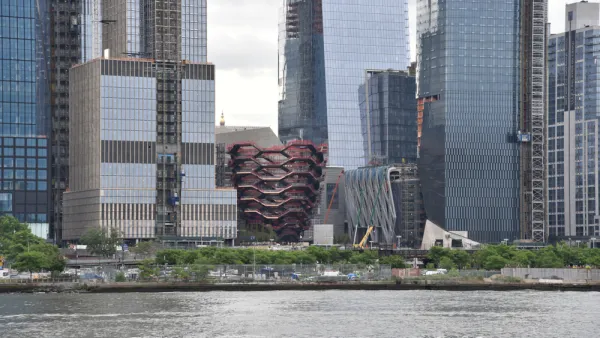
Review: The Hudson Yards Mega-Development, Open to the Public Today
Curbed Architecture Critic Alexandra Lange provides everything you need to know about the $25 billion, "city within the city" that opened to the public in Manhattan today. Also, the review isn't exactly positive.
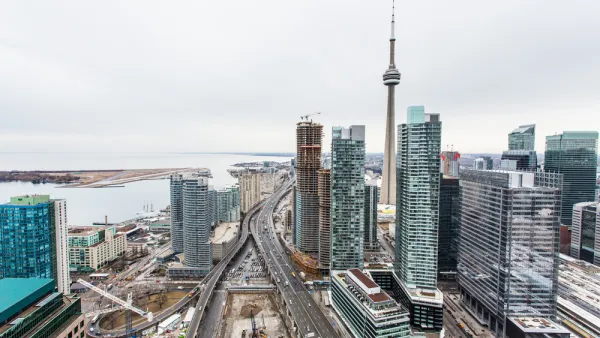
A More Complete Picture of the 'Smart City' Plans in Toronto
The game changing redevelopment proposed by Sidewalk Labs for the Toronto waterfront district of Quayside took new shape recently after the company presented an updated draft of its plan.
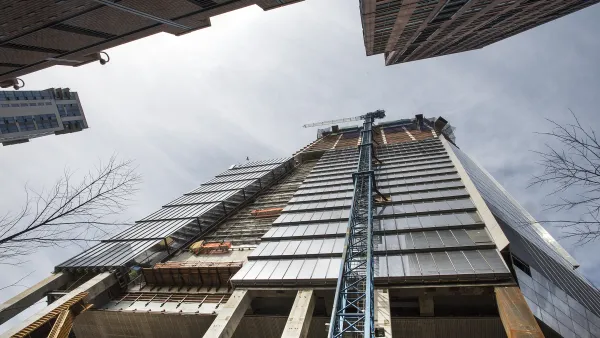
Manhattan's Hudson Yards 'Mini-City' Back on Track
Stymied for a time by lackluster investment, planned redevelopment of Hudson Yards on Manhattan's West Side is picking up speed. Joining residential buildings and budget hotels, office towers will bring municipal revenues back up.

Planetizen Federal Action Tracker
A weekly monitor of how Trump’s orders and actions are impacting planners and planning in America.

Amtrak, CN end decades-long dispute with eight-year agreement
The new operating agreement establishes an updated framework for the companies to work together, including processes to resolve disputes.

Northwest rail fans eager for Sept. 30 debut of Amtrak’s Airo fleet
Get ready for that new train smell and more seats. But they won’t go faster or run more frequently on the Cascades route in Washington and Oregon.

St. Louis Metro to test if single-car trains can reduce operating costs, maintain rider satisfaction
The pilot program will run from October to spring 2027, and begin with one single-car train operating on Metrolink’s Red and Blue lines.

Pennsylvania is building data centers in abandoned mines
Housing data centers in mines provides an alternative to destroying local forests and may spare residents from data centers’ noise and air pollution.

If Corpus Christi can’t revive desalination plant project, it may owe Texas $235 million
Earlier this month, city officials declined to pursue developing the plant for the second time in a year.

FREE Course: Walkable City 1: Why Walkability?
After describing his path towards focusing on walkability as the essence of good planning, Jeff Speck marches through his five principal reasons for making more walkable places.
Reinventing Malls: Planning Alchemy—Turning Gray Fields Into Gold
The course focuses on the opportunities and imperatives that shape reinvention of mall sites.

City of Thousand Oaks
City of Wisconsin Rapids
Harvard University Graduate School of Design
The Architects Foundation
University of Cincinnati Online
The Pocatello Development Authority
The Urban Renewal Agency of the City of Pocatello