By 2030, cities will have tripled in size since 2000. Unmanaged, incessant growth is threatening the planet, according to a new report from the World Resources Institute.


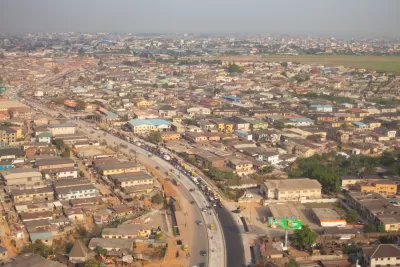
The World Resources Institute released its “Upward and Outward Growth: Managing Urban Expansion for More Equitable Cities in the Global South” report last week, complicating the narrative of urbanization as a vertical process.
"Metropolises aren’t simply building up, they’re expanding out, and doing both at unprecedented rates that have serious consequences for the economy and the environment," writes Patrick Sisson to explain his take on the new report.
To complete the study, "[r]esearchers examined growth patterns for nearly 500 urban areas, using satellite imagery and radar data to measure growth vertically and horizontally," according to Sisson. "The results suggest land-use and density may be one of the defining issues of the next few decades."
The report puts the onus on cities in the Global South to plan a more sustainable future—although efforts of cities like London and Paris to cut emissions is also given credit for making a difference.
Read the full story: As cities grow upward and outward, sprawl and land use become key global issues
Five Key Takeaways from the 2018 World Urban Forum
Insight into the hard work of implementing the New Urban Agenda.

Texas Could Have the Nation’s 3 Largest Cities by 2100. Are They Ready to Embrace Density?
Houston, Dallas, and Austin are growing fast. The old sprawl model is no longer sustainable.
A Primer on Suburban Urbanism
How one master-planned development used lower-density urbanism principles to build a community focused on affordability, sustainability, and conservation.

Planetizen Federal Action Tracker
A weekly monitor of how Trump’s orders and actions are impacting planners and planning in America.

California plans to bury El Niño’s downpour
If the state plays its cards right, it may be able to store a billion acre-feet of El Niño’s water in aquifers.

Desperate measures: Advocates weigh draining Lake Powell to fill Colorado River
Draining the reservoir could reduce evaporation losses by a couple hundred thousand acre-feet.

Housing is the top priority of Seattle’s sole new councilmember
Jenks campaigned on building 1,000 new units of affordable housing.

New tax cuts may slash $1.5 billion in funding for Miami transit, public parks
Amendment 3 will save Miami-Dade homeowners $2,700 in 2028.

Arizona, Wisconsin, Pennsylvania hope to finally advance climate goals post-midterms
The three states have spent years under Republican or divided control.

FREE Course: Walkable City 1: Why Walkability?
After describing his path towards focusing on walkability as the essence of good planning, Jeff Speck marches through his five principal reasons for making more walkable places.
Reinventing Malls: Planning Alchemy—Turning Gray Fields Into Gold
The course focuses on the opportunities and imperatives that shape reinvention of mall sites.

City of Rosemead
Rutgers University, Edward J. Bloustein School of Planning and Public Policy
One Hundred Miles
University of Michigan School for Environment and Sustainability (SEAS)
Hunter College, City University of New York (CUNY)
The Architects Foundation
City of Cambridge
Montrose County
The Pocatello Development Authority