A few milestones stick out from the rest of the scooter news from January 2019.



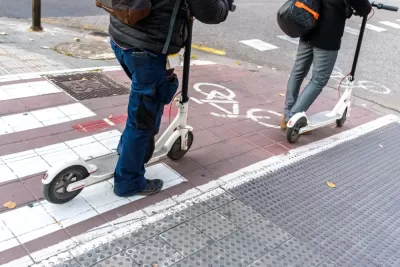
The last time we checked in with wild world of scooters, we were still struggling to get a handle on how to locate dominant narratives in the litigation of electric scooter share in cities around the country. This time around, we feel a little more confident in pointing to a few emerging trends in all the noise surrounding scooters.
Support for scooters as a viable form of alternative transportation is building, and the results from early experiments are allowing for more informed understanding of the potential and limitations of the new mode.
Public Relations
One story controlled the narrative about the popularity of scooters this month: The New York Times reporting on data released by the Portland Bureau of Transportation following a four month pilot scooter share program. Scooter companies played nice, according to the article, and it paid off. Scooters will return to the streets of Portland, and scooter companies scored a major public relations victory in blasting news to a national audience about the popularity of scooter share amongst the general public.
Public sentiment isn't the only dynamic making inroads for scooters—bike advocates are also climbing on board. A Streetsblog USA story canvassed bike advocates in Kansas City, Baltimore, and Nashville and also found support for the new mode as a potentially game-changing addition in the public realm.
Infrastructure
There was also significant movement in the process of making space for scooters in the public realm—though not all of it is forward progress. Arlington, Texas followed the path of Santa Monica, California in blocking off sections of sidewalk and street for pick-up and drop-off of scooters. Call them "scooter corrals," and we'll be surprised if they don't become a common feature of scooter share systems before long.
One potential route toward political and public acceptance of scooters came to an end this month, when Bird ceased collecting a fee to fund bike infrastructure investments. The idea that scooter rides could help fund the infrastructure improvements that will help make a smooth transition into the flow of vehicle and pedestrian traffic turned out to be little more than wishful thinking—a temporary public relations victory. We should be wary of the similar ephemerality of progress in the future.
Keep Calm and Scooter On
Two other stories stood out for their absolute preposterousness, and as evidence that scooters making some people (e.g., politicians and tech evangelists) lose all track of their capacity for ratiocination. There were reports of one company working on autonomous scooters and bikes. Imagine the machinery that could balance a rider on two wheels while sensing and computing fast enough to avoid pedestrians and cars while traveling at a speed somewhere between 10 and 15 mph. If self-driving cars are far-fetched, how about self-scooting scooters?
Then there is the city of Baltimore, which considered a 30-day jail sentence for speeding on a scooter before backing off the threat. Does even the suggestion of such a draconian punishment for speeding while scooting suggest a fair allocation of mobility in the public realm, especially when compared to the slap on the wrist and traffic school delivered to drivers caught speeding in SUVs? Or does it perhaps indicate the policy of wildly-out-of-control reactionists?
Finally, we must mention a few scooter developments that played out on Twitter that also provide interesting, perhaps humorous, insight into the scooter share phenomenon.
First, Mother Jones published a story sharing new data on the injury risks posed by scooter rides. It's certainly not good news that scoter rides pose risk to life and limb. Calling that news evidence that scooters are "the worst thing that ever happened to cities," like Mother Jones did on Twitter, is such an overreach it had a lot of people threatening to cancel their subscriptions.
New research shows exactly why e-scooters are the worst thing that ever happened to cities https://t.co/j3zWtch13e
— Mother Jones (@MotherJones) January 28, 2019
A more measured take on the injury data is available from Bloomberg.
For a more humorous anecdote, check out the work of The Information reporter and Twitter user @coryweinberg, who is keeping track of the names of "snappy one-word names" for scooter companies.
The scooter war no one is talking about: The leader—far and away—for the category of snappy one-word names for scooter startups is "action verb."
Inanimate objects is playing catch up. Bird deserves more credit for bucking industry trends. pic.twitter.com/C6NZm7DyKp— Cory Weinberg (@coryweinberg) January 23, 2019
We've always preferred action verbs to all other forms of words, too.
Now onto the bis list of scooter stories in the categories traditional to Planetizen's "Scooter Media Brief" posts, with some duplications from the articles linked above.
National News
- Electric-scooter injuries pile up, but making the lawsuits stick is hard (Bloomberg, January 25)
- Hundreds Of ER Records Show Most Injured Scooter Riders Weren't Wearing Helmets (LAist, January 25)
- Colleges That Funded Scooter Startups Don’t Love Them on Campus (Bloomberg BusinessWeek, January 22)
- Uber is exploring autonomous bikes and scooters (TechCrunch, January 20)
- Transportation for America releases micromobility policy guide (Smart Cities Dive, January 16)
- Bird Quietly Ends a Much-Hyped Bike Lane Subsidy (Streetsblog USA, January 10)
National Commentary
- Scooters Grapple With Safety After Dark (The Information, January 29)
- Researchers Find that E-Scooters Are a Fun, Easy Way to Go to the ER (Mother Jones, January 25)
- Local Bike Advocates: E-Scooters Are Game-Changing (Streetsblog USA, January 14)
- Anatomy of an Electric Scooter Crash (CityLab, January 10)
Local News
- Baltimore officials to amend proposal that called for 30 days in jail for riding electric scooters too fast (The Baltimore Sun, January 28)
- Disability rights group sues scooter companies, San Diego over sidewalk clutter (Smart Cities Dive, January 18)
- Portland Economist Says City’s E-Scooter Experiment Was a Success—and Wants to Apply the Same Standards to Cars (Willamette Week, January 17)
- Cuomo Plan Lets Localities Legalize E-Scooters and E-Bikes (Streetsblog NYC, January 16)
- In Portland, Scooter Start-Ups Played Nice. Regulators Took Note. (The New York Times, January 15)
- E-scooters will return to Portland this spring, transportation officials say (The Oregonian, January 15)
- OjO's sit-down scooter-share service debuts in Austin, TX (Smart Cities Dive, January 9)
- Galveston officials cautious about allowing scooter rentals (The Daily News)
- Atlanta City Council lays down law on scooters (Atlanta Journal-Constitution, January 7)
- Atlanta City Council could approve electric scooter regulations Monday (Atlanta Journal-Constitution, January 5)
- Electric scooter service Bird eyes Toronto market (The Star, January 4)
- On-street scooter corrals pop up in Arlington (Greater Greater Washington, January 2)
- UPS boosts delivery service with electric scooters made by a Pasadena company (The Pasadena Star News, December 19)
Local Commentary

Scooter Media Brief: Safety, Security, and Business Models Raise Concerns
Recent news has revealed some cracks in the pavement below the speedy wheels of electric scooter share.
Can the Scooter Business Outlast the Coronavirus?
It's the end of the scooter as we know it.
The Culling: Four Fewer Scooter Companies Allowed to Operate in D.C.
A controversial evaluation process has produced a final verdict, and four scooter companies are no longer welcome on the streets of the nation's capital.

The state-sanctioned urbicide of Austin
People don’t kill cities. Freeways do.

US to reduce Colorado River water deliveries to Mexico
A new Colorado Treaty amendment reduces Mexico’s Colorado River water allocation by 250,000 acre feet.

New Jersey’s second-largest city bans standalone data centers
Jersey City will continue to allow co-location facilities, such as those meant for research institutions that store their own data.

Amtrak not solely to blame for New Jersey commuter rail's unreliability, report finds
A new study from the Garden State Initiative found that NJ Transit’s budget grew 20% across a 4 year period, but reliability declined significantly over the same period.

EPA erases limits on planet-warming pollution from power plants
Under Monday’s plan, power plants would still have some limits on how much mercury, arsenic and other contaminants they can emit.

Phoenix announces new on-demand transit service, more frequent RAPID buses
Both new services will launch in October, and are part of Phoenix's Project Effective Access Solutions for Easing Congestion.

FREE Course: Walkable City 1: Why Walkability?
After describing his path towards focusing on walkability as the essence of good planning, Jeff Speck marches through his five principal reasons for making more walkable places.
Reinventing Malls: Planning Alchemy—Turning Gray Fields Into Gold
The course focuses on the opportunities and imperatives that shape reinvention of mall sites.

Eagle County Government
Harvard University Graduate School of Design
Nashville Planning Department
The Architects Foundation
University of Cincinnati Online
The Pocatello Development Authority
The Urban Renewal Agency of the City of Pocatello
Journal of the American Planning Association

