"Should DC spend about $2 million on a parcel of land in Columbia Heights to build a dog park?"


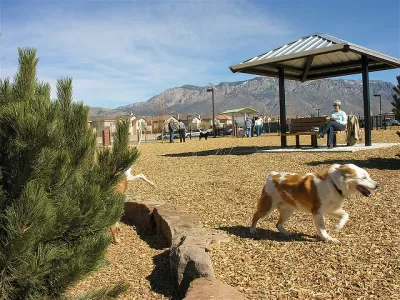
Alex Baca and Nick Finio write an opinion piece on the controversial role of dog parks in housing-impacted urban neighborhoods.
In this case, the proposed dog park would be located on an empty 7,335 square-foot parcel owned by the WMATA and located at 11th Street and Park roads NW in Washington, D.C. Empty for 20 years, the WMATA has allowed people to use the parcel as a dog park since 2009.
"WMATA, which still faces budget shortages, is selling surplus land like this parcel to generate more revenue," according to the article. "In May, the DC Council included $1.5 million to purchase the property from WMATA in its FY2019 budget. The market value is estimated to be closer to $2.1 million. Now that it's officially up for sale, dog park users are urging the council to offer to pay the market rate—$2.1 million—to buy the parcel."
Still, the authors consider the proposition of building a dog park with tax payer money is a housing-constrained city to present a moral quandary that they just can't abide. "Despite our affection toward animals, we believe that spending scarce city funds to preserve this particular parcel as as [sic] dog park is a bad idea, particularly if there’s any chance of this land being used to build more homes for people," write Baca and Finio.
FULL STORY: Is it unethical to build a dog park on prime real estate in housing-strapped DC?

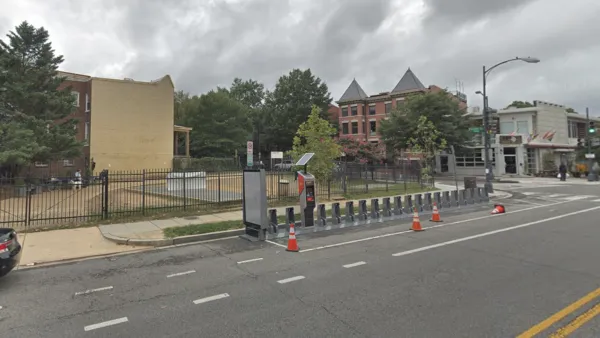
D.C. Attempts to Save Local Dog Park
Residents of Columbia Heights in Washington, D.C. have been using property owned by D.C. Metro as a dog park. The District might buy the land to ensure it stays that way.

D.C. Tops the 2021 ParkScore List
The Trust for Public Land has published the most recent version of its annual ranking of parks and open space. A new twist for 2021includes a new metric to consider equity.
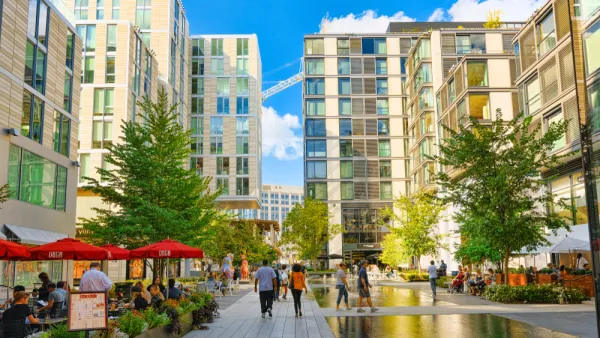
Inclusionary Zoning Expanded in D.C.
The Washington, D.C. Planning Commission voted to expand the District's inclusionary zoning program, acting a year after the D.C. Office of Planning set out to expand the program.

The state-sanctioned urbicide of Austin
People don’t kill cities. Freeways do.

US to reduce Colorado River water deliveries to Mexico
A new Colorado Treaty amendment reduces Mexico’s Colorado River water allocation by 250,000 acre feet.

New Jersey’s second-largest city bans standalone data centers
Jersey City will continue to allow co-location facilities, such as those meant for research institutions that store their own data.

Amtrak not solely to blame for New Jersey commuter rail's unreliability, report finds
A new study from the Garden State Initiative found that NJ Transit’s budget grew 20% across a 4 year period, but reliability declined significantly over the same period.

EPA erases limits on planet-warming pollution from power plants
Under Monday’s plan, power plants would still have some limits on how much mercury, arsenic and other contaminants they can emit.

Phoenix announces new on-demand transit service, more frequent RAPID buses
Both new services will launch in October, and are part of Phoenix's Project Effective Access Solutions for Easing Congestion.

FREE Course: Walkable City 1: Why Walkability?
After describing his path towards focusing on walkability as the essence of good planning, Jeff Speck marches through his five principal reasons for making more walkable places.
Reinventing Malls: Planning Alchemy—Turning Gray Fields Into Gold
The course focuses on the opportunities and imperatives that shape reinvention of mall sites.

Eagle County Government
Harvard University Graduate School of Design
Nashville Planning Department
The Architects Foundation
University of Cincinnati Online
The Pocatello Development Authority
The Urban Renewal Agency of the City of Pocatello
Journal of the American Planning Association