A lawsuit alleging intentional segregation by the Chicago Housing Authority (CHA) has finally reached a settlement.



In the mid 1960s, Chicago public housing residents sued the Chicago Housing Authority (CHA) for only building public housing in black neighborhoods and keeping black residents out of white projects. "The lawsuit is named after the lead plaintiff in that case – Dorothy Gautreaux – who, along with others, won the case against the CHA. Now, the authority has agreed to a settlement," Nicole Cardos reports for WTTW Chicago.
The settlement has specific instructions for what the CHA is to do to alleviate these issues. "The CHA is obligated to maintain its schedule for planning and construction of its 'Plan for Transformation'; develop housing for low-income families in mixed-income communities, or 'opportunity areas'; strengthen its voucher program; and create early learning childhood development programs at four public housing complexes," Cardos Reports.
FULL STORY: 50-Year-Old Housing Discrimination Case Reaches Settlement

Did Demolishing Chicago's Public Housing Make Residents Better Off?
With the demolition of notorious high-rise housing projects such as Cabrini-Green over the last decade and a half, Chicago became a model for a new approach to public housing. A new study tracks former high-rise residents to see how they've fared.
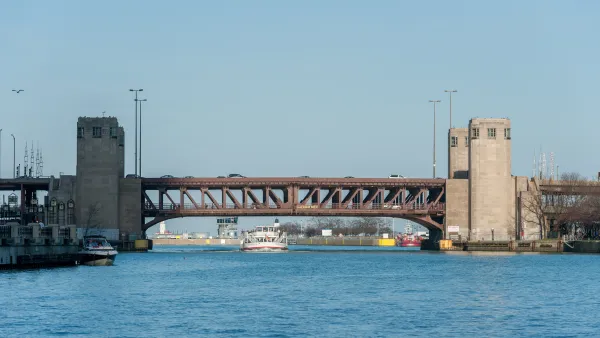
Extreme heat is paralyzing Chicago’s moveable bridges
If moveable bridges are raised during heatwaves, the metal can expand and jam the bridge's mechanisms, preventing it from lowering.

Chicago Amtrak funding makes way for new White Sox stadium
The new funding is the first step in Amtrak vacating its 14th Street rail yard, the future development site of a new baseball stadium.

Planetizen Federal Action Tracker
A weekly monitor of how Trump’s orders and actions are impacting planners and planning in America.

The state-sanctioned urbicide of Austin
People don’t kill cities. Freeways do.

US to reduce Colorado River water deliveries to Mexico
A new Colorado Treaty amendment reduces Mexico’s Colorado River water allocation by 250,000 acre feet.

Mamdani overhauls NYC's Vision Zero plan with 100 new policy goals
The overhaul aims to reduce traffic deaths and make streets safer for pedestrians, cyclists and drivers through lower speed limits, new safety infrastructure and more.

Amtrak not solely to blame for New Jersey commuter rail's unreliability, report finds
A new study from the Garden State Initiative found that NJ Transit’s budget grew 20% across a 4 year period, but reliability declined significantly over the same period.

EPA erases limits on planet-warming pollution from power plants
Under Monday’s plan, power plants would still have some limits on how much mercury, arsenic and other contaminants they can emit.

FREE Course: Walkable City 1: Why Walkability?
After describing his path towards focusing on walkability as the essence of good planning, Jeff Speck marches through his five principal reasons for making more walkable places.
Reinventing Malls: Planning Alchemy—Turning Gray Fields Into Gold
The course focuses on the opportunities and imperatives that shape reinvention of mall sites.

Eagle County Government
Harvard University Graduate School of Design
Nashville Planning Department
The Architects Foundation
University of Cincinnati Online
The Pocatello Development Authority
The Urban Renewal Agency of the City of Pocatello
Journal of the American Planning Association