The history of the earth since 1700 has been a history of human land use.


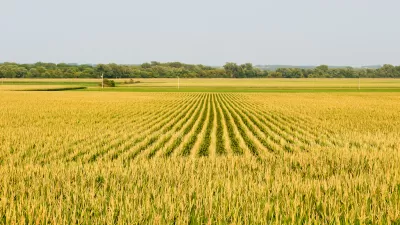
David Montgomery shares the findings of research led by Erle Ellis, a researcher at the University of Maryland, Baltimore County.
According to Montgomery, Earle and team's results show startling changes:
Three centuries ago, humans were intensely using just around 5 percent of the planet, with nearly half the world’s land effectively wild. Today, more than half of Earth’s land is occupied by agriculture or human settlements.
Earle is quoted in the article saying that climate change will someday surpass land use as the "dominant shaper of ecology in the terrestrial real." But presently and for the last several hundred years, it's been land use.
The research is supplemented by a map that shows the transformation of human land use since 1700:
Even with only one snapshot per century, the animation makes some of the trends obvious," writes Montgomery. "Large swathes of Russia and the United States become cropland over the 19th century, while livestock occupies increasing amounts of previously semi-wild land in Africa and Asia.
The maps included in the article illustrate the history of land uses on the entirety of the earth's landmass, urban and village uses, and the history of land uses in Europe.
Read the full story: How 300 Years of Urbanization and Farming Transformed the Planet

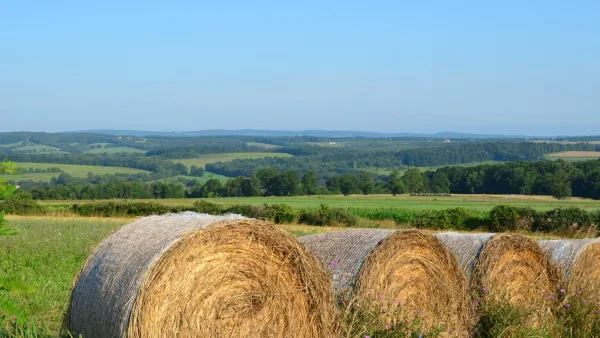
Conservation Easement Program Protects 100,000 Acres of Agricultural Land in New York State
A state famous for its largest city is making a concerted effort to protect agricultural lands as part of a larger national push.
Historically Redlined Neighborhoods Have Higher Rates of Pedestrian Deaths, Study Says
The consequences of historic redlining continue to have consequences in the present day United States. Add another example to the list.
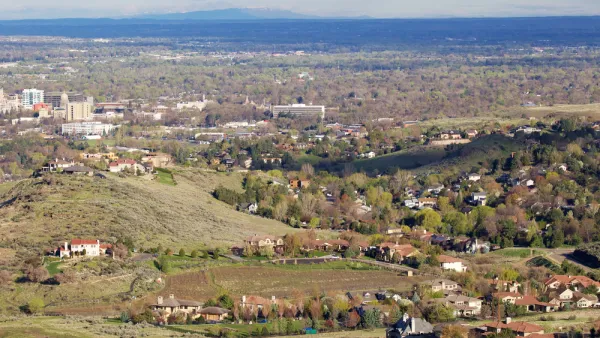
Different Approaches to Fast Growth in Idaho's Treasure Valley
Three cities on the periphery of the fast-growing Treasure Valley showcase different approaches to a sudden influx of newcomers.

Planetizen Federal Action Tracker
A weekly monitor of how Trump’s orders and actions are impacting planners and planning in America.

The state-sanctioned urbicide of Austin
People don’t kill cities. Freeways do.

Colorado’s Largest Data Center Could Rise Next to Homes — Without a Public Hearing
The proposed campus would consume 11 times the power of Denver International Airport; as it has across the country, opposition mounts.

Judges permit Denver to divert 77,000 acre feet from the Colorado River for reservoir expansion
Overuse and climate change have caused the Colorado River’s water levels to plummet.

Amtrak, CN end decades-long dispute with eight-year agreement
The new operating agreement establishes an updated framework for the companies to work together, including processes to resolve disputes.
Raised interest rates may kill financially vulnerable construction projects
The chief economist at ConstructConnect warns that if construction project owners are negatively impacted by the raised rates, it could result in delayed payments to contractors.

FREE Course: Walkable City 1: Why Walkability?
After describing his path towards focusing on walkability as the essence of good planning, Jeff Speck marches through his five principal reasons for making more walkable places.
Reinventing Malls: Planning Alchemy—Turning Gray Fields Into Gold
The course focuses on the opportunities and imperatives that shape reinvention of mall sites.

KFH Group Inc.
Greater Baltimore Committee
Eagle County Government
The Architects Foundation
University of Cincinnati Online
The Pocatello Development Authority
The Urban Renewal Agency of the City of Pocatello