This was not a case of "it's better to ask forgiveness than permission."


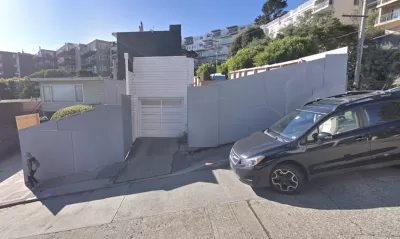
J.K. Dineen reports from San Francisco, where "[a] property owner who illegally demolished a 1936 Twin Peaks house designed by a renowned modernist must rebuild an exact replica of the home rather than the much larger structure the property owner had proposed replacing it with…"
Modernist icon Richard Neutra designed the house at 49 Hopkins Street, known as the Largent House. The property owner, Ross Johnston, created a development company, 49 Hopkins LLC , to raze the house and build a much larger replacement. According to his attorney, Johnston intended to move his family into the much larger house.
The problem with the demolition: Johnston only had permission to "remodel with a design that would have largely kept the first floor of the existing home intact," according to Dineen.
"The case attracted attention because Neutra is considered one of the most important modern architects and because it highlighted the trend of speculators illegally razing modest homes with the intention of replacing them with mega-homes," according to Dineen.
The decision to have Johnston rebuild the house exactly as it was is unprecedented in San Francisco history, according to Dineen. The action has also inspired a lot of debate in San Francisco.
Read the full story: SF to developer who tore down landmark house: Rebuild it exactly as it was


As prices skyrocket, San Francisco Mayor declares rent emergency
Landlords in San Francisco have initiated over 2,400 evictions since January, putting the city on track to see more evictions this year than during any year in the past decade.

Residents sue San Francisco for overriding TOD law
Advocates argue that exempting thousands of parcels from Senate Bill 79 is an "egregious example of the city flouting state law."

Rain gardens keep up to 99% of pollutants out of San Francisco Bay
The city's roadside rain gardens soak up stormwater and filter out dozens of harmful micropollutants.

Planetizen Federal Action Tracker
A weekly monitor of how Trump’s orders and actions are impacting planners and planning in America.

The state-sanctioned urbicide of Austin
People don’t kill cities. Freeways do.

Colorado’s Largest Data Center Could Rise Next to Homes — Without a Public Hearing
The proposed campus would consume 11 times the power of Denver International Airport; as it has across the country, opposition mounts.

Nation's most wind-powered state turns to coal as data centers increase energy demand
For the first time in decades, Iowa has increased its generation of coal power.

NYC cools commuters with city's first rain garden above a bus stop
New York City officials say the plants in the rain garden can absorb 16 gallons of rainwater during heavy storms.

Brightline West’s future may rely on $6 billion federal loan
The company has until Nov. 2 to make a $400 million equity investment into its proposed high-speed rail line.

FREE Course: Walkable City 1: Why Walkability?
After describing his path towards focusing on walkability as the essence of good planning, Jeff Speck marches through his five principal reasons for making more walkable places.
Reinventing Malls: Planning Alchemy—Turning Gray Fields Into Gold
The course focuses on the opportunities and imperatives that shape reinvention of mall sites.

Greater Baltimore Committee
Eagle County Government
Harvard University Graduate School of Design
The Architects Foundation
University of Cincinnati Online
The Pocatello Development Authority
The Urban Renewal Agency of the City of Pocatello
Journal of the American Planning Association