St. Louis transit planners are evaluating the reasons behind a decline in transit use as the Metro Transit system prepares its first light expansion in years.


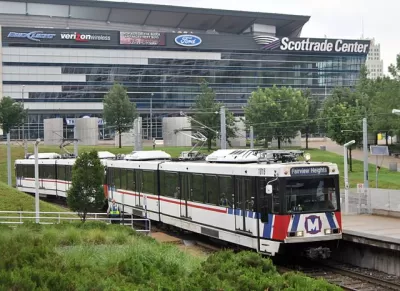
"Ridership on [St. Louis] MetroLink and buses has plunged by more than 20 percent over the last five years, a dip that comes as the light-rail system slowly moves toward its first expansion in more than a decade," reports Leah Thorsen.
"That decrease is split pretty evenly between the light-rail and bus systems, which riders often transfer between on a trip," adds Thorsen.
The context for this discussion is a plan to build a new north-south line in the Metro Transit system. "As those plans move forward, Metro has been assessing why ridership has fallen on existing routes and how to reverse the trend," according to Thorsen.
While the city's declining population and the cost of gas is briefly mentioned, the main focus of Thorsen's reporting is on crime. Security concerns are great enough that it's caused a political struggle between the County Council and Metro Transit. "The St. Louis County Council this fall held back $5 million from Metro for security funding until it can be convinced that concerns about rider safety have been addressed, and that police and Metro are working together," according to Thorsen.
FULL STORY: It's not just crime: Why have so many people quit taking public transit in St. Louis?

St. Louis Studying Ambitious, $2.2 Billion MetroLink Proposal
The city of St. Louis is taking the first official steps toward the ambitious Northside-Southside MetroLink proposal.
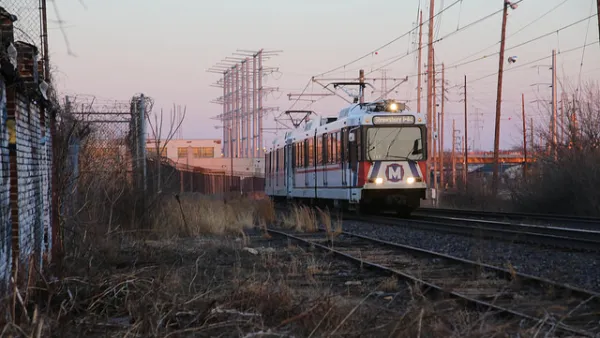
With Mayoral Support—What's Next for Proposed MetroLink Extension in St. Louis
The long-time mayor of St. Louis has announced his top priority for his final year in office, and it's good news for transit advocates.
Funding Approved for St. Louis Transit Agency
After a failed vote last month, the St. Louis County Council voted to move forward with a $128-million infusion into the regional transit system.

Planetizen Federal Action Tracker
A weekly monitor of how Trump’s orders and actions are impacting planners and planning in America.

The state-sanctioned urbicide of Austin
People don’t kill cities. Freeways do.

US to reduce Colorado River water deliveries to Mexico
A new Colorado Treaty amendment reduces Mexico’s Colorado River water allocation by 250,000 acre feet.

5 New England states march closer to 800 megawatt wind energy project
Securing federal approval for the project may be complicated under the Trump administration, which has historically been hostile towards domestic wind power.

Baltimore to break ground on $50 million Transit Priority Project
The project will bring faster bus trips, safer streets and better bike connections to Baltimore.

Airbnb launches $250 million 'last-dollar financing' housing accelerator, makes first investment in Austin
The company will put $6.4 million towards affordable housing development in Texas’ capital.

FREE Course: Walkable City 1: Why Walkability?
After describing his path towards focusing on walkability as the essence of good planning, Jeff Speck marches through his five principal reasons for making more walkable places.
Reinventing Malls: Planning Alchemy—Turning Gray Fields Into Gold
The course focuses on the opportunities and imperatives that shape reinvention of mall sites.


Eagle County Government
Harvard University Graduate School of Design
Nashville Planning Department
The Architects Foundation
University of Cincinnati Online
The Pocatello Development Authority
The Urban Renewal Agency of the City of Pocatello
Journal of the American Planning Association