A Regional Plan Association white paper makes that case that New York City and Amazon have mutually beneficial goals with the decision to located the tech company's second headquarters in Long Island City.


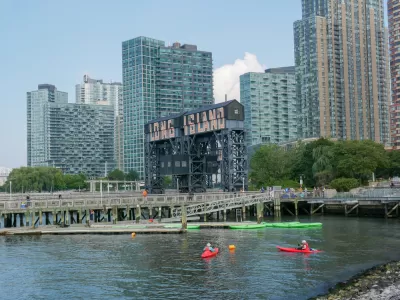
The Regional Plan Association (RPA) released a report Monday that lends conditional support to the deal that will bring Amazon's second headquarters (HQ2) to the Long Island City neighborhood in New York.
Matthew Flamm characterizes the new RPA white paper as supportive of the idea that HQ2 could make progress in three areas of need in Long Island City: "affordable housing, expanding mass transit and protecting Long Island City from sea-level rise."
"Tom Wright, the RPA's chief executive, compares the Amazon deal to Disney's mid-1990s agreement to purchase the New Amsterdam Theater on 42nd Street and invest in Times Square," according to Flamm. "Eventually, he said, Disney and the city had the same goals."
The article includes more details on the report's findings and recommendations on each of the three targeted policy areas.
FULL STORY: Amazon deal a boon for city priorities, think tank says

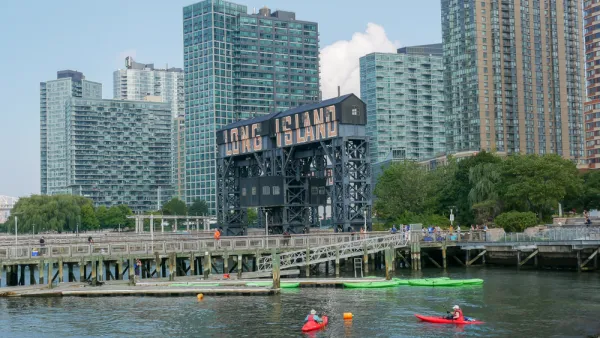
Six Months After Amazon: A Call to Develop in Long Island City
It's been six months since Amazon rescinded its plans to build a second headquarters in New York City. The neighborhood planned for the facility could still see a huge benefit from an ambitious development, according to this opinion.
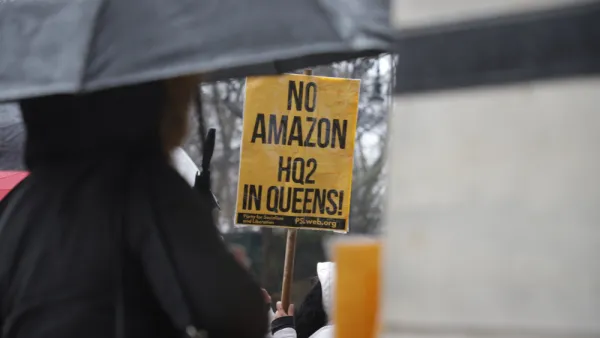
Amazon Calls the Whole New York Thing Off
The AmazonHQ2 circus is packing up and moving to another city.
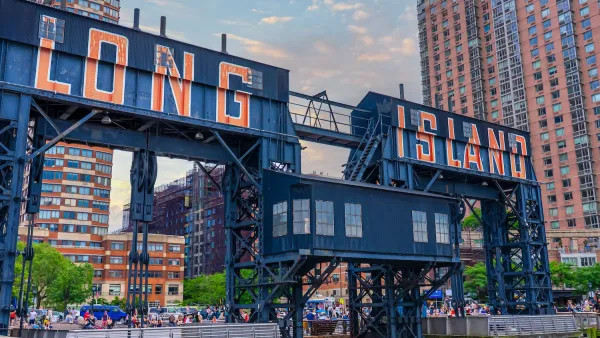
Upzoning Could Bring 15K New Homes to Queens
A rezoning plan for Long Island City opens up prime waterfront land for residential development, but some critics say new housing could be prone to flooding and should be built farther inland.

Planetizen Federal Action Tracker
A weekly monitor of how Trump’s orders and actions are impacting planners and planning in America.

The state-sanctioned urbicide of Austin
People don’t kill cities. Freeways do.

US to reduce Colorado River water deliveries to Mexico
A new Colorado Treaty amendment reduces Mexico’s Colorado River water allocation by 250,000 acre feet.

Mamdani overhauls NYC's Vision Zero plan with 100 new policy goals
The overhaul aims to reduce traffic deaths and make streets safer for pedestrians, cyclists and drivers through lower speed limits, new safety infrastructure and more.

Amtrak not solely to blame for New Jersey commuter rail's unreliability, report finds
A new study from the Garden State Initiative found that NJ Transit’s budget grew 20% across a 4 year period, but reliability declined significantly over the same period.

EPA erases limits on planet-warming pollution from power plants
Under Monday’s plan, power plants would still have some limits on how much mercury, arsenic and other contaminants they can emit.

FREE Course: Walkable City 1: Why Walkability?
After describing his path towards focusing on walkability as the essence of good planning, Jeff Speck marches through his five principal reasons for making more walkable places.
Reinventing Malls: Planning Alchemy—Turning Gray Fields Into Gold
The course focuses on the opportunities and imperatives that shape reinvention of mall sites.

Eagle County Government
Harvard University Graduate School of Design
Nashville Planning Department
The Architects Foundation
University of Cincinnati Online
The Pocatello Development Authority
The Urban Renewal Agency of the City of Pocatello
Journal of the American Planning Association