The city recently received a grant that will help it grow its bike-share network, particularly into areas that have been underserved.


Chicago has been awarded $2.5 million to support efforts addressing climate change, through the American Cities Climate Challenge, part of Bloomberg Philanthropies. Mayor Rahm Emanuel’s office says part of this funding will go toward expanding Chicago’s bike-share network out to the entire city.
“Divvy, the largest bike-sharing program operating in Chicago, has faced challenges in reaching all parts of the city even with expansions into additional South and West Side neighborhoods in recent years,” reports Alex Ruppenthal. The Divvy system currently operates in Chicago and Evanston with 6,000 bicycles available at more than 570 stations, and the full-city expansion may include Divvy or use another program, says Ruppenthal.
In addition to bike sharing, the city wants to put into place policies to encourage car sharing and public transit use. It also will focus on renewable energy, energy efficiency, and the development of programs and infrastructure for solar and electric vehicles.
FULL STORY: Chicago Plans to Expand Bike Sharing to ‘100 Percent of City’

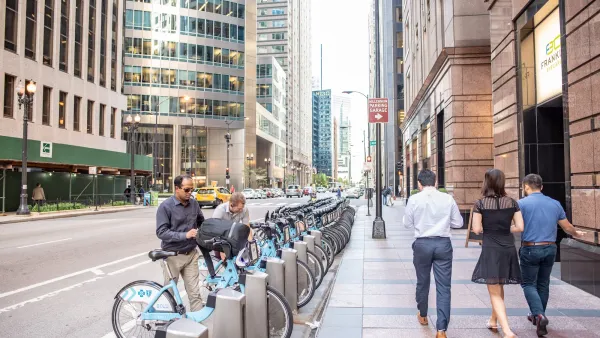
Chicago to Add or Upgrade 200 Bike Share Stations
The Divvy bike share system saw its highest ridership ever in 2025 with 6.8 million trips.
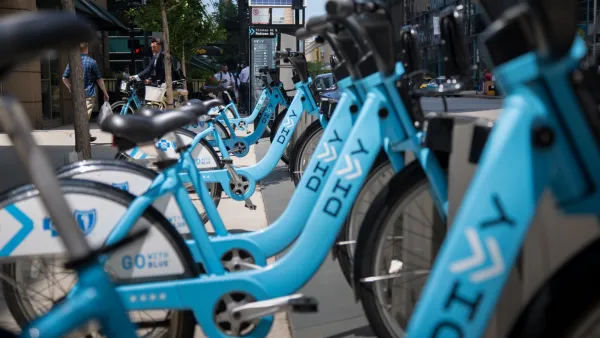
Divvy Introduces E-Bike Charging Docks
New, circular docks let e-bikes charge at stations, eliminating the need for frequent battery swaps.
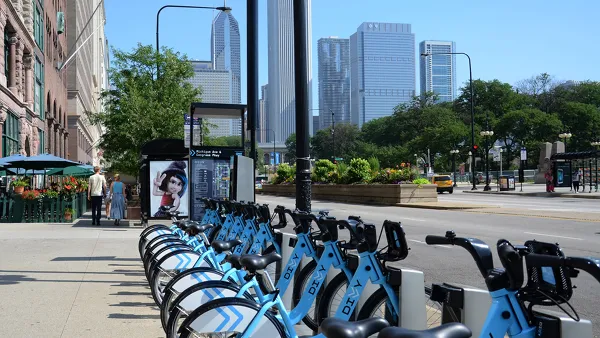
Chicago Bike Share Expands Citywide
Divvy is now available in all 50 wards, with more stations and bikes planned for the system in the next two years.

Planetizen Federal Action Tracker
A weekly monitor of how Trump’s orders and actions are impacting planners and planning in America.

The state-sanctioned urbicide of Austin
People don’t kill cities. Freeways do.

US to reduce Colorado River water deliveries to Mexico
A new Colorado Treaty amendment reduces Mexico’s Colorado River water allocation by 250,000 acre feet.

Mamdani overhauls NYC's Vision Zero plan with 100 new policy goals
The overhaul aims to reduce traffic deaths and make streets safer for pedestrians, cyclists and drivers through lower speed limits, new safety infrastructure and more.

Amtrak not solely to blame for New Jersey commuter rail's unreliability, report finds
A new study from the Garden State Initiative found that NJ Transit’s budget grew 20% across a 4 year period, but reliability declined significantly over the same period.

EPA erases limits on planet-warming pollution from power plants
Under Monday’s plan, power plants would still have some limits on how much mercury, arsenic and other contaminants they can emit.

FREE Course: Walkable City 1: Why Walkability?
After describing his path towards focusing on walkability as the essence of good planning, Jeff Speck marches through his five principal reasons for making more walkable places.
Reinventing Malls: Planning Alchemy—Turning Gray Fields Into Gold
The course focuses on the opportunities and imperatives that shape reinvention of mall sites.

Eagle County Government
Harvard University Graduate School of Design
Nashville Planning Department
The Architects Foundation
University of Cincinnati Online
The Pocatello Development Authority
The Urban Renewal Agency of the City of Pocatello
Journal of the American Planning Association