A design-focused study of mode choice doesn’t consider the many ways people interact with and travel through urban environments.


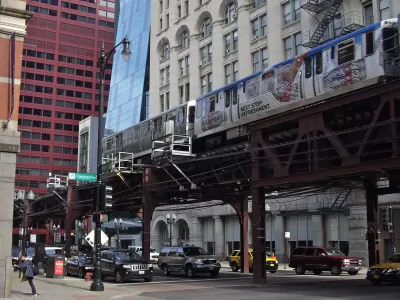
Joe Cortright considers the approaches of design thinking in understanding how cities work. Several years ago, Ford commissioned the design firm IDEO to look at the urban travel experience and how it could be improved in the future.
"IDEO conceptualized the design task by sending groups of its employees to a restaurant a few miles away via different transportation modes, so they could assess the challenges each faces: the subway (too smelly), Divvy bikeshare (too dirty), and Uber (too expensive)," writes Cortright.
But he argues that IDEO was not asking the right questions by focusing solely on transportation. IDEO’s own offices are in a dense neighborhood in Chicago with many food options within walking distance — versus a restaurant several miles away — and the choice to locate there demonstrates how cities can be better designed to meet the needs of the people living and working in them.
"The real failure in design thinking here is IDEO viewing this task as primarily choosing between different transportation modes. Of course, they are free to frame this question however they—and their paying client—would like. But from a broader policy perspective—and from the perspective of citizens and consumers, we’d all be a lot better off if we’d make the design conversation about how we arrange our cities," says Cortright.
Read the full story: The limits of design thinking

New Research Connects Land Use to Ride-Hailing Trips
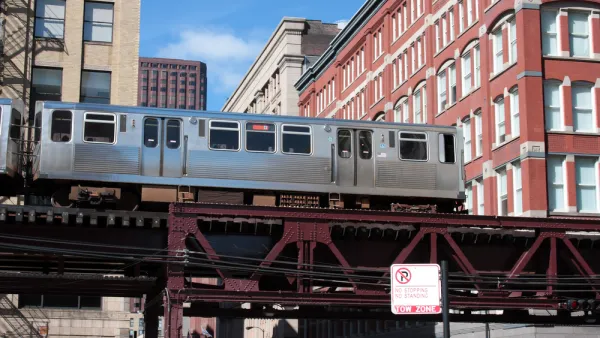
Many of the places in Chicago generating the most ride-hailing trips with services like Uber and Lyft are accessible by transit, according to new research.
Chicago Wants Bike Sharing to Reach All Parts of City
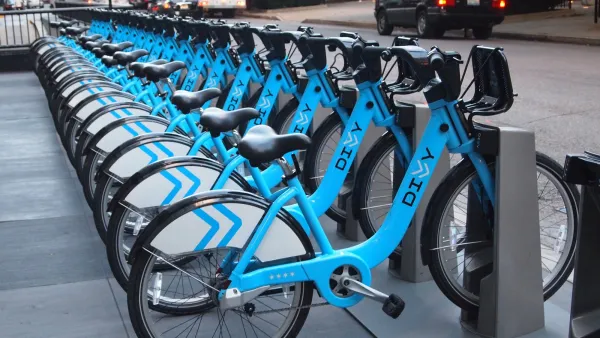
The city recently received a grant that will help it grow its bike-share network, particularly into areas that have been underserved.
Chicago and New York: Two Transit Systems, Two Very Different Outcomes
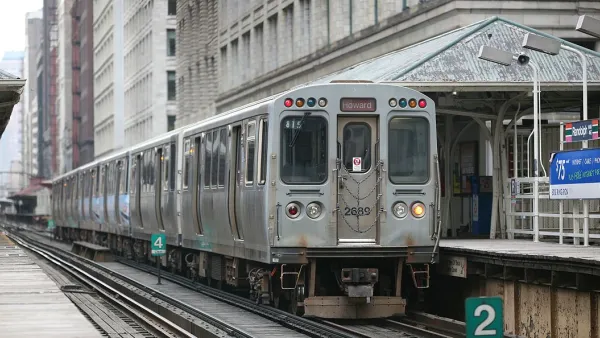
Both cities have aging transit systems in need of major repairs. Chicago’s approach has helped turn the system around while New York is still grappling with its issues.

Planetizen Federal Action Tracker
A weekly monitor of how Trump’s orders and actions are impacting planners and planning in America.

Amtrak, CN end decades-long dispute with eight-year agreement
The new operating agreement establishes an updated framework for the companies to work together, including processes to resolve disputes.

Judges permit Denver to divert 77,000 acre feet from the Colorado River for reservoir expansion
Overuse and climate change have caused the Colorado River’s water levels to plummet.

NYC DOT wants faster, more permanent street upgrades
The city is examining ways to build more concrete infrastructure without getting entangled in 'decades-long' projects.

'Something we’ve never seen before:' rising utility rates could strain city finances nationwide
Data centers, climate change and other factors have caused utility rates in the United States to increase by 38% since 2020.

Trump to overrule local leaders, lease millions of acres of America’s Pacific Island territories’ seafloors to mining companies
International law says that the Indigenous people of America’s territories have a right to prior and informed consent regarding projects that impact their countries.

FREE Course: Walkable City 1: Why Walkability?
After describing his path towards focusing on walkability as the essence of good planning, Jeff Speck marches through his five principal reasons for making more walkable places.
Reinventing Malls: Planning Alchemy—Turning Gray Fields Into Gold
The course focuses on the opportunities and imperatives that shape reinvention of mall sites.

Harvard University Graduate School of Design
KFH Group Inc.
Greater Baltimore Committee
The Architects Foundation
University of Cincinnati Online
The Pocatello Development Authority
The Urban Renewal Agency of the City of Pocatello